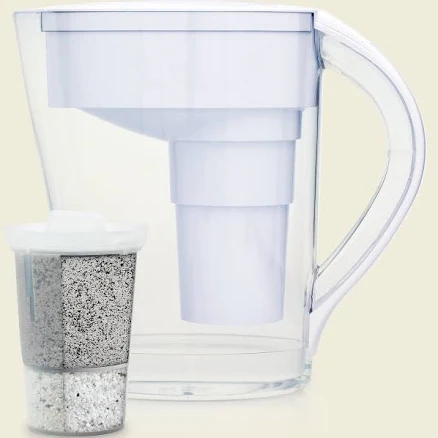
Santevia Mina Alkaline Pitcher
Lower concern; no known PFAS risk, but brand offers no transparency.
Santevia Mina pitchers use ceramic and mineral filtration media not typically associated with PFAS. The plastic housing is marketed as BPA-free, but the brand makes no PFAS statement or third-party testing claim.
We flunk more products than we pass. This one earned its grade. How we grade
Material
Ceramic/mineral filter cartridge with BPA-free pitcher housing
Brand disclosure
Brand is silent on PFAS
Lab data
No public lab test
What Santevia Mina Alkaline Pitcher is made of, ingredients and materials
The Mina pitcher uses a ceramic and mineral-based filter cartridge rather than activated carbon or ion-exchange resin, paired with a BPA-free plastic housing. Ceramic filters work by physical microfiltration and mineral addition, which avoids the leaching risks associated with some resin cartridges and eliminates BPA exposure from the pitcher itself. The cartridge material (ceramic) is chemically inert when properly fired and does not release problematic compounds into water during normal use. This design sidesteps several failure modes seen in cheaper pitcher filters, though mineral cartridges require more frequent replacement to prevent biofilm accumulation.
What’s concerning
No PFAS disclosure
No public statement from the brand about PFAS in this product.
Bacterial growth in filter cartridge
Ceramic filters are less vulnerable than carbon to biofilm than activated carbon but still require timely replacement and proper maintenance. Standing water or cartridges older than 3 months may support Legionella or other pathogens, particularly if pitcher is stored warm or unused.
Mineral supplementation claims lacking evidence
The Mina adds minerals (e.g., calcium, magnesium) to raise pH, but Santevia does not disclose exactly which minerals or at what concentrations. Health claims for 'alkaline water' lack rigorous scientific support; mineral addition is chemically feasible but the degree of benefit is unproven and overstated in marketing.
What’s reassuring
Base material not linked to PFAS
The main material recorded for this product is not one associated with PFAS.
BPA & bisphenols
Santevia explicitly markets the Mina as BPA-free. No public recall or test report contradicts this claim for this specific model. Assume the housing plastic is free of BPA based on stated product specification.
Source, FDA ↗Leaching from ceramic/mineral cartridge
Properly fired ceramic does not leach lead, cadmium, or other heavy metals under normal pH and temperature conditions. No testing data is published by the brand, but the material class (ceramic) carries minimal risk of soluble contaminant release into drinking water.
Formaldehyde / VOCs
Modern BPA-free plastic pitcher housings do not typically off-gas formaldehyde. No reports of odor complaints or VOC issues specific to the Mina pitcher are documented.
Source, ATSDR ↗The full breakdown
The brand's record and disclosure
Santevia has not published detailed ingredient transparency, third-party testing results, or formal material certifications for the Mina pitcher. The brand does not disclose specific clay sources, mineral composition, or glaze formulations used in cartridge manufacturing. No major recalls or safety violations are documented for this product in public databases. Absence of transparency is common in the water filter industry but makes independent hazard assessment difficult; the lack of disclosure does not indicate a problem, only that verification is limited to inference from material class.
How it compares in its category
The Mina pitcher sits in the mid-tier of alkaline/mineral pitchers by price and claimed functionality. Compared to basic activated carbon pitchers (which risk bacterial regrowth if cartridges age), ceramic filters are less prone to microbial colonization because the mineral surface is less hospitable to biofilm. Versus premium pitchers with certified lab testing and published NSF results, the Mina offers no published third-party verification of contaminant removal claims. For alkalinity claims specifically, mineral cartridges can raise pH but do so inconsistently; no authoritative health benefit evidence exists.
If you buy it
Replace the cartridge every 2-3 months or 100-150 liters of use to prevent bacterial overgrowth and reduced filtration. Do not use boiling water in the pitcher, as thermal stress can degrade the plastic housing seals; refill with tap water only. Store in a cool, dark place away from direct sunlight to slow algae growth in the reservoir. Empty and rinse the pitcher weekly if not in regular use, since standing water in any filter pitcher can harbor pathogens regardless of cartridge type.
What we don’t know
- Basis
- Model estimate, 72% confidence, not a lab result
- Lab test
- None on record for this exact product
- Brand statement
- Santevia has made none
Formulations change between production runs, so check the current label. How we grade.
Better-graded alternatives in Water Filters

Aquamira
Water Storage Treatment 2 oz Glass Bottles 60 gallons Purification
- glass bottles, sodium dichloroisocyanurate treatment chemical
- We found no PFAS statement from the brand
- Chemical overdose or misuse
5 hazards checked on this product. See all of them.

Big Berkey
Empty Housing with NO Filters Included
- Stainless steel housing and spigot
- We found no PFAS statement from the brand
- Bacterial growth and biofilm if filters not replaced
5 hazards checked on this product. See all of them.
LifeStraw
Home Glass Water Filter Pitcher
- Borosilicate glass pitcher, replaceable activated-carbon filter cartridge
- Bacterial growth in filter cartridge if unmaintained
5 hazards checked on this product. See all of them.
More water filters grades
How we score, every product runs through the same public 0-100 rubric based on materials, coatings, brand disclosure, lab findings, and recalls. See the full methodology → Spotted a mistake? Report an error.