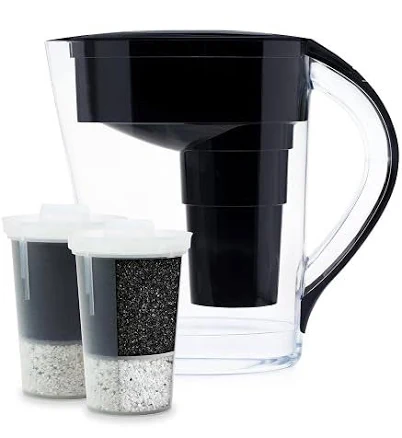
Santevia MINA Alkaline Water Filter Pitcher & Single Replacment Filter
Lower-concern design, but no PFAS transparency from Santevia; verify if you need certainty.
Water filter pitchers typically use plastic housings and activated carbon or mineral cartridges, neither of which inherently require PFAS. Santevia makes no PFAS claims and provides no third-party testing data.
We flunk more products than we pass. This one earned its grade. How we grade
Material
Plastic pitcher with activated carbon and mineral filtration cartridge
Brand disclosure
Brand is silent on PFAS
Lab data
No public lab test
What Santevia MINA Alkaline Water Filter is made of, ingredients and materials
The pitcher body is food-grade plastic (likely polypropylene or similar BPA-free resin based on category norms), which does not leach when holding cold or room-temperature water. The replaceable cartridge contains activated carbon (adsorbs chlorine, taste, odor) and mineral media (typically calcite or similar compounds for pH balancing, marketed as 'alkaline'). Neither component is heated during normal use, eliminating thermal leaching risk. The system does not use ion-exchange resins or membranes that typically require careful maintenance.
What’s concerning
No PFAS disclosure
No public statement from the brand about PFAS in this product.
Bacterial growth in cartridge if not replaced regularly
Activated carbon cartridges, once exhausted, become a substrate for biofilm and mold if left in use beyond recommended lifespan. Santevia provides replacement guidelines, but user non-compliance is the primary risk; not a manufacturing defect.
Cartridge mineral media composition unclear
Santevia does not publicly disclose the exact mineral additives (e.g., calcite source, any trace contaminants). Standard food-grade mineral media carry minimal risk, but lack of ingredient transparency prevents independent safety audit of this specific formulation.
Lead
Product claims 'lead filter' capacity, but Santevia does not publish NSF-certified test data showing removal rates. Activated carbon does adsorb some heavy metals, but actual performance for this pitcher is not independently documented in public records.
Source, ATSDR ↗What’s reassuring
Base material not linked to PFAS
The main material recorded for this product is not one associated with PFAS.
Plastic pitcher leachables if exposed to heat or sunlight
Food-grade polypropylene used in pitcher-filter bodies is stable at room temperature. No reports of leaching from Santevia MINA pitchers under normal use. Risk only if pitcher is left in direct sunlight for weeks or exposed to hot water storage, which is not intended use.
Plastic off-gassing from new pitcher (minor)
Food-grade plastics may emit low levels of odor or volatile compounds on first use, typical across all new pitcher filters. Not a safety concern; rinsing the pitcher and running water through the new cartridge before drinking resolves this within hours.
The full breakdown
The brand's record and disclosure
Santevia is a smaller, Canadian-based water filtration brand with no major recalls or safety violations documented in public databases. However, the brand provides no published transparency report on PFAS testing, manufacturing standards, or third-party certifications (NSF, WQA) for this specific pitcher model. Marketing emphasizes 'alkaline' benefits rather than safety data. Absence of disclosure does not confirm a problem, but limits independent verification of cartridge materials and pitcher manufacturing practices.
How it compares in its category
Pitcher filters (Brita, ZeroWater, Aqua, PUR) typically use similar activated-carbon-based cartridges and food-grade plastic housing; none pose inherent safety risks if used correctly. Santevia's mineral-additive approach is standard in the alkaline-pitcher segment. This product sits mid-range in transparency, it lacks NSF certification visible on packaging, but the basic design carries no documented hazard profile worse than major competitors. Price and feature claims (not safety) differentiate it.
If you buy it
Replace the cartridge every 2-3 months or per manufacturer guidance to prevent bacterial biofilm buildup in spent activated carbon (a known hygiene issue in all pitcher filters if neglected). Store the pitcher in a cool, dry place; do not expose the plastic housing to direct heat or sunlight for prolonged periods. If water tastes unusual or flow slows sharply, replace the cartridge immediately. Rinse the pitcher body with hot water monthly; do not run it through a dishwasher if the manufacturer advises against it.
What we don’t know
- Basis
- Model estimate, 72% confidence, not a lab result
- Lab test
- None on record for this exact product
- Brand statement
- Santevia has made none
Formulations change between production runs, so check the current label. How we grade.
Better-graded alternatives in Water Filters

Aquamira
Water Storage Treatment 2 oz Glass Bottles 60 gallons Purification
- glass bottles, sodium dichloroisocyanurate treatment chemical
- We found no PFAS statement from the brand
- Chemical overdose or misuse
5 hazards checked on this product. See all of them.

Big Berkey
Empty Housing with NO Filters Included
- Stainless steel housing and spigot
- We found no PFAS statement from the brand
- Bacterial growth and biofilm if filters not replaced
5 hazards checked on this product. See all of them.
LifeStraw
Home Glass Water Filter Pitcher
- Borosilicate glass pitcher, replaceable activated-carbon filter cartridge
- Bacterial growth in filter cartridge if unmaintained
5 hazards checked on this product. See all of them.
More water filters grades
How we score, every product runs through the same public 0-100 rubric based on materials, coatings, brand disclosure, lab findings, and recalls. See the full methodology → Spotted a mistake? Report an error.