Seventh Generation · Paper Napkins & Paper Towels
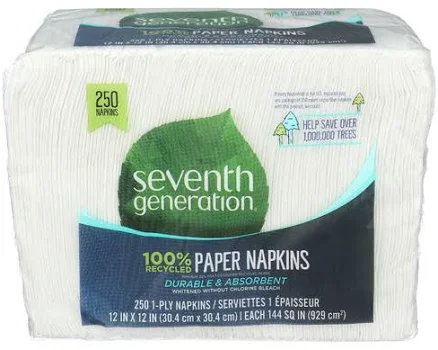
Seventh Generation 100% Recycled Napkins 1-Ply
Lower-concern choice. Plain paper napkins rarely require PFAS treatment.
Seventh Generation 100% recycled napkins are unbleached paper with no water-resistance or stain-guard claims. PFAS coatings are unlikely. No independent testing available.
We flunk more products than we pass. This one earned its grade. How we grade
Material
100% recycled paper (virgin fiber-free)
Lab data
No public lab test
You may also be interested in
Top-graded picks in the categories readers replace first, every one scored on the same rubric.

- polypropylene filter housing, carbon/sediment cartridge
- We found no PFAS statement from the brand
- Bacterial growth in spent cartridges
3 hazards checked on this product, all on its full breakdown.

Aquasure
Premier Series 75 GPD Under Sink Reverse Osmosis Water Filtration System
- RO membrane, carbon filters, stainless steel housing
- We found no PFAS statement from the brand
- Bacterial and microbial growth in housing and filters
4 hazards checked on this product, all on its full breakdown.

Avocado
Vegan Mattress
- organic cotton, natural latex, coconut coir, recycled steel coils
- The brand calls it PFAS-free, which we have not verified
- Heavy metals
2 hazards checked on this product, all on its full breakdown.
What Seventh Generation 100% Napkins 1-Ply is made of, ingredients and materials
This product is 100% post-consumer recycled paper with no virgin fiber content. Recycled paper napkins carry minimal chemical hazard because they rely on mechanical strength rather than coatings or chemical treatments. The 1-ply construction means thinner material but also simpler composition, no lamination, no water-resistant resins, no fluorochemicals needed for typical food contact. Recycled fiber may contain trace contaminants from prior uses, but FDA regulations require food-contact recycled paper to meet contamination limits.
What’s concerning
No PFAS disclosure
No public statement from the brand about PFAS in this product.
Category baseline
The starting point for this type of product, before anything specific to this product is counted.
Ink and dye migration from recycled fiber
Recycled paper can contain residual inks or pigments from prior uses. FDA regulations limit migration, but trace contamination is theoretically possible; risk is low for incidental food contact (napkins are not intended for extended contact with food moisture).
What’s reassuring
Base material not linked to PFAS
The main material recorded for this product is not one associated with PFAS.
Chlorine bleaching residues (dioxins, chlorine compounds)
Seventh Generation napkins are not advertised as bleached; recycled fiber is typically unbleached or minimally treated. No recalls or testing reports for dioxin contamination in this product.
Formaldehyde / VOCs
Single-ply napkins require minimal binding. No formaldehyde resins are standard in napkin production. No reports of formaldehyde off-gassing from this product.
Source, ATSDR ↗Microbial contamination (bacterial growth in storage)
Napkins are paper and do not require maintenance. If stored dry, mold and bacterial risk is minimal. Standard food-safety handling (cool, dry storage) prevents degradation.
Heavy metals
Product is plain white/natural recycled fiber with minimal printing. Seventh Generation does not use colored inks or decorative coatings on standard napkins. No heavy metal pigment concerns identified.
Source, FDA ↗How is this PFAS grade calculated?
The brand's record and disclosure
Seventh Generation publishes ingredient lists and material sourcing for most products and has maintained a public commitment to avoiding PFAS in food-contact items. The brand does not prominently disclose post-consumer recycling standards used (e.g., whether fiber meets FDA recycled-content rules), but no major recalls or safety issues are documented for this napkin line. Parent company Unilever's broader sustainability commitments provide some governance, though Seventh Generation operates with independent marketing claims.
How it compares in its category
Recycled-fiber napkins are less common than virgin-fiber or bleached alternatives. This product avoids chlorine bleaching concerns present in some white napkins and dodges PFAS water-resistance coatings used in premium or "quilted" napkins. Standard virgin-fiber napkins are cheaper and slightly stronger; eco-certified alternatives (e.g., FSC virgin) may have cleaner forestry provenance but higher cost. The 1-ply recycled option trades durability for material simplicity and environmental profile.
If you buy it
Store in a dry location; recycled paper is slightly more moisture-sensitive than virgin fiber and may degrade if exposed to high humidity. No heat risk (napkins are not cookware). These are single-use food contact items with no maintenance required. Disposal is standard compost or recycling; no special precautions needed. For spill-heavy use (oils, acidic foods), you may find 1-ply thinner than multi-ply alternatives, so purchasing frequency may be higher.
What is not known about PFAS in this product?
- Basis
- Model estimate, 78% confidence, not a lab result
- Lab test
- None on record for this exact product
- Brand statement
- Seventh Generation has made a specific claim
Formulations change between production runs, so check the current label. How we grade.
More paper napkins & paper towels grades
How we score, every product runs through the same public 0-100 rubric based on materials, coatings, brand disclosure, lab findings, and recalls. See the full methodology → Spotted a mistake? Report an error.