Bounty · Paper Napkins & Paper Towels
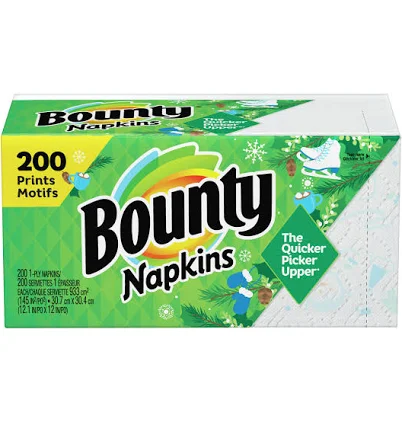
Bounty 12.1 in. x 12 in White 1-Ply Napkins
Skip if PFAS concerns matter. Bounty discloses no coating chemistry.
Bounty napkins are coated for grease resistance, a typical PFAS vector in food-contact paper. The brand makes no public claims or disclosures about coating composition.
The better-graded swap
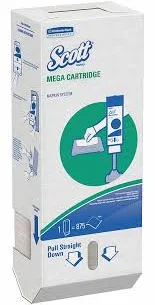
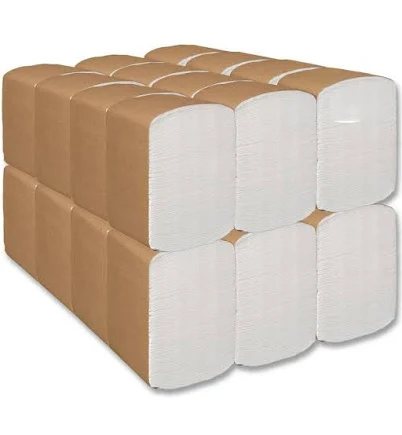
Scott
SCOTT Mega Cartridge Napkins,PK875, 6 PK
70/100 safety
Same rubric that flunked this product. The swap earned Good.
Still want this one anyway? Check the price on Amazon. We’d swap it.
Material
Virgin wood pulp with grease-resistant coating
Brand disclosure
Brand is silent on PFAS
Lab data
No public lab test
You may also be interested in
Top-graded picks in the categories readers replace first, every one scored on the same rubric.

- polypropylene filter housing, carbon/sediment cartridge
- We found no PFAS statement from the brand
- Bacterial growth in spent cartridges
3 hazards checked on this product, all on its full breakdown.

Aquasure
Premier Series 75 GPD Under Sink Reverse Osmosis Water Filtration System
- RO membrane, carbon filters, stainless steel housing
- We found no PFAS statement from the brand
- Bacterial and microbial growth in housing and filters
4 hazards checked on this product, all on its full breakdown.

Avocado
Vegan Mattress
- organic cotton, natural latex, coconut coir, recycled steel coils
- The brand calls it PFAS-free, which we have not verified
- Heavy metals
2 hazards checked on this product, all on its full breakdown.
What Bounty 12.1 in. x 12 1-Ply Napkins is made of, ingredients and materials
Bounty white napkins are virgin wood pulp (bleached cellulose fiber) with an applied grease-resistant coating. The coating chemistry is not publicly disclosed by Bounty, but grease-resistant treatments in paper products typically rely on fluorochemical or silicone-based compounds to repel oils and moisture. Single-ply construction means thinner material and faster breakdown, which reduces longevity but also means less material exposure over time.
What’s concerning
Category baseline
The starting point for this type of product, before anything specific to this product is counted.
No PFAS disclosure
No public statement from the brand about PFAS in this product.
Waterproof / stain-resistant treatment
Water-repellent coating treatments have historically used PFAS.
PFAS
Grease-resistant paper napkin coatings commonly use per- or polyfluoroalkyl substances; Bounty does not specify its coating, so presence cannot be ruled out and should be assumed probable given industry practice.
Source, ATSDR ↗Thermal decomposition of coating at high heat
If napkins are exposed to sustained high temperatures (e.g., placed near flame or in direct oven use), unidentified coating compounds could theoretically degrade; risk is low under normal use but not zero.
What’s reassuring
Chlorine bleaching residues
Virgin white paper napkins are typically chlorine-bleached; however, no documented health concern exists for residual chlorine in food-contact paper napkins at consumer use levels.
Ink or dye migration
White napkins carry minimal printing; no heavy metal inks or azo dye concerns are on record for Bounty napkins, and paper napkins are not primarily food-contact items in problematic scenarios.
Microplastic shedding
Paper napkins do not generate microplastics. Pulp fibers are biodegradable cellulose, though coating particles (if synthetic) could theoretically shed in small amounts; no monitoring data exists for this product.
How is this PFAS grade calculated?
The brand's record and disclosure
Bounty (Procter & Gamble subsidiary) does not publicly disclose the chemical composition of its grease-resistant coatings, nor has it published commitments to PFAS phase-out in paper products. The brand has faced no major safety recalls specific to napkins, and no heavy metals or formaldehyde concerns have been documented in paper napkin products from this manufacturer. Industry-wide, P&G has made limited public statements on fluorochemical use in paper goods.
How it compares in its category
Bounty napkins are mid-market standard in the disposable paper category. Competitors like Viva and Scott offer similar single-ply options with undisclosed coatings. Chlorine-free and uncoated paper napkin brands (e.g., Seventh Generation, If You Care) exist but are less common and more expensive. Most conventional napkins carry the same PFAS disclosure gap; Bounty is neither ahead nor behind on transparency.
If you buy it
Use napkins for their intended purpose, dry wiping and light grease absorption. Do not heat or microwave napkins, as high temperatures can theoretically mobilize coating compounds (though no incidents are documented). Replace boxes if napkins show mold growth (indicates storage in high humidity), but standard shelf life is indefinite if kept dry. If PFAS avoidance is a priority, seek uncoated or explicitly PFAS-free certified alternatives.
What is not known about PFAS in this product?
- Basis
- Model estimate, 45% confidence, not a lab result
- Lab test
- None on record for this exact product
- Brand statement
- Bounty has made none
Formulations change between production runs, so check the current label. How we grade.
What are the PFAS-free alternatives to Bounty 12.1 in. x 12 in White 1-Ply Napkins?
- 100% recycled paper
- Trace metals and contaminants from recycled feedstock
2 hazards checked on this product, all on its full breakdown.
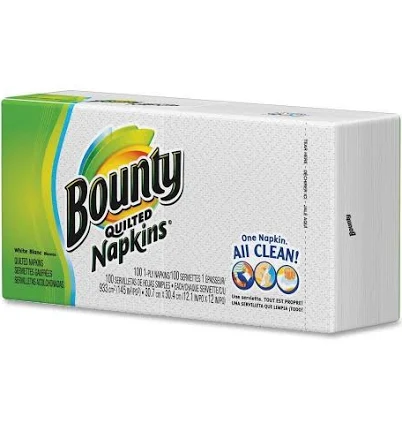
- Virgin wood pulp, 1-ply, no waterproofing layer
- We found no PFAS statement from the brand
- Starting grade for this product type
- Virgin wood pulp, 1-ply paper
- We found no PFAS statement from the brand
- Bleach residues and chlorinated byproducts
2 hazards checked on this product, all on its full breakdown.
More paper napkins & paper towels grades
How we score, every product runs through the same public 0-100 rubric based on materials, coatings, brand disclosure, lab findings, and recalls. See the full methodology → Spotted a mistake? Report an error.