Sierra · Camping Tents & Tarps
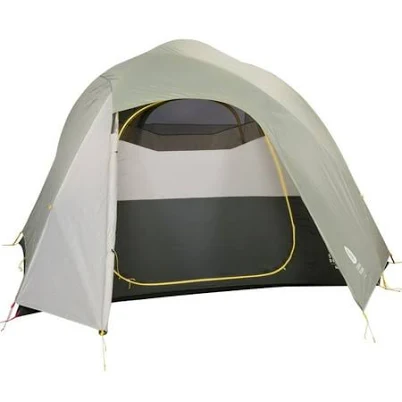
Sierra Designs Nomad 6-Person Tent
Skip until Sierra Designs discloses waterproof treatment chemistry.
This tent uses water-repellent coating-coated polyester fabric, a category historically treated with PFAS-based water repellents. Sierra provides no public disclosure of which water-repellent coating chemistry is used.
Still want this one anyway? Check the price on Amazon. We’d swap it.
Material
Polyester fabric with water-repellent coating (water-repellent coating) treatment
Brand disclosure
Brand is silent on PFAS
Lab data
No public lab test
You may also be interested in
Top-graded picks in the categories readers replace first, every one scored on the same rubric.

Aqua Pure
3M Aqua-Pure AP802B Whole House Filter Housing
- polypropylene filter housing, carbon/sediment cartridge
- We found no PFAS statement from the brand
- Bacterial growth in spent cartridges
3 hazards checked on this product. See all of them.

Aquasure
Premier Series 75 GPD Under Sink Reverse Osmosis Water Filtration System
- RO membrane, carbon filters, stainless steel housing
- We found no PFAS statement from the brand
- Bacterial and microbial growth in housing and filters
4 hazards checked on this product. See all of them.

Avocado
Vegan Mattress
- organic cotton, natural latex, coconut coir, recycled steel coils
- The brand calls it PFAS-free, which we have not verified
- Heavy metals
2 hazards checked on this product. See all of them.
What Sierra Designs Nomad 6-Person Tent is made of, ingredients and materials
The Sierra Designs Nomad 6 uses polyester fabric treated with a water-repellent coating (water-repellent coating) finish to shed rain and maintain breathability. water-repellent coating treatments are typically applied as a topical coating that wears off over time and must be reapplied. The specific chemistry of Sierra's water-repellent coating is not publicly disclosed; historically, many major outdoor brands used PFAS-based fluorinated treatments, though non-fluorinated alternatives exist. Polyester itself is not a material linked to PFAS; the hazard lies in the water-repellent coating chemistry and its degradation pathway.
What’s concerning
Category baseline
The starting point for this type of product, before anything specific to this product is counted.
No PFAS disclosure
No public statement from the brand about PFAS in this product.
Waterproof / stain-resistant treatment
Water-repellent coating treatments have historically used PFAS.
PFAS
Sierra has not disclosed water-repellent coating chemistry; historical industry reliance on PFAS Teflon-family coating means legacy formulations are common in this price/brand segment. PFAS accumulates in body and environment; rated separately as 20/100 per your brief.
Source, ATSDR ↗Volatile organic compounds (VOCs) from water-repellent coating off-gassing
New polyester tents with applied water-repellent coating finishes can emit organic vapors, especially when heated by sun in a closed tent interior. Ventilation mitigates this; risk is highest during initial 24-48 hours and in hot, confined use (e.g., four-season winter camping in sealed environment).
Coating degradation and microparticle shedding
As water-repellent coating breaks down over years of UV exposure and washing, microscopic particles may shed into the environment or be inhaled during setup/takedown. This is a minor pathway for unintended exposure; regular gentle care minimizes shedding rate.
What’s reassuring
Formaldehyde / VOCs
No established recalls or reports of formaldehyde-resin use in Sierra Designs tent polyester. Standard polyester fabric does not require formaldehyde; any residual levels from manufacturing are typically negligible and off-gas minimally at ambient outdoor temperatures.
Source, ATSDR ↗Heavy metals
Polyester staple fiber does not inherently contain antimony or heavy metals unless deliberately dyed with metal-based pigments. Sierra's standard colorways (gray, tan, green) typically use minimal heavy-metal pigments; no recalls or warnings on record for this tent line.
Source, FDA ↗The full breakdown
The brand's record and disclosure
Sierra Designs has not published a public statement on PFAS use or commitment to phasing out fluorinated water-repellent coating treatments as of available records. The brand does not appear to hold third-party certifications (e.g., Bluesign, GOTS) that would restrict hazardous chemicals. This silence is notable given that competitors like Big Agnes and MSR have begun disclosing or transitioning away from PFAS-based water treatments. Without active communication, consumers cannot verify whether this tent uses legacy PFAS formulations or newer alternatives.
How it compares in its category
Most mainstream six-person tents in the sub-$400 range use similar polyester-plus-water-repellent coating construction; price and design differentiate more than material safety. Brands with stronger transparency (e.g., MSR, Nemo) are beginning to label water-repellent coating treatment type or commit to non-fluorinated options, making them preferable if available at comparable cost. Budget tents often lack any disclosed environmental or chemical stance, so Sierra's silence is typical for the segment, not exceptional. High-end ultralight tents sometimes use alternative water-resistant fabrics (ripstop nylon with silicone) that avoid water-repellent coating altogether.
If you buy it
Store the tent dry in a cool, well-ventilated space to prevent mold and off-gassing of water-repellent coating residues. When reapplying water-repellent coating treatment after 1-2 years of use, choose non-fluorinated products (silicone or paraffin-based) to avoid reintroducing PFAS. Do not machine wash; hand rinse with cool water and air dry to preserve the coating. If you notice the tent soaking through rather than beading water, that signals water-repellent coating loss and is your trigger to retreat or consider replacement.
What we don’t know
- Basis
- Model estimate, 35% confidence, not a lab result
- Lab test
- None on record for this exact product
- Brand statement
- Sierra has made none
Formulations change between production runs, so check the current label. How we grade.
More camping tents & tarps grades
How we score, every product runs through the same public 0-100 rubric based on materials, coatings, brand disclosure, lab findings, and recalls. See the full methodology → Spotted a mistake? Report an error.