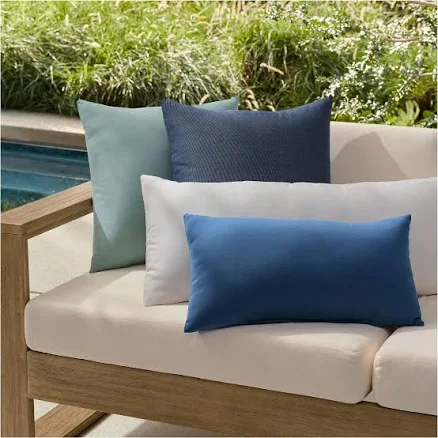
West Elm Sunbrella Indoor/Outdoor Canvas Pillow
Avoid until Sunbrella or West Elm confirms PFAS treatment status.
Sunbrella's performance outdoor fabrics traditionally use fluorocarbon-based repellents containing PFAS. West Elm does not clarify whether this pillow uses old or new formulations.
The better-graded swap
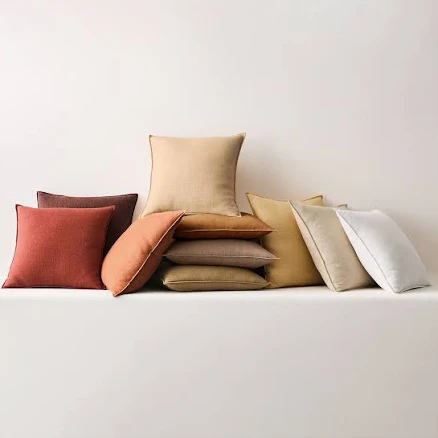
West Elm
West Elm Classic Linen Pillow Cover
75/100 safety
Same rubric that flunked this product. The swap earned Excellent.
Still want this one anyway? Check the price on Amazon. We’d swap it.
Material
Sunbrella acrylic canvas with water-repellent coating finish
Brand disclosure
Brand is silent on PFAS
Lab data
No public lab test
You may also be interested in
Top-graded picks in the categories readers replace first, every one scored on the same rubric.

- polypropylene filter housing, carbon/sediment cartridge
- We found no PFAS statement from the brand
- Bacterial growth in spent cartridges
3 hazards checked on this product, all on its full breakdown.

Aquasure
Premier Series 75 GPD Under Sink Reverse Osmosis Water Filtration System
- RO membrane, carbon filters, stainless steel housing
- We found no PFAS statement from the brand
- Bacterial and microbial growth in housing and filters
4 hazards checked on this product, all on its full breakdown.

Avocado
Vegan Mattress
- organic cotton, natural latex, coconut coir, recycled steel coils
- The brand calls it PFAS-free, which we have not verified
- Heavy metals
2 hazards checked on this product, all on its full breakdown.
What West Elm Sunbrella Canvas Pillow is made of, ingredients and materials
Sunbrella acrylic canvas is a solution-dyed acrylic fiber blend, meaning colorants are locked into the fiber during production rather than applied as topical dyes, reducing leaching risk. The water-repellent coating (water-repellent coating) finish is the concern, this class of treatments historically relies on PFAS chemistry to repel water and stains, though some newer formulations use non-fluorinated alternatives. Sunbrella does not publicly disclose which chemistry their water-repellent coating uses, leaving the fluorochemical burden unknown. Acrylic fiber itself is not inherently hazardous, but the finishing process determines actual exposure risk.
What’s concerning
Category baseline
The starting point for this type of product, before anything specific to this product is counted.
No PFAS disclosure
No public statement from the brand about PFAS in this product.
Waterproof / stain-resistant treatment
Water-repellent coating treatments have historically used PFAS.
water-repellent coating finish (fluorochemical or unknown composition)
Sunbrella acrylic canvas typically uses a water-repellent coating finish for stain and water resistance. Sunbrella does not publicly specify whether this finish contains PFAS or newer non-fluorinated alternatives. Off-gassing risk is low under normal use but increases with heat, washing, or wear.
Coating degradation and secondary leaching
As the water-repellent coating finish breaks down over time (accelerated by washing, UV exposure, and heat), residual finish chemistry may mobilize and leach into the air or contact skin. The risk depends on the specific water-repellent coating formulation, which Sunbrella has not disclosed.
What’s reassuring
Azo dyes
Solution-dyed acrylic fibers like Sunbrella's use colorants integrated into the fiber during production, which historically sidesteps many topical azo dye restrictions. No recalls or public testing data suggest azo dye contamination in Sunbrella products, but the brand does not independently certify dye safety.
Antimony in acrylic fiber
Acrylic fiber can contain antimony as a catalyst residue in polymerization, but levels in finished textiles are typically negligible. Sunbrella does not disclose antimony testing; contamination is not documented in their products but represents an unknown in unvetted acrylic supplies.
Formaldehyde / VOCs
While acrylic fiber itself does not require formaldehyde-based resins for structure, some fabric finishing processes use formaldehyde releasers for wrinkle resistance or stiffness. No public data confirms this in Sunbrella products, but the brand's lack of certification leaves this unverified.
Source, ATSDR ↗How is this PFAS grade calculated?
The brand's record and disclosure
Sunbrella (owned by Glen Raven) has not made public commitments to PFAS-free or phased-out water-repellent coating treatments, nor do they provide third-party certifications like Oeko-Tex or GOTS that would verify low-chemical finishing. West Elm carries Sunbrella products but does not add independent safety screening beyond the supplier's claims. Neither brand has faced major recalls for chemical off-gassing or toxicity, but the absence of transparency on fluorochemical use is itself a red flag in an industry where competitors increasingly disclose or eliminate PFAS.
How it compares in its category
Indoor/outdoor canvas pillows vary widely, some use solution-dyed acrylic (like Sunbrella), others use polyester or cotton. Sunbrella's acrylic is generally more durable and fade-resistant than untreated fabrics, and solution-dyeing reduces topical chemical loads. However, many competitors now offer outdoor pillows with certified low-chemical or PFAS-free water-repellent coating finishes (e.g., those with Bluesign or OEKO-TEX certification). Sunbrella's silence on water-repellent coating chemistry puts it in a middle position, not lower concern than many alternatives, but representative of common market practices.
If you buy it
Use outdoors or in well-ventilated spaces; avoid indoor bedrooms or closed sunrooms where off-gassing could accumulate. Do not machine wash in hot water or dry clean; hand rinse with cool water and mild soap, as agitation and heat can degrade the water-repellent coating finish and potentially mobilize residual chemicals. Inspect seams and backing annually; if mildew, cracking, or odor develops, discontinue use. Consider replacing after 5-7 years or when visible wear appears, as coating degradation may increase leaching of any residual finish chemistry.
What is not known about PFAS in this product?
- Basis
- Model estimate, 45% confidence, not a lab result
- Lab test
- None on record for this exact product
- Brand statement
- Sunbrella has made none
Formulations change between production runs, so check the current label. How we grade.
What are the PFAS-free alternatives to West Elm Sunbrella Indoor/Outdoor Canvas Pillow?
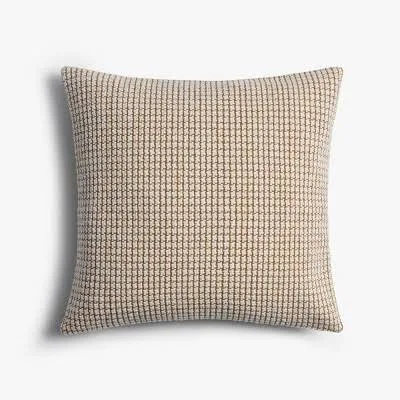
- 100% cotton cover
- We found no PFAS statement from the brand
- Azo dyes and residual dye toxins
3 hazards checked on this product, all on its full breakdown.
- 100% linen with no stated finish or treatment
- Residual processing chemicals (bleach, dyes, finishes)
2 hazards checked on this product, all on its full breakdown.
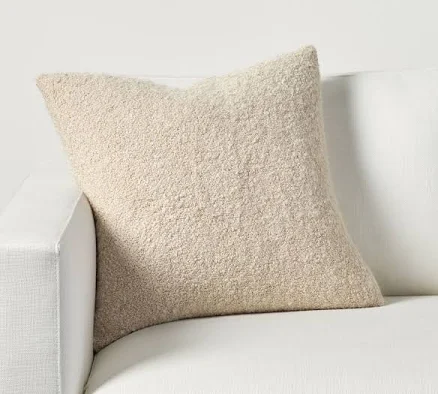
- Boucle textile (wool/polyester blend, uncoated)
- Azo dyes and synthetic colorants
2 hazards checked on this product, all on its full breakdown.
More throw pillows grades
How we score, every product runs through the same public 0-100 rubric based on materials, coatings, brand disclosure, lab findings, and recalls. See the full methodology → Spotted a mistake? Report an error.