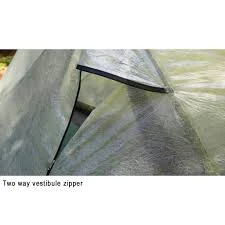
Tarptent · Camping Tents & Tarps
TARPTENT Rainbow Li
Avoid until Tarptent discloses or certifies their water-repellent coating treatment; silence on PFAS for a waterproof shelter raises concern.
This lightweight backpacking shelter has ripstop nylon treated with water-repellent coating for water resistance. Tarptent shares no public information about PFAS in their treatment and holds no third-party PFAS-free certification.
Still want this one anyway? Check the price on Amazon. We’d swap it.
Material
Ripstop nylon with water-repellent coating (water-repellent coating) coating
Brand disclosure
Brand is silent on PFAS
Lab data
No public lab test
What TARPTENT Rainbow Li is made of, ingredients and materials
The Rainbow Li uses ripstop nylon fabric, a lightweight polyamide weave chosen for tear resistance and strength-to-weight ratio in backpacking tents. The critical component is the water-repellent coating (water-repellent coating) coating applied to the nylon surface. water-repellent coating treatments historically relied on PFAS-based chemistry such as C8 fluorocarbons, though some manufacturers have migrated to lower-fluorine or non-fluorinated alternatives. Tarptent has not publicly disclosed which chemistry they use, making it impossible to assess fluorinated contamination risk from this product.
What’s concerning
Category baseline
The starting point for this type of product, before anything specific to this product is counted.
No PFAS disclosure
No public statement from the brand about PFAS in this product.
Waterproof / stain-resistant treatment
Water-repellent coating treatments have historically used PFAS.
PFAS
Ripstop nylon tents almost universally use fluorinated water-repellent coating; Tarptent's silence on their supplier and chemistry, combined with no certified PFAS-free claims, suggests conventional C6 or C8 fluorocarbon treatment. PFAS migrates slowly into skin and dust; graded separately per your framework.
Source, ATSDR ↗Nylon volatiles and off-gassing (residual monomers, oligomers)
New ripstop nylon fabric can off-gas caprolactam and other nylon polymerization byproducts, especially in warm or humid conditions. Ventilation during storage and early use reduces inhalation; levels are typically low for backpacking use (outdoor, well-aired) but notable for car storage or shared indoor sleeping.
Coating degradation and microparticle shedding
As water-repellent coating wears, nylon fibers and coating fragments can shed into the tent interior or onto skin and gear during packed storage. Risk is cumulative over 5-10 years of use; no evidence of toxic degradation products, but mechanical shedding of aged coating is documented in polyamide textiles.
What’s reassuring
Formaldehyde / VOCs
No reports of formaldehyde-based resins or problematic azo dyes in Tarptent fabrics; ripstop nylon for outdoor gear is typically disperse-dyed and does not require high formaldehyde fixatives. No product-specific concerns on record.
Source, ATSDR ↗Heavy metals
Some water-repellent coating formulations historically included aluminum salts as processing aids. No evidence Tarptent uses aluminum-based water-repellent coating, and ripstop nylon coatings are not a typical vector for heavy metal exposure. Unconfirmed due to lack of transparency.
Source, FDA ↗The full breakdown
The brand's record and disclosure
Tarptent is a cottage manufacturer focused on lightweight shelter design but maintains minimal public transparency on material sourcing and chemical treatments. No PFAS-related statements, certifications (e.g., bluesign, GOTS, OEKO-TEX), or supplier commitments are documented on their website or marketing. The absence of any disclosure statement about water-repellent coating chemistry on a waterproof product is notable; competitors in the ultralight space (e.g., Hyperlite, some cottage brands) have begun specifying PFAS-free coatings or providing transparency.
How it compares in its category
Ultralight backpacking tents commonly use ripstop nylon with water-repellent coating coatings; most mass-market brands (MSR, Big Agnes, REI Co-op) also do not volunteer full water-repellent coating chemistry but operate at larger scales with occasional third-party audits. Tarptent's silence is less surprising for a small maker but still a gap, especially as PFAS awareness has grown. Alternatives using polyester fabric or water-repellent coating formulations not based on PFAS chemistry (Zpacks, some UK cottage makers) exist but are often comparable or higher in price.
If you buy it
Store the tent dry and well-ventilated indoors to minimize off-gassing of any residual chemicals during cure-out. Avoid prolonged skin contact with unwashed new fabric, and wash your hands after handling the tent during the first few uses. Reapply water-repellent coating treatment when water no longer beads on the fabric (typically 1-2 seasons of use); if you re-treat, source a PFAS-free water-repellent coating product explicitly and follow application instructions to minimize inhalation exposure. Do not machine-wash or tumble-dry, as heat and agitation degrade the coating and may aerosolize chemicals.
What we don’t know
- Basis
- Model estimate, 45% confidence, not a lab result
- Lab test
- None on record for this exact product
- Brand statement
- Tarptent has made none
Formulations change between production runs, so check the current label. How we grade.
More camping tents & tarps grades
How we score, every product runs through the same public 0-100 rubric based on materials, coatings, brand disclosure, lab findings, and recalls. See the full methodology → Spotted a mistake? Report an error.