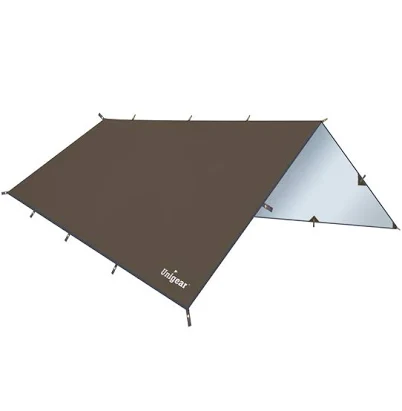
Tarptent · Camping Tents & Tarps
Unigear Waterproof Camping Tarp Tents
Skip until coating composition is disclosed.
This tarp tent uses polyester or nylon with an undisclosed water-repellent coating. Waterproof outdoor textiles commonly used PFAS-based treatments historically.
Still want this one anyway? Check the price on Amazon. We’d swap it.
Material
Polyester/nylon tarp with water-repellent coating (water-repellent coating) coating, type unspecified
Brand disclosure
Brand is silent on PFAS
Lab data
No public lab test
What Unigear Waterproof Camping Tarp Tents is made of, ingredients and materials
Unigear tarps use polyester and nylon as base fabrics, both synthetics stable under normal outdoor conditions. The critical component is the water-repellent coating (water-repellent coating) coating, which Tarptent does not publicly specify as fluorine-free or PFAS-based. water-repellent coating formulations in the camping industry historically relied on PFAS chemistries (perfluorooctane-based treatments), though some manufacturers have transitioned to fluorine-free alternatives. Without explicit disclosure, the coating's chemistry remains a key unknown.
What’s concerning
Category baseline
The starting point for this type of product, before anything specific to this product is counted.
No PFAS disclosure
No public statement from the brand about PFAS in this product.
Waterproof / stain-resistant treatment
Water-repellent coating treatments have historically used PFAS.
PFAS
Unspecified water-repellent treatment likely contains fluorine-based or PFAS chemistry given industry norms for this price tier and product type. No public disclosure or PFAS-free certification available. Exposure risk is low in normal outdoor use but unknown in manufacturing/transport environments.
Source, ATSDR ↗Coating degradation and microplastic shedding
Budget-tier water-repellent coating coatings degrade faster than premium equivalents when exposed to UV, heat, and abrasion. As coatings wear, small particles may shed; whether these constitute microplastics or coating breakdown depends on water-repellent coating type. Risk increases with age and heavy use.
Mold and bacterial growth if wet-stored
Polyester and nylon do not inherently support mold, but trapped moisture can. If tarps are stored damp or in humid conditions, mold and mildew will colonize; inhalation of spores poses respiratory risk, especially for sensitive individuals. Drying and ventilation before storage prevent this.
What’s reassuring
Polyester off-gassing and VOC release
Polyester and nylon base fabrics are stable under normal outdoor conditions and do not off-gas formaldehyde or significant VOCs when new. Risk is minimal unless tarp is stored in very hot, enclosed spaces (e.g., car trunk in summer), where volatile organic compounds may be slightly elevated.
Azo dyes in polyester fabric
No specific contamination reports exist for Unigear tarps. Polyester fabrics can be dyed with azo colorants, which degrade into aromatic amines under certain conditions (friction, sweat, heat). Risk is low in outdoor use but unverified by third-party testing for this brand.
The full breakdown
The brand's record and disclosure
Tarptent (the manufacturer of Unigear products) maintains minimal public safety documentation on material certifications, PFAS content, or water-repellent coating treatment composition. No formal recalls or health incidents are on record for this product line. The brand does not advertise PFAS-free status or third-party material certifications (GOTS, Oeko-Tex, bluesign), which is typical for lower-cost outdoor gear but suggests limited transparency compared to premium competitors. Direct inquiry to the manufacturer about water-repellent coating type would be the only way to clarify coating composition.
How it compares in its category
Unigear tarps occupy the budget-to-mid-range segment of the camping tarp market. Competitors using explicitly PFAS-free or PFC-free water-repellent coating treatments (e.g., some Rab, MSR, and Zpacks offerings) cost 20-50 percent more but offer clearer hazard profiles. Generic polyester tarps without premium coatings avoid water-repellent coating hazards entirely but sacrifice water repellence durability. Unigear's specification gap (undisclosed coating) places it in a middle zone, affordable but with unresolved environmental and health chemistry.
If you buy it
Use the tarp at ground level or as an overhead shelter; avoid direct skin contact with seams and coatings, especially when wet, as coating transfer is possible in early use. Do not machine wash or expose to high heat (above 140°F / 60°C), as this can degrade polyester and release coating components. Store dry and well-ventilated to prevent mold; inspect annually for coating wear or delamination, which indicates replacement need. If you have concerns about PFAS or other coating chemicals, contact the manufacturer for explicit water-repellent coating treatment information before purchase.
What we don’t know
- Basis
- Model estimate, 42% confidence, not a lab result
- Lab test
- None on record for this exact product
- Brand statement
- Tarptent has made none
Formulations change between production runs, so check the current label. How we grade.
More camping tents & tarps grades
How we score, every product runs through the same public 0-100 rubric based on materials, coatings, brand disclosure, lab findings, and recalls. See the full methodology → Spotted a mistake? Report an error.