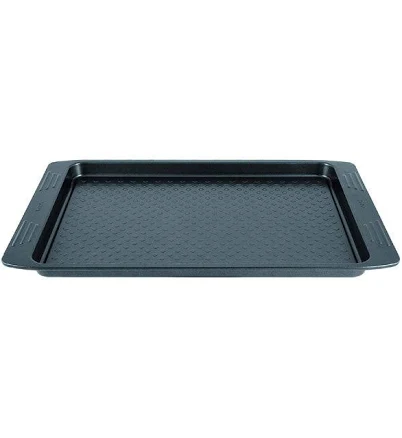
Tefal, Easy Grip Medium Baking Tray 26×36, Is It Non-Toxic?
Avoid until Tefal confirms the coating is PFAS-free.
Tefal won't reveal what's in this tray's nonstick coating or whether it contains PFAS. Older nonstick baking trays often relied on Teflon-type coating or PFOA.
The better-graded swap

Caraway
Caraway Nonstick Ceramic Large Baking Sheet
90/100 safety
Same rubric that flunked this product. The swap earned Excellent.
Still want this one anyway? Check the price on Amazon. We’d swap it.
Material
Steel with unspecified nonstick coating
Brand disclosure
Brand is silent on PFAS
Lab data
No public lab test
You may also be interested in
Top-graded picks in the categories readers replace first, every one scored on the same rubric.

- polypropylene filter housing, carbon/sediment cartridge
- We found no PFAS statement from the brand
- Bacterial growth in spent cartridges
3 hazards checked on this product, all on its full breakdown.

Aquasure
Premier Series 75 GPD Under Sink Reverse Osmosis Water Filtration System
- RO membrane, carbon filters, stainless steel housing
- We found no PFAS statement from the brand
- Bacterial and microbial growth in housing and filters
4 hazards checked on this product, all on its full breakdown.

Avocado
Vegan Mattress
- organic cotton, natural latex, coconut coir, recycled steel coils
- The brand calls it PFAS-free, which we have not verified
- Heavy metals
2 hazards checked on this product, all on its full breakdown.
Is Tefal, Easy Grip Medium Baking Tray 26×36 non-toxic? What it is made of
This tray is steel substrate with an unnamed nonstick coating. Tefal does not publicly specify whether the coating is Teflon-type coating-based (traditional Teflon), ceramic, silicone, or another polymer. This matters because Teflon-type coating coatings can release perfluorinated compounds (PFAS) and fumes above 500°F, while ceramic or silicone alternatives avoid this risk. Without material transparency from Tefal, the actual hazard profile cannot be confirmed.
What’s concerning
Category baseline
The starting point for this type of product, before anything specific to this product is counted.
No PFAS disclosure
No public statement from the brand about PFAS in this product.
Non-stick, chemistry undisclosed
Marketed as non-stick without stating the coating chemistry.
Teflon-type coating degradation and fume release
If coating is Teflon-type coating-based, heating above 500°F or damage to the surface can release fluorinated gases. Standard baking (350-400°F) poses minimal risk, but broiler use or overheating could trigger fume inhalation, especially in birds (which are highly sensitive to Teflon-type coating fumes).
Coating adhesion loss over time
User reports and product reviews on Tefal bakeware indicate nonstick coating can flake or wear after 1-3 years with regular use, particularly at edges. Visible coating loss signals replacement is needed to avoid ingestion of coating particles.
Steel substrate corrosion if coating fails
Once nonstick coating is compromised, bare steel may oxidize or rust if exposed to moisture and not promptly dried. Rust particles are not acutely toxic but indicate the tray has reached end of life.
PFAS
Tefal's silence on coating type is itself a red flag in a category where competitors increasingly disclose Teflon-type coating-free or PFOA-free formulations. This absence of disclosure suggests either legacy Teflon-type coating use or reluctance to market a newer coating formula, neither of which builds consumer confidence.
Source, ATSDR ↗What’s reassuring
Metal leaching from unspecified coating chemistry
Tefal uses approved food-contact materials in EU and North America, so heavy metal migration (lead, cadmium) is unlikely. However, without material specs, no independent verification is possible for this specific product line.
How is this PFAS grade calculated?
The brand's record and disclosure
Tefal (Group SEB subsidiary) has not made public commitments to PFAS-free cookware or provided independent certification of coating composition for this model. The brand maintains a general cookware safety page but does not disclose nonstick chemistry by product line. This silence is notable given industry-wide scrutiny of Teflon-type coating and growing PFAS regulations in EU and North America, where Tefal operates.
How it compares in its category
Most mid-range steel baking trays either use Teflon-type coating nonstick (Tefal's traditional approach), ceramic coatings (GreenPan, Our Place), or uncoated steel (bare or seasoned). Tefal's lack of specification puts this tray at a disadvantage compared to competitors who explicitly market PFAS-free or ceramic options. Budget bakeware often accepts this trade-off; premium brands typically disclose or certify coating type.
If you buy it
Use oven temperatures below 400°F to minimize any potential fume release if coating is Teflon-type coating-based. Avoid preheating empty trays or using under broilers. Do not scratch or damage the coating during storage or use. Hand wash only; dishwasher may accelerate coating wear. Contact Tefal directly and request written confirmation of nonstick coating type and PFAS absence before purchase if this is a concern for your household.
What is not known about PFAS in this product?
- Basis
- Model estimate, 45% confidence, not a lab result
- Lab test
- None on record for this exact product
- Brand statement
- Tefal has made none
Formulations change between production runs, so check the current label. How we grade.
What are the PFAS-free alternatives to Tefal, Easy Grip Medium Baking Tray 26×36?
- ceramic nonstick coating
- A third party reports verifying it as PFAS-free
- Ceramic coating degradation over time
- ceramic nonstick coating
- A third party reports verifying it as PFAS-free
- Coating degradation and durability
2 hazards checked on this product, all on its full breakdown.
- ceramic nonstick coating
- The brand calls it PFAS-free, which we have not verified
- Ceramic coating degradation and particle shedding
3 hazards checked on this product, all on its full breakdown.
More bakeware grades
How we score, every product runs through the same public 0-100 rubric based on materials, coatings, brand disclosure, lab findings, and recalls. See the full methodology → Spotted a mistake? Report an error.