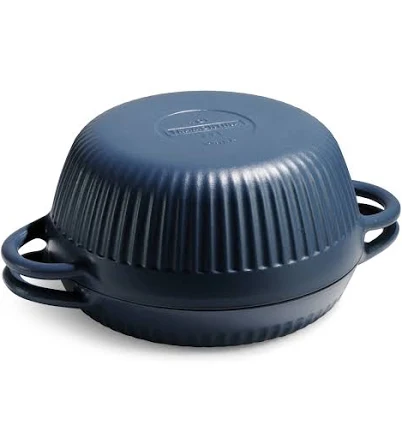
Tramontina 4 QT Enameled Cast Iron Dutch Oven, Is It Non-Toxic?
Lower concern; traditional enameled cast iron with no known PFAS risks, but no public testing.
Vitreous enamel (glass-like) fused to cast iron, a construction without Teflon-family coating. Tramontina doesn't publish PFAS claims, but the product design itself avoids nonstick risk.
Still want this one anyway? Check the price on Amazon. We’d swap it.
Material
enameled cast iron (vitreous enamel coating over cast iron)
Lab data
No public lab test
You may also be interested in
Top-graded picks in the categories readers replace first, every one scored on the same rubric.

- polypropylene filter housing, carbon/sediment cartridge
- We found no PFAS statement from the brand
- Bacterial growth in spent cartridges
3 hazards checked on this product, all on its full breakdown.

Aquasure
Premier Series 75 GPD Under Sink Reverse Osmosis Water Filtration System
- RO membrane, carbon filters, stainless steel housing
- We found no PFAS statement from the brand
- Bacterial and microbial growth in housing and filters
4 hazards checked on this product, all on its full breakdown.

Avocado
Vegan Mattress
- organic cotton, natural latex, coconut coir, recycled steel coils
- The brand calls it PFAS-free, which we have not verified
- Heavy metals
2 hazards checked on this product, all on its full breakdown.
Is Tramontina 4 QT Enameled Iron Dutch Oven non-toxic? What it is made of
Tramontina's 4 QT Dutch oven uses vitreous enamel (silica-based glass fused to cast iron at high temperature) as its cooking surface. Once fully cured and intact, this enamel creates an inert barrier between cast iron and food, eliminating direct iron leaching concerns. The enamel is non-porous when undamaged, meaning it does not degrade chemically during normal cooking and does not release volatile compounds like Teflon-type coating cookware can. Cast iron itself is benign for food contact; the enamel chemistry is the only consideration.
What’s concerning
Category baseline
The starting point for this type of product, before anything specific to this product is counted.
No PFAS disclosure
No public statement from the brand about PFAS in this product.
Enamel coating degradation and chipping
Tramontina's enamel is known to chip more readily than premium brands when subject to impacts, thermal shock, or metal utensil use. Chipped enamel exposes bare cast iron, which will rust; this is a durability and rust-risk issue rather than a direct toxicity hazard, but it can compromise the pot's protective barrier over time.
Thermal shock and enamel fracture
Subjecting a hot enameled Dutch oven to rapid cooling (e.g., immersing in cold water immediately after cooking) can cause the enamel to crack or spall due to differential thermal expansion. This is a mechanical failure mode rather than a chemical hazard, but it accelerates coating loss and rust exposure.
What’s reassuring
Base material not linked to PFAS
The main material recorded for this product is not one associated with PFAS.
Lead
No lead or cadmium contamination has been documented in Tramontina enameled cast iron cookware in published testing or recalls. Vitreous enamel formulations typically do not include these metals, but the brand does not publicly certify lead-free or provide heavy metal test reports.
Source, ATSDR ↗Aluminum leaching
Cast iron Dutch ovens are not aluminum products, so aluminum leaching is not relevant to this cookware type.
Teflon-type coating/nonstick fume risk
Enameled cast iron does not use Teflon-type coating or nonstick coatings; it relies on enamel glaze, so Teflon-type coating fume hazards do not apply.
How is this PFAS grade calculated?
The brand's record and disclosure
Tramontina (Brazilian cookware manufacturer, widely distributed in North America) does not publicly disclose detailed ingredient lists or third-party testing results for its enamel formulations. No major recalls or safety warnings specific to this Dutch oven line are on record. The brand maintains a budget-to-mid-market position and does not market on safety certifications or toxicology transparency, which is typical for cast iron cookware manufacturers in this price tier. No established controversies regarding lead, cadmium, or other coating contaminants have been documented for this product line.
How it compares in its category
Tramontina enameled cast iron sits at the value end of the Dutch oven market, competing against Le Creuset (premium, higher enamel quality assurance) and Staub (similar price-to-quality ratio). All three use vitreous enamel over cast iron, so the fundamental safety profile is comparable. Tramontina's enamel is thinner and somewhat more prone to chipping with rough use, which affects longevity and rust risk rather than toxicity. No systematic testing has shown Tramontina's enamel to release hazardous metals under normal cooking conditions, though data transparency is lower than premium brands.
If you buy it
Avoid preheating empty or on high heat for extended periods, as prolonged high temperatures can degrade enamel integrity over time. Never use metal utensils that scrape or chip the enamel; use wood or silicone instead. If the enamel chips to expose bare cast iron, that exposed spot will begin to rust and should be monitored; small chips are not a food-safety emergency but larger damage warrants retiring the pot. Hand wash and dry immediately after use to prevent water stains and rust at the base. The pot is oven-safe to approximately 400 degrees Fahrenheit (check manufacturer specs); respect this limit.
What is not known about PFAS in this product?
- Basis
- Model estimate, 82% confidence, not a lab result
- Lab test
- None on record for this exact product
- Brand statement
- Tramontina has made a specific claim
Formulations change between production runs, so check the current label. How we grade.
More dutch ovens grades
How we score, every product runs through the same public 0-100 rubric based on materials, coatings, brand disclosure, lab findings, and recalls. See the full methodology → Spotted a mistake? Report an error.