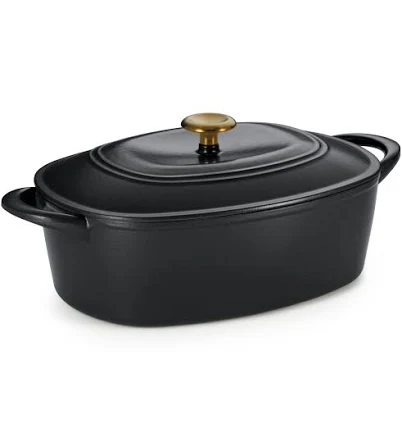
Tramontina 7-Quart Gourmet Cast Iron Covered Oval Dutch Oven, Is It Non-Toxic?
Lower PFAS concern; cast iron with enamel is not a typical PFAS application.
Cast iron with enamel coating, neither material known to contain PFAS. Tramontina makes no PFAS claims, but the material class poses lower risk than nonstick cookware.
Still want this one anyway? Check the price on Amazon. We’d swap it.
Material
Cast iron with enamel coating
Lab data
No public lab test
You may also be interested in
Top-graded picks in the categories readers replace first, every one scored on the same rubric.

- polypropylene filter housing, carbon/sediment cartridge
- We found no PFAS statement from the brand
- Bacterial growth in spent cartridges
3 hazards checked on this product, all on its full breakdown.

Aquasure
Premier Series 75 GPD Under Sink Reverse Osmosis Water Filtration System
- RO membrane, carbon filters, stainless steel housing
- We found no PFAS statement from the brand
- Bacterial and microbial growth in housing and filters
4 hazards checked on this product, all on its full breakdown.

Avocado
Vegan Mattress
- organic cotton, natural latex, coconut coir, recycled steel coils
- The brand calls it PFAS-free, which we have not verified
- Heavy metals
2 hazards checked on this product, all on its full breakdown.
Is Tramontina 7-Quart Gourmet Oval Dutch Oven non-toxic? What it is made of
This Dutch oven consists of cast iron cookware with a vitreous enamel (glass-like ceramic) coating applied via high-temperature firing. The enamel coating is chemically inert once cured and serves as a barrier between the iron base and food, preventing iron leaching and rust. Cast iron itself is not a chemical concern, it is primarily iron and can contribute dietary iron. The enamel's stability depends on maintaining the coating's integrity without chips or cracks.
What’s concerning
No PFAS disclosure
No public statement from the brand about PFAS in this product.
Category baseline
The starting point for this type of product, before anything specific to this product is counted.
Lead
Vitreous enamel coatings can theoretically contain lead or cadmium as colorants or flux agents, particularly in mass-produced cookware. Tramontina does not publish composition data or third-party testing results for this product. The risk is mitigated if the enamel coating remains intact and undamaged; leaching risk increases significantly if the coating chips or cracks and underlying material con
Source, ATSDR ↗Enamel coating degradation and spalling
Consumer reports and product reviews describe some Tramontina enameled cookware showing chips or peeling enamel after extended use or thermal shock (rapid temperature changes). Thinner enamel coatings are more prone to this than premium brands. Once coating integrity is compromised, cast iron rust and potential heavy metal contact with food become concerns.
Thermal shock cracking
Vitreous enamel is brittle and can crack if subjected to rapid temperature changes (e.g., moving from stovetop to cold water, or preheating and then adding cold liquid). Tramontina's manufacturing quality and enamel thickness are not independently verified; budget-tier enameled cookware may be more susceptible than premium alternatives.
What’s reassuring
Base material not linked to PFAS
The main material recorded for this product is not one associated with PFAS.
Iron leaching
Uncoated cast iron leaches significant iron into food; this Tramontina model's vitreous enamel coating blocks direct iron-food contact. Iron leaching is only a concern if the enamel is chipped or cracked, exposing the underlying cast iron to acidic foods.
Handle and lid material composition
The handle and lid are typically phenolic plastic or stainless steel; no standard hazards are documented for Tramontina's handle materials. However, the lid knob's heat tolerance should be verified against the product specification to avoid plastic degradation at high oven temperatures.
How is this PFAS grade calculated?
The brand's record and disclosure
Tramontina is a Brazilian cookware manufacturer with a longstanding presence in North American retail and institutional kitchens. The brand does not publicly disclose detailed composition testing or certifications for lead/cadmium in enamel glazes, which is typical for mainstream cookware manufacturers. No major safety recalls specific to this Dutch oven model appear in public records. Tramontina cookware is widely sold through mainstream retailers without consumer warning flags.
How it compares in its category
Enameled cast iron Dutch ovens (including this Tramontina model, Le Creuset, Staub, and generic alternatives) are the dominant category standard. Tramontina's pricing is significantly lower than premium European brands, reflecting manufacturing location and material sourcing differences but not inherently indicating higher chemical risk. All vitreous enamel cookware relies on the same coating chemistry; differences lie in enamel thickness, manufacturing controls, and thermal evenness rather than hazard profile. Uncoated cast iron and non-stick cookware present different risk profiles (iron leaching and Teflon-type coating fumes, respectively).
If you buy it
Inspect the enamel coating before first use and periodically thereafter for chips, cracks, or peeling; discard or repair if coating is compromised and exposed iron is exposed to acidic foods. Avoid prolonged cooking of highly acidic foods (tomato-based, vinegar, citrus) directly on the cookware for extended periods, as acid can slowly degrade enamel over years. The Dutch oven can tolerate stovetop and oven heat up to the handle's rated temperature (typically 350-400°F depending on lid design); do not exceed these limits. Hand wash after use and dry promptly to prevent rust at exposed edges and around the rim.
What is not known about PFAS in this product?
- Basis
- Model estimate, 82% confidence, not a lab result
- Lab test
- None on record for this exact product
- Brand statement
- Tramontina has made a specific claim
Formulations change between production runs, so check the current label. How we grade.
More dutch ovens grades
How we score, every product runs through the same public 0-100 rubric based on materials, coatings, brand disclosure, lab findings, and recalls. See the full methodology → Spotted a mistake? Report an error.