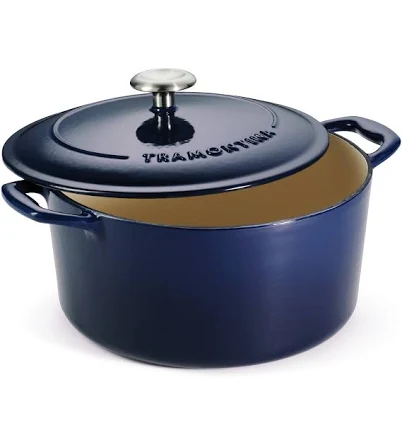
Tramontina Cast Iron Enameled Round Dutch Oven, Is It Non-Toxic?
Lower concern; cast iron enameled Dutch ovens typically skip PFAS, but no public testing or brand statement available.
Traditional glass-like enamel glaze on cast iron, not a Teflon-family coating finish. Tramontina makes no PFAS claims and no lab data is public, though the material itself lowers risk.
Still want this one anyway? Check the price on Amazon. We’d swap it.
Material
Cast iron with enamel glaze coating
Lab data
No public lab test
You may also be interested in
Top-graded picks in the categories readers replace first, every one scored on the same rubric.

- polypropylene filter housing, carbon/sediment cartridge
- We found no PFAS statement from the brand
- Bacterial growth in spent cartridges
3 hazards checked on this product, all on its full breakdown.

Aquasure
Premier Series 75 GPD Under Sink Reverse Osmosis Water Filtration System
- RO membrane, carbon filters, stainless steel housing
- We found no PFAS statement from the brand
- Bacterial and microbial growth in housing and filters
4 hazards checked on this product, all on its full breakdown.

Avocado
Vegan Mattress
- organic cotton, natural latex, coconut coir, recycled steel coils
- The brand calls it PFAS-free, which we have not verified
- Heavy metals
2 hazards checked on this product, all on its full breakdown.
Is Tramontina Cast Iron Round Dutch Oven non-toxic? What it is made of
This product consists of cast iron with a vitrified enamel glaze coating. The enamel is a glass-like surface fused to iron at high temperature, designed to prevent iron leaching and rust. This is a chemically stable combination with a long safety record when the enamel remains intact. Cast iron itself is inert; the enamel layer is the functional safety barrier.
What’s concerning
Category baseline
The starting point for this type of product, before anything specific to this product is counted.
No PFAS disclosure
No public statement from the brand about PFAS in this product.
Enamel coating degradation and iron leaching
If the enamel chips or cracks during normal use, bare cast iron underneath can leach small amounts of iron into acidic foods. This is not acutely toxic but defeats the safety purpose of enameling. Tramontina's enamel durability over years of use is not independently documented; some users report chips appearing sooner than premium brands.
Lead
If enamel contains trace lead (a concern in lower-cost enamelware from some regions), chips exposing the glaze layer could create a food contact hazard. Tramontina's manufacturing region (Brazil) and quality control standards are not publicly detailed, leaving this unquantified.
Source, ATSDR ↗Thermal shock and enamel fracture
Rapid temperature changes can cause the enamel to crack or flake. This is not specific to Tramontina but is a known failure mode in lower-cost enameled cast iron if not handled carefully. Once enamel fails, the cookware's safety profile declines.
What’s reassuring
Base material not linked to PFAS
The main material recorded for this product is not one associated with PFAS.
Lead
No reported contamination or recall involving lead or cadmium in Tramontina enameled cookware. However, the brand does not publicly disclose enamel composition or test results, so independent verification is unavailable. Industry standard practice for reputable brands is to avoid these metals, but without certification this remains unconfirmed.
Source, ATSDR ↗How is this PFAS grade calculated?
The brand's record and disclosure
Tramontina is a Brazilian cookware manufacturer with widespread retail availability but minimal public disclosure of safety testing or certifications on their enameled Dutch ovens. No major recalls or safety warnings specific to this product line are on record. The brand does not publish material safety data sheets or third-party test results for heavy metal content in enamels, which is standard industry practice but leaves verification gaps.
How it compares in its category
Enameled cast iron Dutch ovens show lower concern because the enamel coating isolates the iron and reduces concerns about metal leaching that apply to bare cast iron. Tramontina's products are typically priced lower than Le Creuset or Staub (premium French brands with published safety certifications) but are competitive with Lodge and other mid-range enameled cast iron options. The enamel chemistry and durability depend on manufacturing quality, which varies.
If you buy it
Inspect the enamel coating carefully before use and regularly during ownership; chips, cracks, or flaking expose cast iron and should trigger replacement of the pot. Avoid thermal shock (sudden temperature changes) as it can cause enamel cracking. Hand wash gently to preserve the coating; abrasive scrubbing and dishwasher cycles degrade enamel faster. The enamel shows lower concern at normal stovetop and oven temperatures (typically 350-500F depending on brand specifications).
What is not known about PFAS in this product?
- Basis
- Model estimate, 82% confidence, not a lab result
- Lab test
- None on record for this exact product
- Brand statement
- Tramontina has made a specific claim
Formulations change between production runs, so check the current label. How we grade.
More dutch ovens grades
How we score, every product runs through the same public 0-100 rubric based on materials, coatings, brand disclosure, lab findings, and recalls. See the full methodology → Spotted a mistake? Report an error.