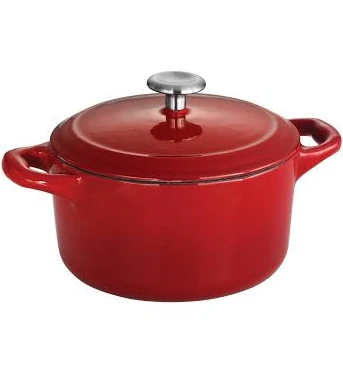
Tramontina Gourmet 24-oz. Enameled Cast Iron Covered Small Cocotte, Is It Non-Toxic?
Lower PFAS concern; traditional enameled cast iron with no nonstick layer.
Vitreous enamel finish over cast iron, neither material requiring PFAS treatment. Tramontina makes no PFAS claims, but cast iron with standard ceramic enamel carries lower risk.
Still want this one anyway? Check the price on Amazon. We’d swap it.
Material
enameled cast iron (vitreous enamel coating over cast iron)
Lab data
No public lab test
You may also be interested in
Top-graded picks in the categories readers replace first, every one scored on the same rubric.

- polypropylene filter housing, carbon/sediment cartridge
- We found no PFAS statement from the brand
- Bacterial growth in spent cartridges
3 hazards checked on this product, all on its full breakdown.

Aquasure
Premier Series 75 GPD Under Sink Reverse Osmosis Water Filtration System
- RO membrane, carbon filters, stainless steel housing
- We found no PFAS statement from the brand
- Bacterial and microbial growth in housing and filters
4 hazards checked on this product, all on its full breakdown.

Avocado
Vegan Mattress
- organic cotton, natural latex, coconut coir, recycled steel coils
- The brand calls it PFAS-free, which we have not verified
- Heavy metals
2 hazards checked on this product, all on its full breakdown.
Is Tramontina Gourmet 24-oz. Small Cocotte non-toxic? What it is made of
This cocotte is cast iron with a vitreous enamel coating, a glass-like surface fused to the metal at high temperature. The enamel layer prevents direct iron-to-food contact, reducing iron leaching while the cast iron base provides heat retention and durability. Unlike nonstick cookware, there is no Teflon-family coating, which eliminates the primary vector for PFAS migration into food.
What’s concerning
Category baseline
The starting point for this type of product, before anything specific to this product is counted.
No PFAS disclosure
No public statement from the brand about PFAS in this product.
Lead
Vitreous enamels can contain lead and cadmium as colorants or stabilizers, especially in older formulations. Tramontina does not publish test results for heavy metals in enamel coatings on this product, so no assurance of lead-free status is publicly available. Modern production is generally lead-free, but independent verification is absent.
Source, ATSDR ↗Enamel coating degradation and flaking
Enameled cast iron is prone to chipping under thermal stress or impact; once the enamel fractures, exposed cast iron can leach iron at elevated rates and the compromised coating cannot be reliably restored. This is an inherent risk of the material class, not a Tramontina-specific flaw, but requires user vigilance.
Iron leaching (minor, expected)
Enameled cast iron cookware naturally leaches small amounts of iron into acidic foods; this is not a hazard for most consumers and can provide dietary iron supplementation. Only becomes problematic if enamel is damaged, exposing bare iron directly.
What’s reassuring
Base material not linked to PFAS
The main material recorded for this product is not one associated with PFAS.
Aluminum leaching
The cocotte is cast iron, not aluminum, so aluminum leaching is not a concern with this product.
Teflon-type coating fume risk
This product uses vitreous enamel, not Teflon-type coating or other Teflon-family coating nonstick coatings, eliminating the risk of fume decomposition at high heat.
How is this PFAS grade calculated?
The brand's record and disclosure
Tramontina, a Brazilian kitchenware manufacturer owned by Groupe SEB, does not publicly disclose detailed safety testing results or third-party certifications for heavy metals in enamel coatings on this product line. No major recalls specific to lead or cadmium contamination in their enameled cast iron have been publicly documented. The brand maintains a general safety stance but provides minimal transparency on enamel composition or testing protocols.
How it compares in its category
Tramontina's enameled cast iron is competitively positioned as a mid-range option, typically priced below premium brands like Le Creuset and Staub. All traditional enameled cast iron carries the same baseline risks around enamel chipping and potential lead in older glaze formulations, though modern production across reputable brands has largely moved to lead-free enamels. Tramontina's offering is materially similar to Lodge enameled and Le Creuset in terms of hazard profile, though less third-party certified for safety.
If you buy it
Avoid thermal shock by preheating gradually and never plunging hot cookware into cold water, which can cause enamel cracking and expose the iron underneath. Do not use metal utensils that chip or scratch the enamel surface; use wood or silicone instead. Hand-wash rather than machine-wash to prevent enamel wear. If enamel becomes visibly chipped or cracked, discontinue use to avoid iron particles and potential accumulated contaminant exposure.
What is not known about PFAS in this product?
- Basis
- Model estimate, 82% confidence, not a lab result
- Lab test
- None on record for this exact product
- Brand statement
- Tramontina has made a specific claim
Formulations change between production runs, so check the current label. How we grade.
More dutch ovens grades
How we score, every product runs through the same public 0-100 rubric based on materials, coatings, brand disclosure, lab findings, and recalls. See the full methodology → Spotted a mistake? Report an error.