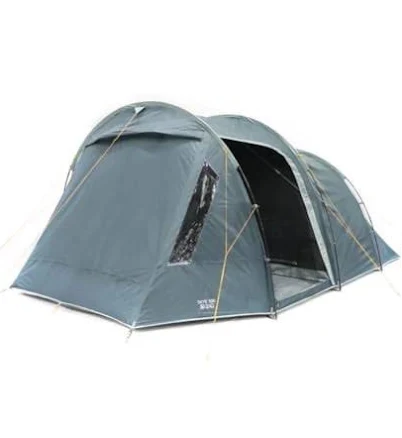
Skye 500 5-Man Tent
Avoid until Vango reveals waterproofing chemistry or confirms PFAS-free treatment.
The Skye 500 camping tent uses polyester with a water-repellent coating, but Vango does not publicly disclose the specific water-repellent coating chemistry or PFAS content. Tents routinely rely on fluorinated coatings for water resistance.
Still want this one anyway? Check the price on Amazon. We’d swap it.
Material
polyester tent fabric with water-repellent coating (water-repellent coating) coating
Brand disclosure
Brand is silent on PFAS
Lab data
No public lab test
You may also be interested in
Top-graded picks in the categories readers replace first, every one scored on the same rubric.

Aqua Pure
3M Aqua-Pure AP802B Whole House Filter Housing
- polypropylene filter housing, carbon/sediment cartridge
- We found no PFAS statement from the brand
- Bacterial growth in spent cartridges
3 hazards checked on this product. See all of them.

Aquasure
Premier Series 75 GPD Under Sink Reverse Osmosis Water Filtration System
- RO membrane, carbon filters, stainless steel housing
- We found no PFAS statement from the brand
- Bacterial and microbial growth in housing and filters
4 hazards checked on this product. See all of them.

Avocado
Vegan Mattress
- organic cotton, natural latex, coconut coir, recycled steel coils
- The brand calls it PFAS-free, which we have not verified
- Heavy metals
2 hazards checked on this product. See all of them.
What Skye 500 5-Man Tent is made of, ingredients and materials
The Skye 500 uses polyester tent fabric treated with a water-repellent coating (water-repellent coating) coating, standard for camping tents to shed water without pooling. Polyester itself is chemically stable and does not leach into food or skin under normal outdoor use. The hazard lies entirely in the water-repellent coating treatment applied to the fabric, Vango has not publicly disclosed whether this uses legacy PFAS-based chemistry (which persists in the environment and bioaccumulates) or newer fluorine-free alternatives. Polyester can off-gas volatile organic compounds (VOCs) when new, particularly in sealed storage or hot conditions, though outdoor ventilation typically minimizes exposure.
What’s concerning
Category baseline
The starting point for this type of product, before anything specific to this product is counted.
No PFAS disclosure
No public statement from the brand about PFAS in this product.
Waterproof / stain-resistant treatment
Water-repellent coating treatments have historically used PFAS.
PFAS
Vango has not disclosed whether the waterproofing treatment uses PFAS-based compounds (likely but unconfirmed). Without brand transparency, assume worst-case legacy chemistry; confirmed PFAS-free alternatives exist but are not claimed here.
Source, ATSDR ↗Volatile organic compound (VOC) off-gassing
New polyester fabric and applied coatings release VOCs when new, especially if stored in sealed or warm conditions. Outdoor setup and airing out mitigates exposure significantly.
water-repellent coating degradation over time
The water-repellent coating naturally wears after 3-5 seasons of use and UV exposure. Reapplication options may introduce new chemical exposures if not carefully selected for PFAS content.
What’s reassuring
Microplastic shedding from synthetic fabric
Polyester tents do not shed microplastics under normal camping use conditions (no washing, agitation, or heat exposure typical of textiles). Not a credible hazard for this product in its intended context.
Formaldehyde / VOCs
Modern polyester tent fabrics do not typically use formaldehyde resins or azo dyes as part of their manufacturing. This hazard class is relevant to dyed apparel and textiles, not functional outdoor fabric.
Source, ATSDR ↗The full breakdown
The brand's record and disclosure
Vango is a well-established UK-based outdoor brand owned by Johnson Outdoors, but maintains no published commitment to PFAS-free waterproofing chemistry or environmental certifications for tent materials. Unlike some competitors (e.g., Big Agnes, some Decathlon lines), Vango does not openly declare fluorine-free water-repellent coating or bluesign certification on this model. No major recalls or safety controversies are on record for this specific tent, but the silence on water-repellent coating composition represents a significant gap in transparency that is now standard practice among responsible outdoor manufacturers.
How it compares in its category
The Vango Skye 500 sits in the mid-market recreational camping segment. Comparable tents from brands like Coleman, Outwell, and entry-level REI Co-op models typically employ similar polyester-plus-water-repellent coating construction, meaning this product is not an outlier in its hazard profile for the category. However, premium brands (Nemo, MSR, Big Agnes) increasingly market PFAS-free or fluorine-free waterproofing as a selling point, making Vango's non-disclosure a relative weakness in a shifting market. For a budget-conscious buyer, the Skye 500 is typical; for an environmentally or health-conscious buyer, the lack of assurance is a disadvantage.
If you buy it
Air out the tent in direct sunlight and well-ventilated space for several hours after unpacking to allow VOC off-gassing. Avoid storing in hot, sealed vehicles or attics; keep in a cool, dry location to minimize water-repellent coating degradation and microclimate off-gassing. Inspect the water-repellent coating annually, if water no longer beads on the fabric, the coating is degrading (normal after 3-5 seasons), and re-treatment products may or may not be PFAS-free, so research before reapplying. Do not use inside a tent for cooking or heating; ensure adequate cross-ventilation, especially in wet conditions.
What we don’t know
- Basis
- Model estimate, 35% confidence, not a lab result
- Lab test
- None on record for this exact product
- Brand statement
- Vango has made none
Formulations change between production runs, so check the current label. How we grade.
More camping tents & tarps grades
How we score, every product runs through the same public 0-100 rubric based on materials, coatings, brand disclosure, lab findings, and recalls. See the full methodology → Spotted a mistake? Report an error.