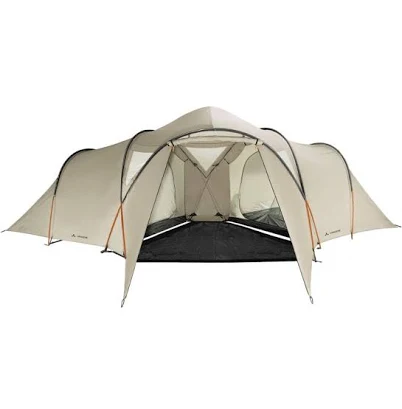
Vaude Badawi Long 6P Sand Tent
Tent uses water-repellent coating typical of outdoor gear; PFAS risk cannot be ruled out.
This 6-person tent uses polyester treated for water repellency, a common application for coatings that historically relied on PFAS. Vaude withholds coating details.
Still want this one anyway? Check the price on Amazon. We’d swap it.
Material
Polyester fabric with water-repellent coating (water-repellent coating) finish
Brand disclosure
Brand is silent on PFAS
Lab data
No public lab test
What Vaude Badawi Long 6P Sand Tent is made of, ingredients and materials
The Badawi uses a polyester fabric shell with a water-repellent coating (water-repellent coating) finish applied to the outer layer. water-repellent coating coatings on outdoor gear historically relied on PFOA or PFOS, though newer formulations exist; Vaude does not publicly disclose which type is used on this model. Polyester itself is chemically stable in normal use, but the water-repellent coating finish is the potential concern point for leaching or off-gassing, especially under heat or UV degradation over years of exposure.
What’s concerning
Category baseline
The starting point for this type of product, before anything specific to this product is counted.
No PFAS disclosure
No public statement from the brand about PFAS in this product.
Waterproof / stain-resistant treatment
Water-repellent coating treatments have historically used PFAS.
PFAS
Vaude has not disclosed whether the water-repellent coating finish on this tent uses legacy PFOA/PFOS or newer alternatives; standard industry practice for budget-to-mid-range polyester tents still includes fluorinated compounds in many cases.
Source, ATSDR ↗water-repellent coating off-gassing or leaching
Over time or under heat/UV stress, water-repellent coating finishes can degrade and shed particles or volatile compounds; risk is low in typical storage but increases with age, sun exposure, or if fabric is damaged.
Microplastic shedding from coating
As the water-repellent coating degrades over years of use and washing, fragments may shed into soil or water; this is an environmental rather than direct health hazard but part of the product lifecycle to consider.
What’s reassuring
Formaldehyde / VOCs
No specific recalls or reports link Vaude polyester tents to formaldehyde exposure; however, some polyester fabrics use resin finishing that can release formaldehyde, especially when new. Off-gassing typically subsides after initial airing.
Source, ATSDR ↗Azo dyes in fabric
The sand color of this model is likely achieved with conventional azo dyes; Vaude does not claim restricted-substance certifications for its tent fabrics, so regulatory compliance (REACH/ZDHC) is assumed but not verified.
The full breakdown
The brand's record and disclosure
Vaude is a German outdoor brand with a stated sustainability focus, but has not published specific chemical disclosure for water-repellent coating coatings on individual products or lines. The company has not voluntarily committed to PFAS-free certifications (such as bluesign or Cradle to Cradle) for its tent range, nor has it faced public recalls or safety complaints tied to chemical composition in the tent category. This silence is typical for the outdoor gear industry but limits transparency on a key safety parameter.
How it compares in its category
Most conventional three-season polyester tents use similar water-repellent coating treatments; alternatives like silicone-coated or PU-coated nylon (used by some competitors) avoid traditional PFAS but introduce different polymer concerns. High-end brands such as MSR or Hilleberg sometimes offer PFAS-free or fluorocarbon-free options, though at higher cost. The Badawi is mid-range; it represents the industry norm rather than a leader or laggard in chemical transparency.
If you buy it
Store the tent dry and out of direct sunlight when not in use to slow water-repellent coating degradation and off-gassing. Do not machine wash or subject to heat treatment; hand rinse with cool water if cleaning is needed. Inspect the fabric annually for wear, peeling, or degradation of the coating; once the water-repellent coating visibly fails (water no longer beads), the chemical risk is lower but the tent's water resistance is compromised. Plan a 5-to-10-year replacement cycle depending on use frequency, after which the coating may become unpredictable.
What we don’t know
- Basis
- Model estimate, 45% confidence, not a lab result
- Lab test
- None on record for this exact product
- Brand statement
- Vaude has made none
Formulations change between production runs, so check the current label. How we grade.
More camping tents & tarps grades
How we score, every product runs through the same public 0-100 rubric based on materials, coatings, brand disclosure, lab findings, and recalls. See the full methodology → Spotted a mistake? Report an error.