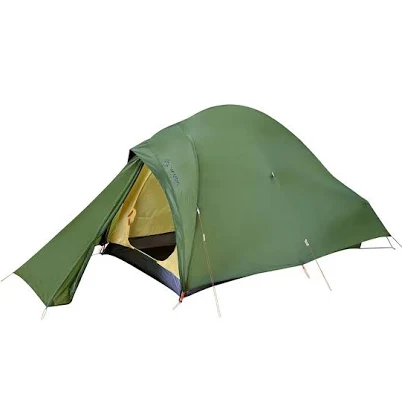
Vaude Hogan UL 2P Dome Tent
Tent waterproofing often involves PFAS; Vaude does not disclose.
This lightweight dome tent has polyester ripstop with water-repellent finish strongly associated with PFAS-based coatings. Vaude makes no transparency claims.
Still want this one anyway? Check the price on Amazon. We’d swap it.
Material
Polyamide ripstop + water-repellent coating (water-repellent coating) finish
Brand disclosure
Brand is silent on PFAS
Lab data
No public lab test
What Vaude Hogan UL 2P Dome Tent is made of, ingredients and materials
The Hogan UL 2P uses polyamide (nylon) ripstop fabric, a lightweight synthetic chosen for tensile strength and packability in backpacking tents. The water-repellent coating (water-repellent coating) finish applied to the fabric is the critical unknown, most modern tent water-repellent coating coatings rely on fluorinated compounds (PFAS) to achieve water beading and long-term hydrophobicity. Vaude does not publicly disclose whether their water-repellent coating is fluorinated, non-fluorinated (wax-based), or hybrid. Polyamide itself is chemically stable under normal use conditions and does not off-gas significantly.
What’s concerning
Category baseline
The starting point for this type of product, before anything specific to this product is counted.
No PFAS disclosure
No public statement from the brand about PFAS in this product.
Waterproof / stain-resistant treatment
Water-repellent coating treatments have historically used PFAS.
PFAS
Vaude does not disclose water-repellent coating composition; industry standard for dome tents of this type is fluorinated PFAS. Exposure is primarily environmental (manufacturing, washing, disposal) rather than direct skin contact during use, but bioaccumulation remains a systemic concern.
Source, ATSDR ↗Polyamide fiber stability and microplastic potential
Nylon ripstop can shed fibers with heavy abrasion or wear over years of use and packing. In field conditions this is negligible, but repeated washing or aggressive brushing during cleaning may accelerate microfiber release. No specific data exists for this tent model.
Degradation of water-repellent coating over repeated use and washing
All water-repellent coating-coated tents lose water repellency over time, particularly with frequent wet-weather use and washing. This does not create a safety hazard but signals that re-coating or replacement may be needed; if re-coating uses fluorinated PFAS, the cycle continues.
What’s reassuring
VOC or chemical off-gassing on opening
New polyamide tents may have a faint chemical smell from manufacturing residues or dyes, typically mild and dissipates within days of airing. No reported health incidents from Vaude tents; standard practice is to air out in sunlight before first use.
Dyes or chemical residues in polyamide fabric
Vaude does not disclose dye or chemical inputs; polyamide naturally accepts both azo and non-azo dyes. The risk is low compared to apparel (no direct skin contact) but formaldehyde resins or heavy metal pigments are theoretically possible. No testing or recall data exists for this product.
The full breakdown
The brand's record and disclosure
Vaude is a German outdoor brand with a public sustainability commitment, but their transparency on PFAS in textiles and waterproofing is minimal. The company has not published PFAS-free certifications or ingredient disclosures for their tent lines, nor responded visibly to requests for non-fluorinated water-repellent coating confirmation. This silence is noteworthy given the brand's otherwise detailed environmental reporting; it suggests either use of PFAS (the industry default) or a strategic choice not to engage the topic publicly. No product recalls or health incidents specific to Vaude tents are on record.
How it compares in its category
Most ultralight dome tents in this price and weight class use polyamide or polyester with fluorinated water-repellent coating, making the Hogan UL typical rather than exceptional on the PFAS front. A small number of manufacturers (e.g., some cottage brands, specific Patagonia models) now offer PFAS-free or fluorocarbon-free alternatives with silicone or wax-based treatments, though these are less common, heavier, or more expensive. The Hogan UL's lack of any visible commitment to lower-concern waterproofing approaches places it in the mainstream, unexceptional tier.
If you buy it
Store the tent dry in a cool place away from direct sunlight to preserve both the polyamide fibers and water-repellent coating longevity. Avoid machine washing; clean with water and soft brush only, as harsh detergents degrade water-repellent coating. Do not apply iron or direct heat to the fabric. Inspect seams and fabric annually for tears or wear; small holes can be patched with polyamide-compatible repair tape or patches. Replace the tent if the water-repellent coating visibly fails (water no longer beads) and re-coating products are either unavailable or use undisclosed PFAS, since re-waterproofing perpetuates the same disclosure gap.
What we don’t know
- Basis
- Model estimate, 45% confidence, not a lab result
- Lab test
- None on record for this exact product
- Brand statement
- Vaude has made none
Formulations change between production runs, so check the current label. How we grade.
More camping tents & tarps grades
How we score, every product runs through the same public 0-100 rubric based on materials, coatings, brand disclosure, lab findings, and recalls. See the full methodology → Spotted a mistake? Report an error.