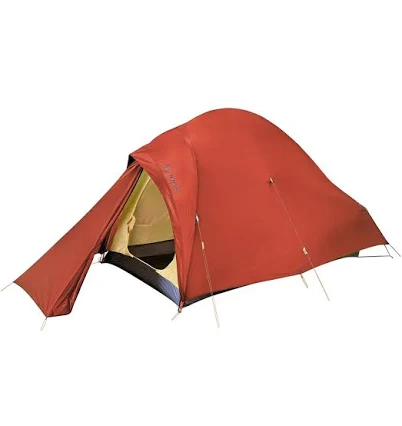
Vaude Hogan UL 2P Tent
Moderate concern; typical water-repellent coating tent coating likely contains PFAS.
This lightweight backpacking tent has nylon ripstop treated for water repellency, a category where PFAS-based coatings remain standard. Vaude makes no statements about alternatives.
Still want this one anyway? Check the price on Amazon. We’d swap it.
Material
nylon ripstop fabric with water-repellent coating (water-repellent coating) coating
Brand disclosure
Brand is silent on PFAS
Lab data
No public lab test
What Vaude Hogan UL 2P Tent is made of, ingredients and materials
The Hogan UL 2P uses nylon ripstop fabric, a lightweight polyamide woven with reinforcing threads in a crosshatch pattern to resist tearing. The water-repellent coating (water-repellent coating) coating applied to this nylon is the critical layer, it sheds rain without fully waterproofing, which keeps weight and breathability high. This type of coating in the ultralight camping category historically uses fluorinated compounds (PFAS variants) because they are highly efficient water repellents, though some manufacturers have begun transitioning to fluorine-free alternatives. Vaude has not publicly disclosed the specific water-repellent coating chemistry used on this model.
What’s concerning
Category baseline
The starting point for this type of product, before anything specific to this product is counted.
No PFAS disclosure
No public statement from the brand about PFAS in this product.
Waterproof / stain-resistant treatment
Water-repellent coating treatments have historically used PFAS.
PFAS
Standard industry water-repellent coating chemistry for ultralight nylon ripstop tents typically contains fluorinated compounds (PFAS). Vaude does not disclose the specific formulation or confirm PFAS-free status. This is a known class concern, not specific to this brand, but lack of transparency prevents user mitigation.
Source, ATSDR ↗Nylon fabric degradation and microparticle shedding
Nylon ripstop is durable but can shed microfibers through abrasion and weathering, particularly along seams and high-wear areas. This is inherent to all nylon camping tents and not unique to Vaude; actual exposure risk during normal tent use and storage is minimal.
Coating durability loss over time
Water-repellent coating coatings on nylon degrade with UV exposure, washing, and heat. As the coating fails, water no longer beads and can penetrate the fabric, leading to mildew and potential mold growth if stored damp. This is a maintenance issue, not a safety hazard, but requires user awareness.
What’s reassuring
Heavy metals
No recalls or public testing data specific to the Hogan UL 2P indicate heavy metal contamination in nylon fabric dyes. Standard industrial nylon production is regulated in Germany and EU; specific hazard for this product is not documented.
Source, FDA ↗Flame retardants
Nylon ripstop camping tents are not typically treated with flame retardant chemicals, as they are outdoor equipment not subject to flammability standards. No evidence of flame retardant treatment on the Hogan UL 2P.
Source, EPA ↗The full breakdown
The brand's record and disclosure
Vaude is a German outdoor equipment manufacturer with a stated commitment to sustainability and environmental responsibility. However, the company does not publish a formal PFAS elimination policy or timeline for this product line, and does not disclose water-repellent coating chemistry on product labels or technical sheets for the Hogan UL 2P. Vaude has pursued some bluesign certifications on apparel lines, which restrict certain chemicals, but bluesign does not yet mandate PFAS-free water-repellent coating coatings on textiles. Absence of disclosure does not indicate hazard, but it limits consumer choice based on this material.
How it compares in its category
The Hogan UL 2P is a minimalist ultralight two-person tent typical of current ultralight backpacking design. Most competitors in this weight class (Big Agnes, Zpacks, Hyperlite) also use nylon ripstop with fluorinated water-repellent coating coatings; few brands disclose PFAS content or offer fluorine-free alternatives at ultralight specifications. Tents using Teflon-type coating-based coatings (like older PU-backed models) pose fume inhalation risk if exposed to high heat; the Hogan UL 2P's simpler water-repellent coating approach avoids that specific hazard. If PFAS exposure is a priority, brands like Tentsile or certain MSR models have begun exploring fluorine-free water-repellent coating, though performance and durability data is still limited.
If you buy it
Store the tent dry in a cool, dark space to slow water-repellent coating degradation; nylon itself does not off-gas hazardously under normal conditions. Avoid prolonged direct sunlight exposure when deployed, as UV can degrade both the fabric and coating over time. Do not machine wash; rinse gently with cool water and air dry. After 2-5 years of regular use, the water-repellent coating will lose effectiveness (water will no longer bead on the fabric surface), at which point a fluorine-free water-repellent coating reapplication product (like Nixwax or similar) can restore water shedding if desired.
What we don’t know
- Basis
- Model estimate, 45% confidence, not a lab result
- Lab test
- None on record for this exact product
- Brand statement
- Vaude has made none
Formulations change between production runs, so check the current label. How we grade.
More camping tents & tarps grades
How we score, every product runs through the same public 0-100 rubric based on materials, coatings, brand disclosure, lab findings, and recalls. See the full methodology → Spotted a mistake? Report an error.