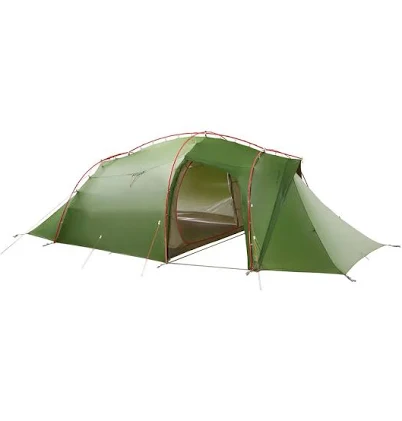
Vaude Mark XT 4-Person Tent
Skip until Vaude discloses water-repellent coating chemistry or provides third-party PFAS testing.
This 4-person tent features polyester with water-repellent coating standard for waterproof shelters. Vaude does not disclose what water-repellent coating chemistry is used.
Still want this one anyway? Check the price on Amazon. We’d swap it.
Material
Polyester with water-repellent coating (water-repellent coating) coating
Brand disclosure
Brand is silent on PFAS
Lab data
No public lab test
What Vaude Mark XT 4-Person Tent is made of, ingredients and materials
The Mark XT uses polyester fabric with a water-repellent coating (water-repellent coating) coating, standard for 3-season camping tents. Polyester itself is chemically stable and does not leach BPA or phthalates under normal use. The water-repellent coating is the critical unknown, historically many outdoor fabric treatments relied on long-chain PFAS (perfluorinated compounds) for water resistance, though some manufacturers have switched to alternatives not linked to PFAS. Vaude has not published the chemistry of their water-repellent coating formulation for this model.
What’s concerning
Category baseline
The starting point for this type of product, before anything specific to this product is counted.
No PFAS disclosure
No public statement from the brand about PFAS in this product.
Waterproof / stain-resistant treatment
Water-repellent coating treatments have historically used PFAS.
PFAS
Polyester camping tents commonly use PFAS-based water repellents. Vaude has not disclosed whether their water-repellent coating is PFAS-free or PFAS-containing. Direct skin contact is minimal in normal use (tent exterior), but leaching into soil and groundwater near campsite is a documented concern for PFAS-treated textiles.
Source, ATSDR ↗Coating adhesion and peeling over time
Water-repellent coating coatings, especially older PFAS-based formulations, can degrade and peel after 3-5 years of UV and moisture exposure. Peeled coating particles are not an acute hazard but indicate loss of water protection and potential for mold growth inside the tent if not properly maintained.
What’s reassuring
Polyester degradation and microplastic shedding
Polyester fabric in tents can shed microfibers over years of use, especially after UV exposure and mechanical wear. No specific data exists for the Mark XT model, but abrasion and washing increase shedding risk. This is an environmental rather than acute personal health hazard.
Formaldehyde / VOCs
Some polyester textiles contain formaldehyde-releasing resins for wrinkle resistance or fabric stiffening. Vaude's finishing process for the Mark XT is not publicly documented. Modern polyester camping fabric typically uses minimal finishes not linked to PFAS, making formaldehyde risk lower but not ruled out.
Source, ATSDR ↗Metal components (zippers, poles) corrosion
Aluminum or steel poles and zinc alloy zippers are standard in this category. No specific corrosion or heavy metal leaching issues are documented for Vaude tents under normal camping conditions. Saltwater or harsh chemical exposure poses higher risk.
The full breakdown
The brand's record and disclosure
Vaude is a German outdoor company with a stated commitment to sustainability, but this commitment has not extended to public PFAS disclosure for tent lines as of available records. The company does not appear on major PFAS-free certification lists (like Bluesign or GOTS for textiles, or industry PFAS commitments). No recalls or contamination incidents are documented for Vaude tents. Without third-party testing or a published chemistry statement, water-repellent coating composition remains opaque.
How it compares in its category
Most mid-range 4-person tents use polyester with water-repellent coating coatings; this is industry standard. A few brands (e.g., Naturehike, some Coleman models) have begun offering PFAS-free water-repellent coating options or have committed to disclosure. Vaude's silence on this issue is typical for European outdoor brands, though less defensible than it was five years ago as PFAS awareness has grown. Direct competitors with known PFAS transparency or confirmed PFAS-free certifications are available at similar price points.
If you buy it
Store the tent dry and well-ventilated indoors; polyester fabric does not off-gas significantly, but prolonged heat (e.g., in a hot car) will not improve the water-repellent coating and may cause minor surface changes. Reapply commercial PFAS-free water-repellent coating products if water beading diminishes after 2-3 years of use. Do not machine wash; rinse gently with cool water and mild soap. Contact Vaude directly asking for water-repellent coating chemistry disclosure or third-party PFAS testing results; purchasing feedback may accelerate transparency.
What we don’t know
- Basis
- Model estimate, 35% confidence, not a lab result
- Lab test
- None on record for this exact product
- Brand statement
- Vaude has made none
Formulations change between production runs, so check the current label. How we grade.
More camping tents & tarps grades
How we score, every product runs through the same public 0-100 rubric based on materials, coatings, brand disclosure, lab findings, and recalls. See the full methodology → Spotted a mistake? Report an error.