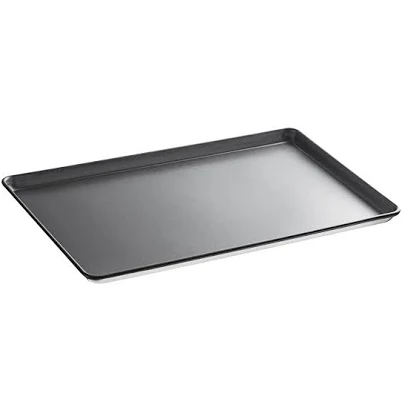
Vollrath 9002NS Full Size Wear-Ever Sheet Pan, Is It Non-Toxic?
Lower concern with anodized aluminum, no nonstick layer.
The natural anodized finish on this commercial aluminum pan means no nonstick or water-repellent treatment was added. Anodized aluminum carries lower PFAS risk than coated nonstick versions.
The better-graded swap

Caraway
Caraway Nonstick Ceramic Large Baking Sheet
90/100 safety
Same rubric that flunked this product. The swap earned Excellent.
Still want this one anyway? Check the price on Amazon. We’d swap it.
Material
Aluminum sheet pan, natural anodized finish
Brand disclosure
Brand is silent on PFAS
Lab data
No public lab test
You may also be interested in
Top-graded picks in the categories readers replace first, every one scored on the same rubric.

- polypropylene filter housing, carbon/sediment cartridge
- We found no PFAS statement from the brand
- Bacterial growth in spent cartridges
3 hazards checked on this product, all on its full breakdown.

Aquasure
Premier Series 75 GPD Under Sink Reverse Osmosis Water Filtration System
- RO membrane, carbon filters, stainless steel housing
- We found no PFAS statement from the brand
- Bacterial and microbial growth in housing and filters
4 hazards checked on this product, all on its full breakdown.

Avocado
Vegan Mattress
- organic cotton, natural latex, coconut coir, recycled steel coils
- The brand calls it PFAS-free, which we have not verified
- Heavy metals
2 hazards checked on this product, all on its full breakdown.
Is Vollrath 9002NS Full Size Sheet Pan non-toxic? What it is made of
The Vollrath 9002NS is formed from aluminum sheet stock with a natural anodized finish. Anodizing creates a hard oxide layer on the aluminum surface that acts as a barrier, significantly reducing the risk of aluminum ions leaching into food compared to bare or bare-anodized aluminum. This product contains no Teflon-type coating nonstick coating, eliminating fume-emission risk entirely. The natural (non-dyed) anodize is chemically inert under normal baking conditions.
What’s concerning
Category baseline
The starting point for this type of product, before anything specific to this product is counted.
No PFAS disclosure
No public statement from the brand about PFAS in this product.
Aluminum leaching
Anodized layer significantly reduces leaching risk, but microscopic abrasion during use or dishwashing can expose bare aluminum. Leaching becomes more likely with acidic foods (tomato-based, citrus) at high temperatures or prolonged contact, though the amount released at typical baking temperatures is generally well below concern thresholds.
Anodize layer degradation
Prolonged exposure to harsh alkaline dishwasher detergents, acidic foods, or physical scouring can wear the anodize over months to years. Once the protective oxide layer is compromised, bare aluminum is exposed. No recalls exist, but this is a known material limitation of anodized cookware that requires maintenance awareness.
Surface contaminants from manufacturing
Commercial aluminum can retain light machine oils, dust, or particulates from rolling and forming. Hand washing before first use is a standard precaution, though no specific manufacturing defect recalls for Vollrath sheet pans are documented.
What’s reassuring
Base material not linked to PFAS
The main material recorded for this product is not one associated with PFAS.
Teflon-type coating fume risk
This product has no nonstick coating; Teflon-type coating fumes are not a hazard. The natural anodize provides release properties adequate for most baked goods without any fluorinated polymer.
Lead
Anodizing does not use lead- or cadmium-based compounds in commercial food-service applications. No independent testing or regulatory alerts document heavy metal contamination in Vollrath anodized bakeware.
Source, ATSDR ↗How is this PFAS grade calculated?
The brand's record and disclosure
Vollrath is a long-established commercial foodservice equipment manufacturer with no widely documented safety recalls or controversies tied to their bakeware line. The brand does not publicly disclose detailed material certifications or PFAS avoidance policies, though their choice of anodized aluminum without nonstick coating aligns with lower-risk manufacturing. No independent testing alerts or regulatory action against Vollrath sheet pans appear in public records.
How it compares in its category
Anodized aluminum sheet pans occupy the middle ground in home bakeware, with lower concern than bare aluminum or dark carbon steel (which shed more iron), but with higher concern than borosilicate glass or stainless steel. Vollrath's commercial-grade construction and thickness typically outlast lighter home-brand alternatives, reducing replacement frequency. Many casual-use aluminum sheet pans lack the durability of this commercial line.
If you buy it
Use it for baking at standard oven temperatures (up to 500F); anodized aluminum is stable in this range. Hand wash or use mild dishwasher cycles to preserve the anodize layer; avoid prolonged contact with strong acids or alkaline cleaners. The anodize can gradually wear from physical abrasion; inspect yearly for bare spots and replace if aluminum begins to show through. Store dry to prevent any oxidation of exposed aluminum edges.
What is not known about PFAS in this product?
- Basis
- Model estimate, 82% confidence, not a lab result
- Lab test
- None on record for this exact product
- Brand statement
- Vollrath has made none
Formulations change between production runs, so check the current label. How we grade.
What are the PFAS-free alternatives to Vollrath 9002NS Full Size Wear-Ever Sheet Pan?
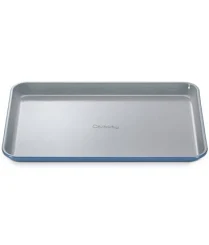
- ceramic nonstick coating
- A third party reports verifying it as PFAS-free
- Ceramic coating degradation over time
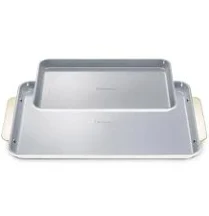
- ceramic nonstick coating
- A third party reports verifying it as PFAS-free
- Coating degradation and durability
2 hazards checked on this product, all on its full breakdown.
- ceramic nonstick coating
- The brand calls it PFAS-free, which we have not verified
- Ceramic coating degradation and particle shedding
3 hazards checked on this product, all on its full breakdown.
More bakeware grades
How we score, every product runs through the same public 0-100 rubric based on materials, coatings, brand disclosure, lab findings, and recalls. See the full methodology → Spotted a mistake? Report an error.