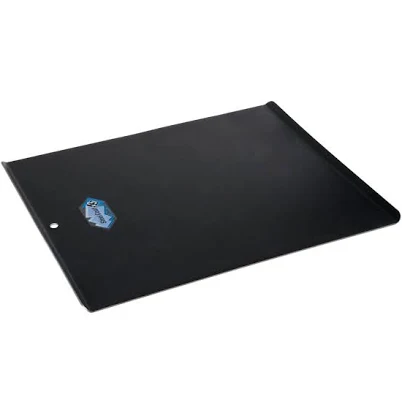
Vollrath Cookie Sheet, Is It Non-Toxic?
Lower concern with hard-anodized aluminum, no nonstick.
Vollrath's hard-anodized aluminum cookie sheets skip nonstick coatings entirely, which cuts out a major PFAS pathway. Hard anodizing doesn't typically involve PFAS in production or use.
The better-graded swap
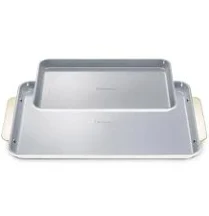
Caraway
Caraway Ceramic Nonstick Baking Sheet Duo
100/100 safety
Same rubric that flunked this product. The swap earned Excellent.
Still want this one anyway? Check the price on Amazon. We’d swap it.
Material
Aluminum with hard-anodized finish, no nonstick coating
Brand disclosure
Brand is silent on PFAS
Lab data
No public lab test
You may also be interested in
Top-graded picks in the categories readers replace first, every one scored on the same rubric.

- polypropylene filter housing, carbon/sediment cartridge
- We found no PFAS statement from the brand
- Bacterial growth in spent cartridges
3 hazards checked on this product, all on its full breakdown.

Aquasure
Premier Series 75 GPD Under Sink Reverse Osmosis Water Filtration System
- RO membrane, carbon filters, stainless steel housing
- We found no PFAS statement from the brand
- Bacterial and microbial growth in housing and filters
4 hazards checked on this product, all on its full breakdown.

Avocado
Vegan Mattress
- organic cotton, natural latex, coconut coir, recycled steel coils
- The brand calls it PFAS-free, which we have not verified
- Heavy metals
2 hazards checked on this product, all on its full breakdown.
Is Vollrath Cookie Sheet non-toxic? What it is made of
Vollrath cookie sheets are aluminum with hard-anodized finish, a electrochemical process that densifies the aluminum oxide layer to create a durable, non-porous barrier. Hard anodizing is distinct from nonstick coatings like Teflon-type coating and does not rely on fluorinated polymers. The anodized layer resists corrosion and minimizes direct contact between food and bare aluminum, reducing leaching concerns that plague untreated aluminum cookware.
What’s concerning
Category baseline
The starting point for this type of product, before anything specific to this product is counted.
No PFAS disclosure
No public statement from the brand about PFAS in this product.
Aluminum leaching
Hard anodizing significantly reduces aluminum ion release compared to bare aluminum, but lengthy contact with acidic or salty foods can slowly degrade the anodized barrier. Occasional baking is very low risk; chronic use with tomato-based or vinegar-containing recipes warrants attention.
Coating degradation and bare metal exposure
Physical damage, scratching, or chemical attack can breach the anodized layer over years of use. If the coating fails visibly, replace the sheet to prevent direct aluminum exposure and potential leaching spikes.
What’s reassuring
Base material not linked to PFAS
The main material recorded for this product is not one associated with PFAS.
Lead
Hard anodizing is a chemical process, not a glaze or ceramic coating; no traditional paint, enamel, or glaze layers are present. This hazard class does not apply to hard-anodized aluminum sheets.
Source, ATSDR ↗Teflon-type coating/nonstick fume risk
This product does not use Teflon-type coating, silicone, or other polymer nonstick coatings. No fume risk from thermal decomposition at normal baking temperatures (up to 500F).
Unlisted or uncontrolled additives in anodizing process
Hard anodizing uses sulfuric acid electrolysis; no documented public health issues from residual process chemicals in Vollrath sheets. No safety data sheets or contamination reports are on record for this product.
How is this PFAS grade calculated?
The brand's record and disclosure
Vollrath is a long-established commercial and consumer bakeware manufacturer (founded 1874) with no public safety recalls specifically tied to leaching, coating failure, or chemical contamination in their aluminum sheet pans. The company does not publish detailed material safety disclosures or third-party certifications for consumer products, but their commercial foodservice track record suggests manufacturing quality controls. No documented PFAS-related statements or reformulations are on record for this product line.
How it compares in its category
Hard-anodized aluminum sheets occupy a middle ground, lower concern than bare aluminum or painted finishes prone to chipping, but slightly higher thermal conductivity than stainless steel (which some prefer for even browning). Versus nonstick carbon steel or ceramic alternatives, hard anodizing avoids fluorinated coatings entirely. Vollrath's commercial heritage means tighter manufacturing tolerances than budget imported sheets, reducing risk of defects or premature coating failure.
If you buy it
Use normal hand-washing; hard anodizing resists abrasive scrubbing better than nonstick. Do not soak excessively or expose to highly acidic foods for prolonged periods, as anodized layers can be compromised by salt or vinegar (though temporary use presents lower concern). Avoid stacking unpadded sheets to prevent scratches. Replace if the anodized surface shows visible pitting, white spots, or obvious wear exposing bare aluminum. Monitor for any darkening or color change, which may indicate early anodization failure.
What is not known about PFAS in this product?
- Basis
- Model estimate, 78% confidence, not a lab result
- Lab test
- None on record for this exact product
- Brand statement
- Vollrath has made none
Formulations change between production runs, so check the current label. How we grade.
What are the PFAS-free alternatives to Vollrath Cookie Sheet?
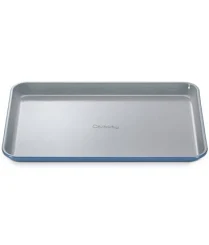
- ceramic nonstick coating
- A third party reports verifying it as PFAS-free
- Ceramic coating degradation over time
- ceramic nonstick coating
- A third party reports verifying it as PFAS-free
- Coating degradation and durability
2 hazards checked on this product, all on its full breakdown.

- ceramic nonstick coating
- The brand calls it PFAS-free, which we have not verified
- Ceramic coating degradation and particle shedding
3 hazards checked on this product, all on its full breakdown.
More bakeware grades
How we score, every product runs through the same public 0-100 rubric based on materials, coatings, brand disclosure, lab findings, and recalls. See the full methodology → Spotted a mistake? Report an error.