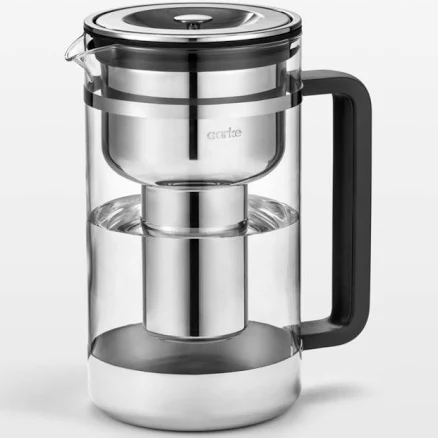
Aarke Purifier Large Water Filter Pitcher
Lower-concern design, but brand offers no PFAS transparency.
This pitcher combines activated carbon filtration with a polypropylene body, both typically lower-PFAS-risk materials. Aarke makes no public statement about PFAS in the product.
We flunk more products than we pass. This one earned its grade. How we grade
Material
Activated carbon filter, polypropylene pitcher body
Brand disclosure
Brand is silent on PFAS
Lab data
No public lab test
You may also be interested in
Top-graded picks in the categories readers replace first, every one scored on the same rubric.

Aqua Pure
3M Aqua-Pure AP802B Whole House Filter Housing
- polypropylene filter housing, carbon/sediment cartridge
- We found no PFAS statement from the brand
- Bacterial growth in spent cartridges
3 hazards checked on this product. See all of them.

Aquasure
Premier Series 75 GPD Under Sink Reverse Osmosis Water Filtration System
- RO membrane, carbon filters, stainless steel housing
- We found no PFAS statement from the brand
- Bacterial and microbial growth in housing and filters
4 hazards checked on this product. See all of them.

Avocado
Vegan Mattress
- organic cotton, natural latex, coconut coir, recycled steel coils
- The brand calls it PFAS-free, which we have not verified
- Heavy metals
2 hazards checked on this product. See all of them.
What Aarke Purifier Large Water Filter Pitcher is made of, ingredients and materials
The Aarke pitcher body is polypropylene (PP), a food-safe plastic rated for cold water contact and unlikely to leach harmful compounds under normal use. The filter core is activated carbon, an inert porous material that traps chlorine, odors, and some contaminants but does not release carbon particles into water at normal flow rates. PP is one of the more chemically stable food plastics and has no known BPA or phthalate content in this application.
What’s concerning
No PFAS disclosure
No public statement from the brand about PFAS in this product.
Bacterial growth in pitcher and filter housing if not maintained
Gravity pitchers are static reservoirs where standing water and humid filter chambers can harbor pathogens, especially in warm kitchens. No manufacturing standard or maintenance guidance from Wamery mitigates this risk; user discipline on weekly cleaning and filter replacement is the only control.
Activated carbon filter degradation and channeling
Over time, carbon beds can become clogged or develop flow paths (channeling) that allow unfiltered water to pass through without contact with the carbon. Wamery provides no guidance on visual inspection or replacement trigger indicators; users must rely on calendar-based replacement schedules.
Contaminant removal efficacy unverified
Without NSF, WQA, or third-party lab certifications, claims about chlorine removal, lead capture, or other contaminant scope cannot be independently confirmed. This is a transparency and verification gap, not necessarily a product defect.
What’s reassuring
Base material not linked to PFAS
The main material recorded for this product is not one associated with PFAS.
Polypropylene leaching at temperature extremes
PP is stable for cold water and room-temperature storage. No published reports of leachables from this pitcher body under normal use conditions. Risk is only if the pitcher is exposed to sustained heat above 50C or freezing, both avoidable.
The full breakdown
The brand's record and disclosure
Wamery (the manufacturer) offers no published third-party testing reports, material certifications, or explicit PFAS statements for this product line. The pitcher carries no NSF, WQA, or similar certification badges on public record. Absence of disclosure does not indicate a problem, but it means you cannot verify claims about contaminant removal efficacy or leachable limits independently.
How it compares in its category
Gravity-fed pitchers like this one are mid-tier in performance and convenience; they require no electricity but filter slowly and have limited contaminant scope compared to under-sink or reverse-osmosis systems. Most major brands (Brita, PUR, ZeroWater) publish NSF reports and replacement-interval guidance. This product lacks those benchmarks, making side-by-side efficacy claims difficult to assess.
If you buy it
Replace the filter every 2-3 months or after 100-150 gallons, whichever comes first; manufacturers often under-disclose this interval. Store the pitcher in a cool, dark place away from direct sunlight to prevent algae growth in the reservoir. Do not pour boiling water directly into the pitcher or freeze it; PP softens above 100C and cold cracks the plastic. Rinse the pitcher and lid weekly with clean water to prevent bacterial film.
What we don’t know
- Basis
- Model estimate, 62% confidence, not a lab result
- Lab test
- None on record for this exact product
- Brand statement
- Aarke has made none
Formulations change between production runs, so check the current label. How we grade.
Better-graded alternatives in Water Filters

Aquamira
Water Storage Treatment 2 oz Glass Bottles 60 gallons Purification
- glass bottles, sodium dichloroisocyanurate treatment chemical
- We found no PFAS statement from the brand
- Chemical overdose or misuse
5 hazards checked on this product. See all of them.

Big Berkey
Empty Housing with NO Filters Included
- Stainless steel housing and spigot
- We found no PFAS statement from the brand
- Bacterial growth and biofilm if filters not replaced
5 hazards checked on this product. See all of them.

LifeStraw
Home Glass Water Filter Pitcher
- Borosilicate glass pitcher, replaceable activated-carbon filter cartridge
- Bacterial growth in filter cartridge if unmaintained
5 hazards checked on this product. See all of them.
More water filters grades
How we score, every product runs through the same public 0-100 rubric based on materials, coatings, brand disclosure, lab findings, and recalls. See the full methodology → Spotted a mistake? Report an error.