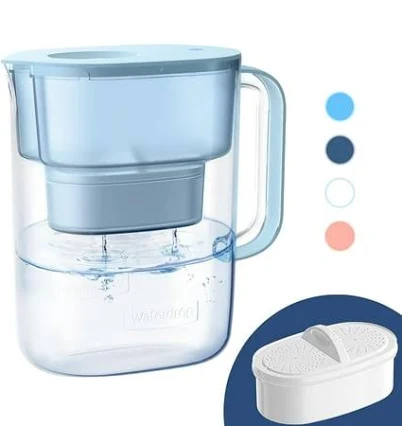
Waterdrop 10-Cup Water Filter Pitcher
Lower concern; standard pitcher materials without known PFAS vectors, but brand offers no transparency.
This pitcher is made of polypropylene plastic and activated carbon, materials not typically associated with PFAS in standard water filter designs. Waterdrop makes no PFAS avoidance claims or third-party certifications, leaving transparency limited.
We flunk more products than we pass. This one earned its grade. How we grade
Material
polypropylene pitcher body, activated carbon filter cartridge
Lab data
No public lab test
You may also be interested in
Top-graded picks in the categories readers replace first, every one scored on the same rubric.

Aqua Pure
3M Aqua-Pure AP802B Whole House Filter Housing
- polypropylene filter housing, carbon/sediment cartridge
- We found no PFAS statement from the brand
- Bacterial growth in spent cartridges
3 hazards checked on this product. See all of them.

Aquasure
Premier Series 75 GPD Under Sink Reverse Osmosis Water Filtration System
- RO membrane, carbon filters, stainless steel housing
- We found no PFAS statement from the brand
- Bacterial and microbial growth in housing and filters
4 hazards checked on this product. See all of them.

Avocado
Vegan Mattress
- organic cotton, natural latex, coconut coir, recycled steel coils
- The brand calls it PFAS-free, which we have not verified
- Heavy metals
2 hazards checked on this product. See all of them.
What Waterdrop 10-Cup Water Filter Pitcher is made of, ingredients and materials
The Waterdrop 10-Cup pitcher body is polypropylene (PP), a thermoplastic chosen for food contact because it is generally stable and does not leach BPA or phthalates under normal cold-water use. The activated carbon filter cartridge uses granulated carbon media to adsorb chlorine, sediment, and some volatile organic compounds; carbon itself is biologically inert but requires regular replacement to prevent bacterial colonization and filter exhaustion. Polypropylene has a melting point around 130C, so this pitcher is not designed for hot water and should not be used with boiling or near-boiling liquids.
What’s concerning
No PFAS disclosure
No public statement from the brand about PFAS in this product.
Polypropylene degradation over time
Polypropylene pitchers can become brittle and may develop micro-cracks after 2-3 years of daily use, especially if exposed to sunlight or temperature fluctuations. No specific data on Waterdrop pitcher lifespan exists in public records, but this is a known material-aging pattern for food-contact plastics in this category.
Bacterial regrowth in filter cartridge
Activated carbon filters can harbor bacteria if not replaced regularly or if water sits stagnant in the pitcher. Waterdrop provides no documentation of antimicrobial treatment or monitoring features in the cartridge, leaving users reliant on adherence to replacement schedules.
Activated carbon filter exhaustion without visual indicator
Many Waterdrop pitcher users report no clear warning when filter capacity is reached; over-saturated carbon stops adsorbing contaminants but looks unchanged. Some competing brands (PUR) include electronic indicators; Waterdrop does not, increasing risk of relying on an exhausted filter unknowingly.
Leachables from polypropylene in hot-water misuse
If used with hot water despite design intent, polypropylene can release trace amounts of unreacted monomers or processing additives. This is an end-user error hazard rather than a manufacturing defect, but the pitcher offers no warning label visible in standard product photos.
What’s reassuring
Base material not linked to PFAS
The main material recorded for this product is not one associated with PFAS.
Heavy metals
Waterdrop has published no third-party testing of filter cartridges for lead, arsenic, or cadmium contamination in the carbon itself. Standard food-grade activated carbon should be free of such contaminants, but lack of public certification means this remains unverified for this specific brand.
Source, FDA ↗The full breakdown
The brand's record and disclosure
Waterdrop has not published detailed material sourcing, manufacturing, or third-party safety certifications readily available in public databases. The brand offers no documented transparency on PFAS testing, heavy metal screening of filter media, or chemical finish of the pitcher body. No major recalls or safety controversies involving this specific pitcher model appear in CPSC or international safety databases as of available records. The absence of disclosure is typical for value-segment pitcher filters but leaves end-users without independent verification of manufacturing standards.
How it compares in its category
Standard pitcher filters (Brita, PUR, Waterdrop) all use similar polypropylene bodies and activated carbon media; this product sits in the middle-market segment with no performance or safety advantage over major competitors, but also no documented disadvantage. Some premium brands (Clearly Filtered, LifeStraw) publish third-party contaminant reduction certifications; Waterdrop does not. For price, the Waterdrop pitcher offers reasonable value, but buyers trading up to certified alternatives gain documented reduction claims and sometimes bacterial-growth monitoring features.
If you buy it
Use only with cold water; never fill with hot or boiling water, as polypropylene can warp or leach trace additives at elevated temperature. Replace the filter cartridge every 40 gallons or 2 months, whichever comes first, to prevent saturation and microbial growth inside the carbon bed. Rinse the pitcher body and lid weekly with hot tap water and mild soap; dry thoroughly to reduce mold risk in the reservoir. Store the pitcher in a cool, dry place away from direct sunlight, which can degrade the polypropylene over years of use.
What we don’t know
- Basis
- Model estimate, 72% confidence, not a lab result
- Lab test
- None on record for this exact product
- Brand statement
- Waterdrop has made a specific claim
Formulations change between production runs, so check the current label. How we grade.
Better-graded alternatives in Water Filters

Aquamira
Water Storage Treatment 2 oz Glass Bottles 60 gallons Purification
- glass bottles, sodium dichloroisocyanurate treatment chemical
- We found no PFAS statement from the brand
- Chemical overdose or misuse
5 hazards checked on this product. See all of them.

Big Berkey
Empty Housing with NO Filters Included
- Stainless steel housing and spigot
- We found no PFAS statement from the brand
- Bacterial growth and biofilm if filters not replaced
5 hazards checked on this product. See all of them.

LifeStraw
Home Glass Water Filter Pitcher
- Borosilicate glass pitcher, replaceable activated-carbon filter cartridge
- Bacterial growth in filter cartridge if unmaintained
5 hazards checked on this product. See all of them.
More water filters grades
How we score, every product runs through the same public 0-100 rubric based on materials, coatings, brand disclosure, lab findings, and recalls. See the full methodology → Spotted a mistake? Report an error.