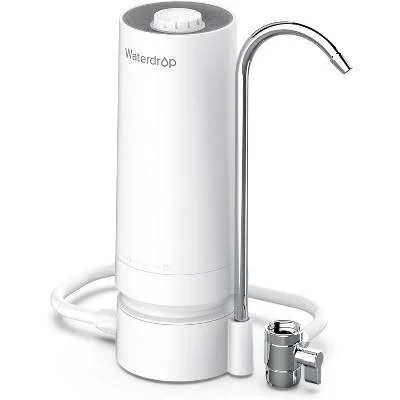
Waterdrop Countertop Water Filter
Lower-risk category, Waterdrop does not publicly disclose PFAS stance.
Waterdrop countertop filters use activated carbon and ion-exchange media, both common and inherently lower-PFAS-risk materials. However, Waterdrop makes no public PFAS claim or third-party certification.
We flunk more products than we pass. This one earned its grade. How we grade
Material
Activated carbon filter cartridge, plastic housing
Lab data
No public lab test
You may also be interested in
Top-graded picks in the categories readers replace first, every one scored on the same rubric.

Aqua Pure
3M Aqua-Pure AP802B Whole House Filter Housing
- polypropylene filter housing, carbon/sediment cartridge
- We found no PFAS statement from the brand
- Bacterial growth in spent cartridges
3 hazards checked on this product. See all of them.

Aquasure
Premier Series 75 GPD Under Sink Reverse Osmosis Water Filtration System
- RO membrane, carbon filters, stainless steel housing
- We found no PFAS statement from the brand
- Bacterial and microbial growth in housing and filters
4 hazards checked on this product. See all of them.

Avocado
Vegan Mattress
- organic cotton, natural latex, coconut coir, recycled steel coils
- The brand calls it PFAS-free, which we have not verified
- Heavy metals
2 hazards checked on this product. See all of them.
What Waterdrop Countertop Water Filter is made of, ingredients and materials
Waterdrop countertop filters use activated carbon cartridges (primary filtration media) housed in plastic, typically polypropylene or similar food-contact polymers. Activated carbon itself is inert and does not leach; the risk sits in the plastic housing and any adhesives or binders in the cartridge frame. Long-term exposure to water at room temperature poses minimal leaching risk from food-grade plastics, but cartridge degradation or pressure buildup can accelerate polymer breakdown.
What’s concerning
No PFAS disclosure
No public statement from the brand about PFAS in this product.
BPA & bisphenols
Waterdrop does not specify plastic grade or bisphenol-free certification. Food-contact polypropylene is generally low-risk, but unknown additives or recycled content cannot be ruled out without material documentation.
Source, FDA ↗Bacterial or mold growth in cartridge/housing
Cartridge binder or adhesive off-gassing
Cartridge frames may use synthetic binders or epoxy adhesives that could off-gas VOCs if cartridge is new or if housing is stored in warm conditions. No testing data from Waterdrop is available to confirm or rule out.
Filter efficacy and false sense of safety
Activated carbon is not effective against bacteria, viruses, or nitrates; many users assume countertop filters remove all contaminants. Waterdrop marketing does not always clarify these limits, risking misuse in contaminated water.
Cartridge disposal and microplastic shedding
Spent cartridges may shed carbon dust or plastic fragments if handled roughly. No clear end-of-life disposal guidance from Waterdrop; cartridges are not typically recyclable.
What’s reassuring
Base material not linked to PFAS
The main material recorded for this product is not one associated with PFAS.
The full breakdown
The brand's record and disclosure
Waterdrop has not publicly disclosed PFAS stance or testing protocols for filter cartridges, despite PFAS being a known concern in water filtration (some carbon sources or binder resins may contain legacy PFAS). The brand holds no major third-party certifications (NSF, WQA) on file for this countertop model, limiting independent verification of material safety. No major recalls or contamination incidents are documented for this product line.
How it compares in its category
Countertop carbon filters like Waterdrop's present lower concern than pitcher filters (less stagnant water, faster flow) but offer less assurance than NSF-certified undersink or whole-house systems. Waterdrop's lack of third-party certification is typical for budget countertop brands; premium alternatives (Aquasana, Clearly Filtered) publish NSF data and PFAS testing. Activated carbon efficacy is similar across brands; differentiation is in transparency and cartridge lifespan.
If you buy it
Replace cartridges every 2-3 months or 200-300 gallons (whichever comes first) to prevent bacterial biofilm and carbon exhaustion. Do not expose the plastic housing to direct heat, hot water fills above 110F, or sunlight; store in a cool, dark cabinet. Rinse the housing weekly and inspect for visible cracks or discoloration. Contact Waterdrop directly to request PFAS testing data and cartridge material specifications before purchase if PFAS concern is high.
What we don’t know
- Basis
- Model estimate, 62% confidence, not a lab result
- Lab test
- None on record for this exact product
- Brand statement
- Waterdrop has made a specific claim
Formulations change between production runs, so check the current label. How we grade.
Better-graded alternatives in Water Filters

Aquamira
Water Storage Treatment 2 oz Glass Bottles 60 gallons Purification
- glass bottles, sodium dichloroisocyanurate treatment chemical
- We found no PFAS statement from the brand
- Chemical overdose or misuse
5 hazards checked on this product. See all of them.

Big Berkey
Empty Housing with NO Filters Included
- Stainless steel housing and spigot
- We found no PFAS statement from the brand
- Bacterial growth and biofilm if filters not replaced
5 hazards checked on this product. See all of them.

LifeStraw
Home Glass Water Filter Pitcher
- Borosilicate glass pitcher, replaceable activated-carbon filter cartridge
- Bacterial growth in filter cartridge if unmaintained
5 hazards checked on this product. See all of them.
More water filters grades
How we score, every product runs through the same public 0-100 rubric based on materials, coatings, brand disclosure, lab findings, and recalls. See the full methodology → Spotted a mistake? Report an error.