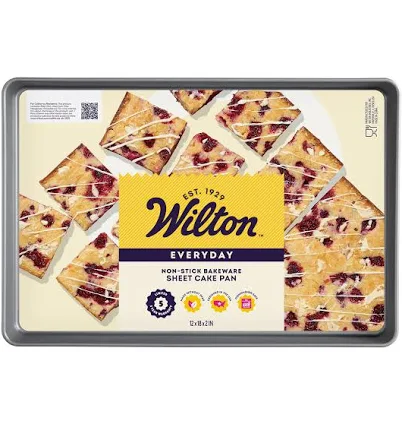
Wilton Treats Made Simple Non-Stick Sheet Cake Pan, Is It Non-Toxic?
Avoid until Wilton discloses the coating chemistry.
Wilton doesn't publicly explain what non-stick coating this cake pan uses or whether it contains PFAS. Standard non-stick cookware often uses Teflon-family coating, making unverified products risky.
The better-graded swap
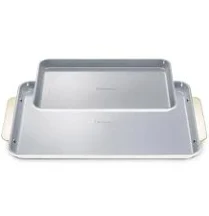
Caraway
Caraway Ceramic Nonstick Baking Sheet Duo
100/100 safety
Same rubric that flunked this product. The swap earned Excellent.
Still want this one anyway? Check the price on Amazon. We’d swap it.
Material
Steel with non-stick coating (type unspecified)
Brand disclosure
Brand is silent on PFAS
Lab data
No public lab test
You may also be interested in
Top-graded picks in the categories readers replace first, every one scored on the same rubric.

- polypropylene filter housing, carbon/sediment cartridge
- We found no PFAS statement from the brand
- Bacterial growth in spent cartridges
3 hazards checked on this product, all on its full breakdown.

Aquasure
Premier Series 75 GPD Under Sink Reverse Osmosis Water Filtration System
- RO membrane, carbon filters, stainless steel housing
- We found no PFAS statement from the brand
- Bacterial and microbial growth in housing and filters
4 hazards checked on this product, all on its full breakdown.

Avocado
Vegan Mattress
- organic cotton, natural latex, coconut coir, recycled steel coils
- The brand calls it PFAS-free, which we have not verified
- Heavy metals
2 hazards checked on this product, all on its full breakdown.
Is Wilton Treats Made Simple Sheet Cake Pan non-toxic? What it is made of
This pan is steel with a proprietary non-stick coating that Wilton has not publicly identified as not a material linked to PFAS. Steel itself is inert and food-safe; the risk centers entirely on the coating chemistry. Without disclosure, you cannot verify whether the non-stick layer uses traditional Teflon-type coating (which releases fumes if overheated) or newer alternatives like ceramic or silicon-based systems. The coating is the functional component that contacts food and determines safe heat limits.
What’s concerning
Category baseline
The starting point for this type of product, before anything specific to this product is counted.
No PFAS disclosure
No public statement from the brand about PFAS in this product.
Non-stick, chemistry undisclosed
Marketed as non-stick without stating the coating chemistry.
Teflon-type coating fume risk (thermal decomposition)
If the coating is Teflon-type coating-based (unconfirmed), exceeding 500F can release fluorinated gases. Standard home ovens rarely exceed 450F, but broiler use or direct flame exposure could trigger this. Wilton does not specify a maximum temperature.
Coating degradation and flaking
Non-stick bakeware coatings wear over time with normal use and dishwasher exposure. Flaked coating fragments may be ingested in baked goods. No specific recalls for this model are documented, but degradation is a known lifecycle issue for all non-stick bakeware.
What’s reassuring
Leaching from steel substrate or coating adhesive
Steel itself does not leach significant elements at normal baking temperatures. However, the adhesive bonding the non-stick layer to steel is not disclosed and may contain trace metals or polymers; no published data or complaints are on record for this product line.
Allergen risk from manufacturing residues
No documented allergen claims or cross-contamination incidents for Wilton bakeware. Steel and standard non-stick coatings do not inherently introduce common allergens, but undisclosed manufacturing additives cannot be ruled out for sensitive individuals.
How is this PFAS grade calculated?
The brand's record and disclosure
Wilton, a subsidiary of Merehurst Ltd. and a major baking-supply brand, has not issued public statements committing to PFAS-free non-stick coatings or disclosing the chemistry of existing lines. The company does not advertise Teflon-type coating-free or ceramic-coated alternatives prominently in this product category. Industry data shows many legacy non-stick bakeware brands continue using Teflon-type coating without pushing toward alternatives, and Wilton's silence suggests no recent reformulation push for this line.
How it compares in its category
Steel bakeware with undisclosed non-stick coatings is standard in the mass-market segment; this product is typical for the price point. Safer alternatives include ceramic-coated steel pans (e.g., GreenPan, Our Place), uncoated stainless steel (no chemical risk but requires greasing), or cast iron. Brands like OXO and Calphalon have begun disclosing Teflon-type coating-free options, making Wilton's silence a relative weakness in an evolving market.
If you buy it
Keep oven temperature below 400F to minimize any risk of coating degradation or fume release. Avoid metal utensils; use silicone or wood to preserve the coating. Inspect regularly for chips, scratches, or peeling; discard the pan if the coating shows damage, as bare steel edges may rust and flakes may enter food. Hand-wash only; dishwasher use accelerates coating wear. Replace every 3-5 years or sooner if performance declines.
What is not known about PFAS in this product?
- Basis
- Model estimate, 35% confidence, not a lab result
- Lab test
- None on record for this exact product
- Brand statement
- Wilton has made none
Formulations change between production runs, so check the current label. How we grade.
What are the PFAS-free alternatives to Wilton Treats Made Simple Non-Stick Sheet Cake Pan?
- ceramic nonstick coating
- A third party reports verifying it as PFAS-free
- Ceramic coating degradation over time
- ceramic nonstick coating
- A third party reports verifying it as PFAS-free
- Coating degradation and durability
2 hazards checked on this product, all on its full breakdown.

- ceramic nonstick coating
- The brand calls it PFAS-free, which we have not verified
- Ceramic coating degradation and particle shedding
3 hazards checked on this product, all on its full breakdown.
More bakeware grades
How we score, every product runs through the same public 0-100 rubric based on materials, coatings, brand disclosure, lab findings, and recalls. See the full methodology → Spotted a mistake? Report an error.