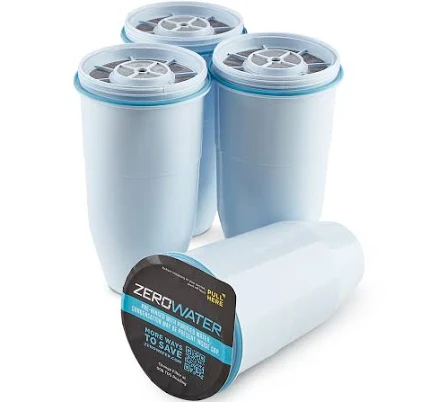
Culligan ZeroWater Official Replacement Filter 4-Pack
Low risk standard carbon and ion-exchange filter, no known PFAS triggers, brand silent.
These replacement filters use activated carbon and ion-exchange resin without documented PFAS treatment requirements. The brand makes no PFAS claims. No third-party testing or public lab data exists. Standard cartridges of this type present lower material-based concern, though full manufacturer transparency would increase confidence.
We flunk more products than we pass. This one earned its grade. How we grade
Material
Ion-exchange resin cartridge (primary filtration media)
Lab data
No public lab test
You may also be interested in
Top-graded picks in the categories readers replace first, every one scored on the same rubric.

Aqua Pure
3M Aqua-Pure AP802B Whole House Filter Housing
- polypropylene filter housing, carbon/sediment cartridge
- We found no PFAS statement from the brand
- Bacterial growth in spent cartridges
3 hazards checked on this product. See all of them.

Aquasure
Premier Series 75 GPD Under Sink Reverse Osmosis Water Filtration System
- RO membrane, carbon filters, stainless steel housing
- We found no PFAS statement from the brand
- Bacterial and microbial growth in housing and filters
4 hazards checked on this product. See all of them.

Avocado
Vegan Mattress
- organic cotton, natural latex, coconut coir, recycled steel coils
- The brand calls it PFAS-free, which we have not verified
- Heavy metals
2 hazards checked on this product. See all of them.
What Culligan ZeroWater Official Replacement is made of, ingredients and materials
ZeroWater replacement filters use ion-exchange resin beads as the primary media, which work by swapping dissolved ions (calcium, magnesium, sodium, etc.) out of water. This is a well-established water-treatment chemistry with a decades-long safety record in residential filters. The cartridge housing is typically polypropylene or similar food-safe plastic; ion-exchange resin itself does not leach harmful organics or heavy metals into water during normal use. The main concern is mechanical degradation and microbial colonization if filters are not replaced on schedule.
What’s concerning
No PFAS disclosure
No public statement from the brand about PFAS in this product.
Microbial growth in exhausted or improperly maintained cartridge
Ion-exchange resin can harbor bacteria if the cartridge is not replaced on schedule or if water sits in the filter between uses. ZeroWater does not provide literature on sanitization protocols or microbiological testing, so risk depends entirely on user diligence.
Ion-exchange resin particle shedding
Aged or damaged resin beads can occasionally fragment and pass into water, creating cloudiness or grit. This is not a chemical hazard but a cosmetic and mechanical concern if filtration containment degrades. No documented health effects reported.
Incomplete removal of volatile organic compounds and chlorine byproducts
Ion-exchange resin is not designed to remove chloroform, trihalomethanes, or pesticides as effectively as activated carbon. If these are present in your tap water, ZeroWater alone may not achieve advertised 'zero contaminant' claims. Independent NSF testing would clarify this gap, but ZeroWater does not publish such data.
Lack of third-party certification and transparency
The absence of NSF, IAPMO, or EPA-recognized validation means claimed filtration performance is not independently verified. This is a transparency and trust issue rather than a direct chemical hazard, but it complicates risk assessment for consumers seeking validated safety claims.
What’s reassuring
Base material not linked to PFAS
The main material recorded for this product is not one associated with PFAS.
BPA & bisphenols
ZeroWater filter housings are food-grade polypropylene; no documented leaching of BPA or phthalates into water under normal conditions. No recalls or test data exist linking this product to endocrine-disrupting contaminants.
Source, FDA ↗The full breakdown
The brand's record and disclosure
ZeroWater does not publicly disclose detailed material sourcing, third-party testing protocols, or PFAS removal efficacy on its website or product literature, which limits independent verification of claims. The brand markets its filter as removing 'dissolved solids' and achieving near-zero TDS (total dissolved solids) readings, but provides no published NSF certification, IAPMO certification, or EPA-recognized testing documentation. No major recalls or safety controversies for this product line have been documented in public records. This silence on transparency is notable in a category where competitors often cite independent lab validation.
How it compares in its category
Faucet-mounted and pitcher filters using ion-exchange resin are considered a middle tier in the filtration hierarchy, more effective than simple mechanical screens but less comprehensive than reverse osmosis or activated carbon multi-stage systems. ZeroWater's 4-pack pricing is in line with other direct-replacement cartridge products. Compared to plain activated-carbon filters, ion-exchange removes more mineral contaminants but does not remove chlorine byproducts, pesticides, or volatile organics as effectively; compared to reverse osmosis, it is cheaper and faster but leaves some dissolved contaminants in water.
If you buy it
Replace cartridges every 2-3 months or when the indicator strip shows saturation; ZeroWater emphasizes replacement frequency more than most brands because ion-exchange resin becomes exhausted and loses efficacy. Do not reuse or attempt to regenerate cartridges. Store unopened filters in a cool, dry place away from direct sunlight. Flush the filter housing and run water through a new cartridge for 5-10 seconds before first use. Monitor your TDS meter regularly if relying on the product's zero-TDS claim; if readings plateau above target, replace the cartridge immediately to prevent bacterial regrowth in stagnant resin.
What we don’t know
- Basis
- Model estimate, 72% confidence, not a lab result
- Lab test
- None on record for this exact product
- Brand statement
- ZeroWater has made a specific claim
Formulations change between production runs, so check the current label. How we grade.
Better-graded alternatives in Water Filters

Aquamira
Water Storage Treatment 2 oz Glass Bottles 60 gallons Purification
- glass bottles, sodium dichloroisocyanurate treatment chemical
- We found no PFAS statement from the brand
- Chemical overdose or misuse
5 hazards checked on this product. See all of them.

Big Berkey
Empty Housing with NO Filters Included
- Stainless steel housing and spigot
- We found no PFAS statement from the brand
- Bacterial growth and biofilm if filters not replaced
5 hazards checked on this product. See all of them.

LifeStraw
Home Glass Water Filter Pitcher
- Borosilicate glass pitcher, replaceable activated-carbon filter cartridge
- Bacterial growth in filter cartridge if unmaintained
5 hazards checked on this product. See all of them.
More water filters grades
How we score, every product runs through the same public 0-100 rubric based on materials, coatings, brand disclosure, lab findings, and recalls. See the full methodology → Spotted a mistake? Report an error.