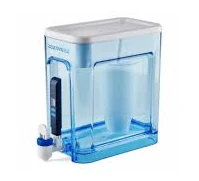
ZeroWater Dispenser
No coating of concern recorded, and no PFAS statement from the brand.
The brand has published no PFAS statement for this product that we could find.
We flunk more products than we pass. This one earned its grade. How we grade
Material
Ion-exchange resin cartridge, plastic pitcher housing
Lab data
No public lab test
You may also be interested in
Top-graded picks in the categories readers replace first, every one scored on the same rubric.

Aqua Pure
3M Aqua-Pure AP802B Whole House Filter Housing
- polypropylene filter housing, carbon/sediment cartridge
- We found no PFAS statement from the brand
- Bacterial growth in spent cartridges
3 hazards checked on this product. See all of them.

Aquasure
Premier Series 75 GPD Under Sink Reverse Osmosis Water Filtration System
- RO membrane, carbon filters, stainless steel housing
- We found no PFAS statement from the brand
- Bacterial and microbial growth in housing and filters
4 hazards checked on this product. See all of them.

Avocado
Vegan Mattress
- organic cotton, natural latex, coconut coir, recycled steel coils
- The brand calls it PFAS-free, which we have not verified
- Heavy metals
2 hazards checked on this product. See all of them.
What ZeroWater Dispenser is made of, ingredients and materials
The ZeroWater dispenser uses ion-exchange resin cartridges (polymer beads that swap ions to remove dissolved solids) housed in a plastic pitcher. Ion-exchange resins themselves are chemically inert once saturated and do not leach into water under normal use; the risk profile hinges on the pitcher plastic and whether resin exhaustion allows contaminants to pass through. The cartridge design is sealed, so direct resin contact with water is controlled by the ion-exchange mechanism, not surface degradation.
What’s concerning
No PFAS disclosure
No public statement from the brand about PFAS in this product.
Bacterial growth in housing if cartridge not replaced timely
Ion-exchange cartridges are most effective early in their life; delayed replacement allows water stagnation in the pitcher housing, creating conditions for microbial colonization. This is a usage and maintenance issue, not a material defect.
Ion-exchange resin particle shedding if cartridge housing fractures
A cracked or improperly seated cartridge could release resin beads into drinking water. Beads themselves are non-toxic, but physical presence is undesirable; inspect cartridges before installation and ensure they click or seal properly into the housing.
Plastic degradation over extended storage or heat exposure
The pitcher housing can become brittle or warp if stored near hot appliances or left in direct sunlight for months. This does not introduce toxins but may compromise seal integrity and bacterial containment.
What’s reassuring
Base material not linked to PFAS
The main material recorded for this product is not one associated with PFAS.
Leachables from plastic pitcher housing
ZeroWater does not disclose the specific plastic polymer (likely polycarbonate or copolyester). No recalls or test data on record show BPA or BPS leaching from this brand's pitcher; however, the absence of published material specifications limits independent verification.
The full breakdown
The brand's record and disclosure
ZeroWater has not publicly disclosed PFAS testing or manufacturing statements, despite PFAS being relevant to water filtration industry discussions. The brand does not appear in major environmental health databases flagged for safety recalls or hazardous material violations. Third-party certifications (NSF, WQA) are not prominently documented on standard product packaging, limiting independent verification of material standards.
How it compares in its category
Ion-exchange pitcher filters are a common consumer choice and pose fewer mechanical risks than reverse-osmosis or activated-carbon filters, which require more complex plumbing and can harbor bacterial growth if flow rates drop. ZeroWater's approach is mainstream and does not employ exotic coatings or additives that would raise concerns. The main category-wide issue, inadequate replacement schedules leading to bacterial regrowth or resin exhaustion, applies equally here.
If you buy it
Replace cartridges on the manufacturer's recommended schedule (typically every 2-6 months depending on water hardness and use); exhausted resin will no longer filter and may allow contaminants through. Store the pitcher in a cool, dark place and do not expose it to extreme heat or direct sunlight, which can degrade plastic over time. Rinse the pitcher regularly and dry it fully to prevent mold or bacterial buildup in the housing. Do not microwave or freeze the pitcher or cartridge.
What we don’t know
- Basis
- Model estimate, 72% confidence, not a lab result
- Lab test
- None on record for this exact product
- Brand statement
- ZeroWater has made a specific claim
Formulations change between production runs, so check the current label. How we grade.
Better-graded alternatives in Water Filters

Aquamira
Water Storage Treatment 2 oz Glass Bottles 60 gallons Purification
- glass bottles, sodium dichloroisocyanurate treatment chemical
- We found no PFAS statement from the brand
- Chemical overdose or misuse
5 hazards checked on this product. See all of them.

Big Berkey
Empty Housing with NO Filters Included
- Stainless steel housing and spigot
- We found no PFAS statement from the brand
- Bacterial growth and biofilm if filters not replaced
5 hazards checked on this product. See all of them.

LifeStraw
Home Glass Water Filter Pitcher
- Borosilicate glass pitcher, replaceable activated-carbon filter cartridge
- Bacterial growth in filter cartridge if unmaintained
5 hazards checked on this product. See all of them.
More water filters grades
How we score, every product runs through the same public 0-100 rubric based on materials, coatings, brand disclosure, lab findings, and recalls. See the full methodology → Spotted a mistake? Report an error.