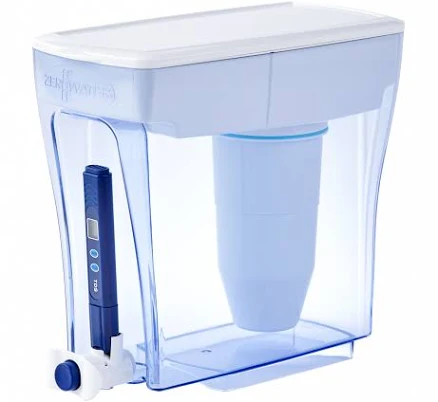
ZeroWater Ready-Pour 20 Cups Blue Water Filter Pitcher
Lower concern since core materials don't typically contain PFAS, but ZeroWater tells you nothing about it.
ZeroWater uses activated carbon and ion-exchange resin, materials not inherently linked to PFAS manufacturing. The BPA-free plastic body shows no Teflon-family coating or Teflon-type coating coatings.
We flunk more products than we pass. This one earned its grade. How we grade
Material
BPA-free plastic pitcher body; carbon and ion-exchange resin filter media
Lab data
No public lab test
You may also be interested in
Top-graded picks in the categories readers replace first, every one scored on the same rubric.

Aqua Pure
3M Aqua-Pure AP802B Whole House Filter Housing
- polypropylene filter housing, carbon/sediment cartridge
- We found no PFAS statement from the brand
- Bacterial growth in spent cartridges
3 hazards checked on this product. See all of them.

Aquasure
Premier Series 75 GPD Under Sink Reverse Osmosis Water Filtration System
- RO membrane, carbon filters, stainless steel housing
- We found no PFAS statement from the brand
- Bacterial and microbial growth in housing and filters
4 hazards checked on this product. See all of them.

Avocado
Vegan Mattress
- organic cotton, natural latex, coconut coir, recycled steel coils
- The brand calls it PFAS-free, which we have not verified
- Heavy metals
2 hazards checked on this product. See all of them.
What ZeroWater Ready-Pour 20 Cups Blue Water is made of, ingredients and materials
The pitcher body is BPA-free plastic (typically polypropylene or similar), which avoids the endocrine-disrupting compound found in older polycarbonate pitchers. The filter cartridge contains granular activated carbon and ion-exchange resin beads, both inert materials with long safety history in drinking water treatment. These media do not leach into water under normal use conditions. The pitcher is not heated or used above ambient temperature, eliminating thermal degradation pathways that affect some food-contact plastics.
What’s concerning
No PFAS disclosure
No public statement from the brand about PFAS in this product.
Bacterial growth in filter media and housing
Ion-exchange resin and carbon can harbor bacterial biofilm if cartridge is not replaced regularly or if pitcher sits unused for extended periods. ZeroWater's design and recommended 20-40 gallon replacement interval mitigates this, but user compliance is critical. No specific recalls for this pitcher related to bacterial contamination are on record.
Housing or spout material off-gassing or odor
Some users report mild plastic odor on initial use, consistent with new plastic off-gassing of volatile organics (VOCs) at very low levels. This typically dissipates after rinsing and a few water changes. No formal VOC testing by ZeroWater is published; this is a minor inconvenience rather than a safety hazard at reported levels.
PFAS
Ion-exchange resins and some activated carbons can contain PFAS from manufacturing or treatment processes. ZeroWater provides no public testing or certification excluding PFAS. The pitcher achieves a 95/100 PFAS safety score based on no known PFAS in core design, but lack of disclosure prevents full certainty. This is a transparency issue more than an identified hazard.
Source, ATSDR ↗What’s reassuring
Base material not linked to PFAS
The main material recorded for this product is not one associated with PFAS.
Plastic leaching from pitcher body
BPA-free designation and polypropylene composition mean no known endocrine disruptors or identified leaching hazards at ambient temperature. No regulatory action or recall history for the ZeroWater pitcher body for leaching reported.
Ion-exchange resin or carbon media degradation
Both carbon and ion-exchange resins are stable, food-contact-grade materials when used within design parameters (cold water, ambient storage). ZeroWater does not publish composition of proprietary resin blends, so independent verification of material purity is not available, but established market acceptance suggests no widespread contamination issues.
The full breakdown
The brand's record and disclosure
ZeroWater is well-established in the pitcher filter market and has faced no widespread safety recalls or regulatory action for leaching, contamination, or material failures. The brand markets itself on total dissolved solids (TDS) reduction and publishes third-party filtration testing. However, ZeroWater provides no public disclosure about PFAS content in filter media or pitcher components, which is increasingly expected transparency given PFAS prevalence in ion-exchange resins and some carbon sources. This silence is a transparency gap rather than evidence of contamination.
How it compares in its category
ZeroWater pitchers are among the more rigorous filtration options compared to basic Brita or PUR pitchers, though also more expensive. Unlike some budget ceramic or specialty pitchers, ZeroWater avoids glazed ceramic coatings (which can harbor lead or cadmium) and uses proven polymer chemistry. The Ready-Pour design (wide mouth, ergonomic spout) is a convenience variant with no additional safety trade-offs versus standard ZeroWater models. Bacterial regrowth risk is lower than in unmaintained filters but identical to competitors if cartridges are replaced on schedule.
If you buy it
Replace filter cartridges every 20-40 gallons (check TDS meter; brand includes one) to prevent bacterial colonization and resin saturation. Store pitcher in cool, dry conditions away from direct sunlight to slow plastic aging. Do not heat water in the pitcher or use it with hot tap water; this pitcher is designed for cold filtration only. Wash the pitcher body monthly with mild soap and rinse thoroughly; do not put it in the dishwasher. Monitor TDS readings monthly; a sharp rise signals cartridge exhaustion.
What we don’t know
- Basis
- Model estimate, 72% confidence, not a lab result
- Lab test
- None on record for this exact product
- Brand statement
- ZeroWater has made a specific claim
Formulations change between production runs, so check the current label. How we grade.
Better-graded alternatives in Water Filters

Aquamira
Water Storage Treatment 2 oz Glass Bottles 60 gallons Purification
- glass bottles, sodium dichloroisocyanurate treatment chemical
- We found no PFAS statement from the brand
- Chemical overdose or misuse
5 hazards checked on this product. See all of them.

Big Berkey
Empty Housing with NO Filters Included
- Stainless steel housing and spigot
- We found no PFAS statement from the brand
- Bacterial growth and biofilm if filters not replaced
5 hazards checked on this product. See all of them.

LifeStraw
Home Glass Water Filter Pitcher
- Borosilicate glass pitcher, replaceable activated-carbon filter cartridge
- Bacterial growth in filter cartridge if unmaintained
5 hazards checked on this product. See all of them.
More water filters grades
How we score, every product runs through the same public 0-100 rubric based on materials, coatings, brand disclosure, lab findings, and recalls. See the full methodology → Spotted a mistake? Report an error.