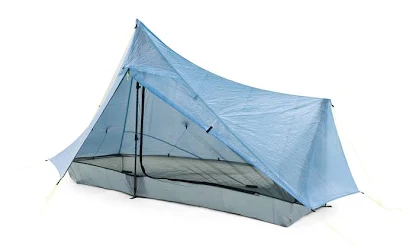
Zpacks · Camping Tents & Tarps
Pivot Solo Tent
Skip until Zpacks clarifies waterproof coating chemistry.
The tent uses Zpacks' proprietary Dyneema composite with an undisclosed waterproof treatment. High-end ultralight shelters commonly rely on Teflon-family coating coatings.
Still want this one anyway? Check the price on Amazon. We’d swap it.
Material
Dyneema composite fabric (polyethylene); waterproof coating unspecified
Brand disclosure
Brand is silent on PFAS
Lab data
No public lab test
What Pivot Solo Tent is made of, ingredients and materials
The Pivot Solo uses Dyneema composite fabric, a ultra-high-molecular-weight polyethylene (UHMWPE) laminate that is inherently chemically inert and does not leach plasticizers, BPA, or phthalates under normal use. Dyneema itself is associated with lower concern as a synthetic tent fabric because it is not formulated with softening agents or chemical additives baked into the polymer matrix. However, Zpacks does not publicly disclose the chemistry of the waterproof coating applied to this fabric, which is the critical unknown, modern tent coatings are typically polyurethane, silicone, or Teflon-family coating-based, each with different safety and environmental profiles.
What’s concerning
Category baseline
The starting point for this type of product, before anything specific to this product is counted.
No PFAS disclosure
No public statement from the brand about PFAS in this product.
Waterproof / stain-resistant treatment
Water-repellent coating treatments have historically used PFAS.
Waterproof coating chemistry (unspecified)
Zpacks does not disclose whether the fabric coating is fluorinated (PFAS-containing), polyurethane, or silicone-based. Fluorinated water-repellent coating coatings are common in ultralight gear and do not off-gas under normal temperature use, but fluorinated compounds persist in the environment and body if coating flakes or degrades.
Microfiber shedding from coating degradation
As the waterproof coating ages and experiences flex stress (typical in single-wall tents), microscopic particles may separate from the fabric. This is not a direct toxicity hazard but a source of microplastic exposure if particles are inhaled or ingested during setup/teardown, particularly in enclosed sleeping spaces.
What’s reassuring
Polyethylene (Dyneema) stability
The Dyneema substrate itself does not leach additives, BPA, or phthalates and is chemically stable across normal camping temperature ranges (minus 20 to 60 degrees Celsius). No health hazards are documented for Dyneema fiber or fabric contact.
Formaldehyde / VOCs
Zpacks does not publicly confirm whether dyes or sizing agents contain formaldehyde resins or azo dyes. However, Dyneema composites typically require minimal chemical processing compared to woven textiles, and ultralight gear manufacturers do not generally apply heavy finishing treatments that would introduce these hazards.
Source, ATSDR ↗Off-gassing during storage or use
Dyneema composite and applied coatings do not emit measurable volatile organic compounds (VOCs) at room temperature or during typical camping use. Off-gassing is not a documented concern for modern tent fabrics of this type.
The full breakdown
The brand's record and disclosure
Zpacks is a minimalist ultralight gear manufacturer with no published safety certifications, third-party testing, or PFAS commitments on record. The brand has not responded to or acknowledged PFAS concerns in outdoor apparel and gear despite the industry-wide shift toward transparency on water-repellent coating (water-repellent coating) coatings. This silence is particularly notable because ultralight tent fabrics often rely on fluorinated finishes to achieve water resistance at minimal weight, making coating chemistry essential information for informed purchase decisions.
How it compares in its category
Most ultralight single-wall tents rely on fluorinated water-repellent coating or polyurethane coatings; Zpacks provides no comparative advantage in transparency. Competitors like Hyperlite Mountain Gear and Six Moon Designs similarly avoid detailed coating disclosures, but larger brands (Big Agnes, MSR) have begun issuing PFAS statements in response to regulatory pressure. The Pivot Solo's Dyneema base fabric is among materials with lower concern as substrate options, but coating opacity is industry-wide, not brand-specific.
If you buy it
Store the tent dry and avoid prolonged exposure to direct sunlight, which can degrade any coating over 5-10 years of use. Do not apply aftermarket waterproofing sprays unless you verify they are PFAS-free, as many consumer water-repellent coating treatments are fluorinated. Inspect seams and coating annually for peeling or delamination; once degradation is visible, the tent's water resistance cannot be reliably restored. Request written confirmation from Zpacks about whether the waterproof coating contains PFAS or fluorinated compounds before purchase if PFAS exposure is a personal concern.
What we don’t know
- Basis
- Model estimate, 42% confidence, not a lab result
- Lab test
- None on record for this exact product
- Brand statement
- Zpacks has made none
Formulations change between production runs, so check the current label. How we grade.
More camping tents & tarps grades
How we score, every product runs through the same public 0-100 rubric based on materials, coatings, brand disclosure, lab findings, and recalls. See the full methodology → Spotted a mistake? Report an error.