Adidas · Synthetic Athletic Insoles & Orthotics
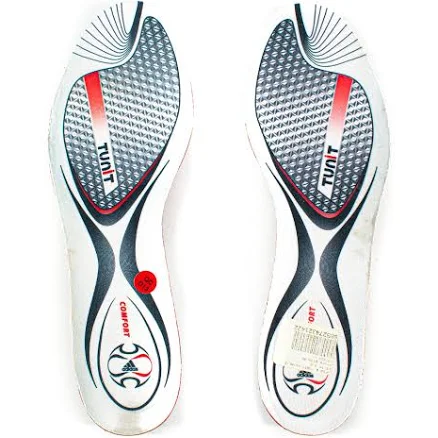
Adidas F50 Tunit Chassis Comfort Insole, 6US / 5.5UK / 38.67EU
Low-medium concern. Foam insoles unlikely to use PFAS, but no disclosure.
The F50 insoles are primarily EVA foam and mesh textile without water or stain treatments requiring PFAS. Adidas has not disclosed PFAS use or testing for this model.
Still want this one anyway? Check the price on Amazon. We’d swap it.
Material
EVA foam, mesh textile lining
Lab data
No public lab test
What Adidas F50 Tunit Chassis Comfort Insole is made of, ingredients and materials
The F50 Tunit Chassis insole is constructed primarily from EVA (ethylene-vinyl acetate) foam, a closed-cell polymer widely used in athletic footwear for cushioning and shock absorption. EVA is chemically inert when cured and does not leach significant compounds under normal foot-temperature conditions (body heat ~37C). The mesh textile lining is a synthetic fabric overlay that provides structure and moisture wicking; standard athletic mesh does not require flame retardants and poses minimal hazard under normal wear.
What’s concerning
Category baseline
The starting point for this type of product, before anything specific to this product is counted.
No PFAS disclosure
No public statement from the brand about PFAS in this product.
Azo dyes in mesh textile
The mesh lining may be colored; if so, azo dyes are a routine risk in low-cost synthetic textiles. Adidas does not disclose colorant source for insole components. Contact-dermatitis risk is minimal since insoles contact foot skin only intermittently.
EVA foam degradation and off-gassing
EVA can release trace amounts of vinyl acetate and acetic acid when aged or heated. Risk is very low under normal foot conditions but increases if stored in hot environments or if foam integrity breaks down with age.
Microbial growth if insole remains damp
Prolonged moisture retention in the foam or mesh (e.g., from sweat or wet storage) can promote odor-causing bacteria or mold. This is a hygiene concern rather than a toxicological hazard but may trigger inflammatory skin reactions in susceptible users.
What’s reassuring
Base material not linked to PFAS
The main material recorded for this product is not one associated with PFAS.
Formaldehyde / VOCs
No formaldehyde-resin wrinkle-resistance treatment has been documented in Adidas insole mesh linings. Athletic mesh is typically finished only with water-based sizing.
Source, ATSDR ↗Antimony in polyester
The mesh is likely nylon or polyethylene rather than polyester, making antimony catalysts unnecessary. If polyester is present, no recall or test data indicates antimony leaching from insole textiles.
The full breakdown
The brand's record and disclosure
Adidas has not publicly disclosed PFAS use in insole foam or provided third-party testing for this specific component. The brand remains silent on water-resistant treatment of the mesh, which historically was a vector for PFAS in textiles. However, no recalls or safety alerts have been issued for F50 insoles. Adidas has committed to eliminating PFAS from apparel by 2025 (announced 2022) but has not extended this pledge explicitly to foam components.
How it compares in its category
EVA insoles are industry standard in mid-to-premium athletic footwear and have lower volatile organic compound (VOC) off-gassing risk compared to older PU (polyurethane) foam formulations. The Tunit Chassis is a replacement insole rather than a full shoe, reducing total chemical exposure compared to buying a new shoe. Most competing insoles (Superfeet, Spenco, Powerstep) use similar EVA or comparable closed-cell foam and do not disclose PFAS either.
If you buy it
Store insoles in a cool, dry environment away from direct heat and sunlight to prevent EVA degradation and any potential minor off-gassing of residual monomers. Replace when visible compression, cracking, or odor develops (typically 12-18 months depending on use intensity). Wash the mesh lining by hand with warm water and mild soap; avoid machine drying. Do not expose to temperatures above 60C (hot car interiors or dishwashers).
What we don’t know
- Basis
- Model estimate, 72% confidence, not a lab result
- Lab test
- None on record for this exact product
- Brand statement
- Adidas has made a specific claim
Formulations change between production runs, so check the current label. How we grade.
More synthetic athletic insoles & orthotics grades
How we score, every product runs through the same public 0-100 rubric based on materials, coatings, brand disclosure, lab findings, and recalls. See the full methodology → Spotted a mistake? Report an error.