Adidas · Synthetic Athletic Insoles & Orthotics
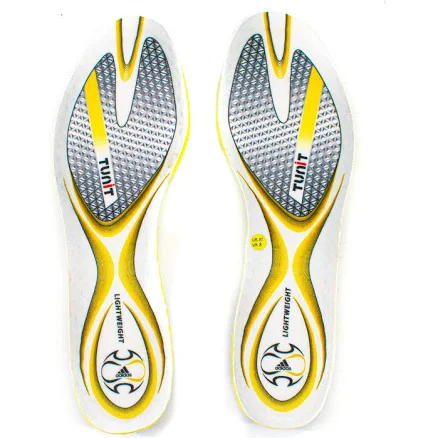
Adidas F50 Tunit Chassis Lightweight Insole, 6US / 5.5UK / 38.67EU
Low-medium concern. Standard foam insole without known PFAS triggers.
The F50 insole is primarily EVA foam and textiles, materials not typically treated with PFAS. No waterproofing or stain resistance claims are disclosed, and Adidas has not publicly committed to PFAS elimination.
Still want this one anyway? Check the price on Amazon. We’d swap it.
Material
EVA foam, textile blend
Lab data
No public lab test
What Adidas F50 Tunit Chassis Lightweight is made of, ingredients and materials
This insole is constructed from EVA (ethylene-vinyl acetate) foam, a closed-cell synthetic polymer widely used in athletic footwear for cushioning and lightweight support. EVA is chemically stable under normal wear conditions and does not leach volatile organic compounds (VOCs) at body temperature. The textile blend upper layer provides breathability and moisture management but introduces a second material stream to evaluate for dyes and finishes.
What’s concerning
Category baseline
The starting point for this type of product, before anything specific to this product is counted.
No PFAS disclosure
No public statement from the brand about PFAS in this product.
Azo dyes in textile layer
The textile blend may be dyed with azo colorants, which are restricted but not banned in most markets. Adidas products are tested to restricted substance limits, but no specific test reports for this insole model are publicly available.
Formaldehyde / VOCs
Textile components may contain formaldehyde-based finishing resins for wrinkle resistance or stiffening. Adidas formulations may be within lower concern limits, but specific finish chemistry is not disclosed for this model.
Source, ATSDR ↗Degradation and microparticle shedding
Over 12-18 months, EVA foam can break down mechanically and shed fine particles into socks and shoes. This is normal wear and not a chemical hazard but may be relevant for users concerned about synthetic particulates.
What’s reassuring
Base material not linked to PFAS
The main material recorded for this product is not one associated with PFAS.
VOC off-gassing from EVA foam
EVA foam used in athletic insoles does not typically release significant VOCs at body temperature. No odor or respiratory complaints have been documented for this product line.
Antimony in polyester content
If polyester is used as a textile layer, it may contain trace antimony oxide as a catalyst, but residual antimony in finished textiles is typically negligible and not a concern during normal wear.
The full breakdown
The brand's record and disclosure
Adidas has made limited public commitments to chemical transparency in foam insoles specifically, though the company publishes general restricted substances lists (RSL) for finished products. No recalls or safety warnings have been issued for this F50 Tunit model. The brand's PFAS disclosure remains opaque, consistent with industry norms for athletic footwear, but PFAS is not a known formulation driver in EVA foam insoles.
How it compares in its category
EVA insoles are standard across mid to premium athletic footwear and carry no known safety disadvantages versus competing foam types (polyurethane, gel). This product sits in the typical safety profile for replacement insoles in its price tier. Textile-lined insoles do require slightly more attention to dye and finish testing than pure foam, but Adidas products routinely meet EU and North American textile safety standards.
If you buy it
Replace insoles every 12-18 months or when cushioning visibly degrades, as worn foam can create pressure points. Machine wash at low temperature if the textile layer requires cleaning; avoid high heat or direct sunlight, which can degrade EVA over time. Store in a dry environment to prevent moisture absorption that may promote odor or mold. Monitor for any skin irritation; if it occurs, rinse and allow skin to air-dry.
What we don’t know
- Basis
- Model estimate, 72% confidence, not a lab result
- Lab test
- None on record for this exact product
- Brand statement
- Adidas has made a specific claim
Formulations change between production runs, so check the current label. How we grade.
More synthetic athletic insoles & orthotics grades
How we score, every product runs through the same public 0-100 rubric based on materials, coatings, brand disclosure, lab findings, and recalls. See the full methodology → Spotted a mistake? Report an error.