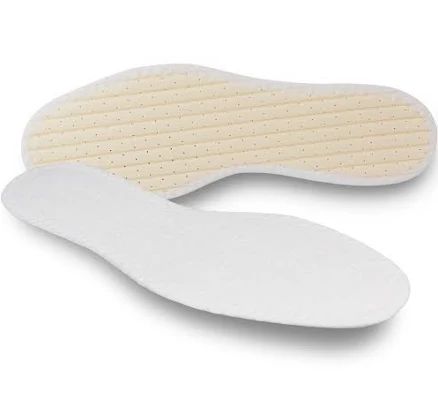
· Synthetic Athletic Insoles & Orthotics
Cotton Insole
Cotton insole with undisclosed backing material.
Cotton insoles with no treatment on record. The backing material is not described.
Still want this one anyway? Check the price on Amazon. We’d swap it.
Material
Cotton with possible latex or synthetic backing
Brand disclosure
Brand is silent on PFAS
Lab data
No public lab test
What Cotton Insole is made of, ingredients and materials
Cotton insoles are primarily woven or non-woven cotton, which is a natural cellulose fiber free from the synthetic polymer hazards (BPA, phthalates) common in foam or plastic-based alternatives. The backing material is the uncertainty here, typical cotton insole constructions use latex rubber or synthetic adhesive/polymer bases to add cushioning and durability. Cotton itself does not off-gas VOCs or formaldehyde; risk depends entirely on the glue and backing formulation, which the brand does not publicly specify.
What’s concerning
Category baseline
The starting point for this type of product, before anything specific to this product is counted.
No PFAS disclosure
No public statement from the brand about PFAS in this product.
Adhesive/backing composition (unknown)
The brand does not disclose adhesive or backing material (latex vs. synthetic polymer). Uncertified adhesives may off-gas volatile organic compounds (VOCs) or formaldehyde releasers, particularly if backing is synthetic rubber or polyurethane. Risk is low for typical use in open footwear but elevated if worn in enclosed spaces.
Latex sensitization (conditional)
If backing contains natural latex rubber, individuals with latex allergy or cross-reactivity (e.g., birch pollen sensitivity) may experience allergic contact dermatitis. The brand does not specify latex-free options publicly, making pre-purchase verification necessary for sensitive users.
What’s reassuring
Base material not linked to PFAS
The main material recorded for this product is not one associated with PFAS.
Formaldehyde / VOCs
No established reports of formaldehyde-release finishes in cotton insoles. Industrial cotton textiles sometimes use formaldehyde resins for wrinkle resistance; absent certification (Oeko-Tex, GOTS), this remains unconfirmed but unlikely to present acute risk in foot-contact insoles.
Source, ATSDR ↗Heavy metals
Cotton insoles typically require minimal dyeing; no public records of lead, cadmium, or azo dye issues in products. Risk is theoretical and consistent with the broader safety profile of undyed or naturally colored cotton textiles.
Source, FDA ↗Azo dyes or antimony in synthetic components
If backing contains polyester or other synthetics, azo dyes or antimony catalyst residues are a theoretical concern. No recalls or testing data are available for insoles; risk is lower than in synthetic-dominant footwear.
The full breakdown
The brand's record and disclosure
The brand is a German footwear accessories manufacturer with a long history (founded 1906) but maintains minimal public disclosure of material sourcing, production practices, or chemical use. No major safety recalls or formaldehyde/heavy-metal incidents appear in public records for insoles. The brand does not publish PFAS statements or third-party certifications (e.g., Oeko-Tex, GOTS), leaving the backing and adhesive composition opaque to consumers.
How it compares in its category
Cotton insoles sit in the mid-range safety profile of foot-care textiles. They avoid the microplastic shedding risk of synthetic foam insoles and the potential for azo dyes or antimony migration common in polyester-heavy products. However, without certified organic cotton or transparent backing disclosure, they offer less assurance than GOTS-certified or latex-free alternatives marketed for sensitive skin. Most mass-market insoles (Superfeet, Dr. Scholl's) offer similar or lower transparency.
If you buy it
Machine wash or gently hand wash in warm water; air dry flat to avoid degradation of adhesive backing. Replace every 6-12 months depending on wear, as aged backing may degrade and shed particulates. Avoid prolonged heat exposure (high-temperature dryers) as synthetic backing can soften. If you have latex sensitivity, contact directly to confirm backing material before purchase, as product specifications do not clearly distinguish latex-free variants.
What we don’t know
- Basis
- Model estimate, 75% confidence, not a lab result
- Lab test
- None on record for this exact product
- Brand statement
- has made none
Formulations change between production runs, so check the current label. How we grade.
More synthetic athletic insoles & orthotics grades
How we score, every product runs through the same public 0-100 rubric based on materials, coatings, brand disclosure, lab findings, and recalls. See the full methodology → Spotted a mistake? Report an error.