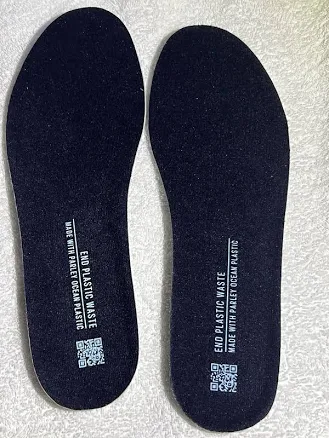
Adidas · Synthetic Athletic Insoles & Orthotics
Size 9.5-10m, Adidas Replacement Insole(blue), No Shoes
Lower concern. Standard foam insoles rarely contain PFAS.
Adidas replacement insoles are typical foam products without known water-resistant or stain-resistant treatment. No public PFAS disclosures identified.
Still want this one anyway? Check the price on Amazon. We’d swap it.
Material
Foam insole, likely EVA or polyurethane
Lab data
No public lab test
What Size 9.5-10m, Adidas Replacement is made of, ingredients and materials
This insole is almost certainly ethylene-vinyl acetate (EVA) foam or polyurethane (PU), both common cushioning polymers in athletic footwear. EVA and PU do not inherently contain heavy metals, formaldehyde resins, or azo dyes in their base formulations. The blue coloring likely uses synthetic organic dyes, which are typically azo-free in major brand athletic products, though Adidas does not publicly disclose dye specifications for replacement insoles.
What’s concerning
Category baseline
The starting point for this type of product, before anything specific to this product is counted.
No PFAS disclosure
No public statement from the brand about PFAS in this product.
Volatile organic compounds (VOCs) from polyurethane degradation
PU foam can off-gas trace VOCs, especially when new or if exposed to heat. Adidas does not publish VOC emissions data for this product. Risk is minimal in typical indoor use but relevant if worn in very warm environments.
Microplastics
Foam degradation over time can release microplastic particles, especially with high friction or abrasion. Direct skin contact is minimized by shoe lining, but this is a general concern for foam insole products.
Source, EPA ↗What’s reassuring
Base material not linked to PFAS
The main material recorded for this product is not one associated with PFAS.
Azo dyes (skin contact from blue coloring)
Major athletic brands typically use non-azo dyes in foam components to meet EU and safety standards. No evidence of azo dye use in Adidas foam insoles, but Adidas does not explicitly certify this product azo-free.
Formaldehyde / VOCs
Modern EVA and PU insoles rarely use formaldehyde-based adhesives, having shifted to alternatives with lower concern for formaldehyde exposure. No public recalls or warnings for Adidas foam insoles on this basis.
Source, ATSDR ↗Heavy metals
Cadmium and lead are not typical constituents of modern synthetic organic dyes used in athletic footwear. Adidas supply chain audits generally screen for heavy metals, though specific testing data for this SKU is not public.
Source, FDA ↗The full breakdown
The brand's record and disclosure
Adidas has faced scrutiny over PFAS use in performance textiles and waterproofing treatments, but has not disclosed PFAS content in foam insole components. The company has committed to phasing PFAS in apparel by 2025 but provides no transparency on replacement parts. No recalls or documented health incidents tied to Adidas foam insoles are on record.
How it compares in its category
Replacement foam insoles from major athletic brands (Nike, Asics, New Balance) carry equivalent safety profiles; this category is low-risk relative to coated cookware or cosmetics. Off-brand or unbranded foam insoles lack manufacturing oversight and are harder to verify. Adidas replacement parts are generally made in facilities subject to brand quality control.
If you buy it
Store insoles in a cool, dry place to prevent degradation of the foam structure. Do not expose to direct heat sources (radiators, dishwashers, or hot water) as PU can break down and release volatile organic compounds. Replace when foam becomes compressed, loses cushioning, or develops visible cracks, typically every 6-12 months depending on use intensity. Wash with mild soap and cool water if needed; air dry completely before reuse.
What we don’t know
- Basis
- Model estimate, 72% confidence, not a lab result
- Lab test
- None on record for this exact product
- Brand statement
- Adidas has made a specific claim
Formulations change between production runs, so check the current label. How we grade.
More synthetic athletic insoles & orthotics grades
How we score, every product runs through the same public 0-100 rubric based on materials, coatings, brand disclosure, lab findings, and recalls. See the full methodology → Spotted a mistake? Report an error.