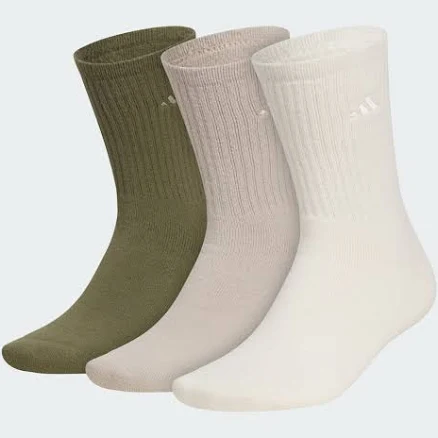
adidas Men's Cushioned Comfort Crew Socks (3-Pack)
Lower PFAS concern for basic crew socks; no water-repellent coating treatment reported, but no third-party verification.
Adidas cushioned crew socks are standard knit construction with no documented water-repellent or stain-resistant finish, eliminating the primary PFAS risk vectors. Adidas hasn't publicly committed to PFAS-free sock production or disclosed testing.
Still want this one anyway? Check the price on Amazon. We’d swap it.
Material
Cotton-blend knit (comfort socks, no water-resistance treatment documented)
Lab data
No public lab test
You may also be interested in
Top-graded picks in the categories readers replace first, every one scored on the same rubric.

- polypropylene filter housing, carbon/sediment cartridge
- We found no PFAS statement from the brand
- Bacterial growth in spent cartridges
3 hazards checked on this product, all on its full breakdown.

Aquasure
Premier Series 75 GPD Under Sink Reverse Osmosis Water Filtration System
- RO membrane, carbon filters, stainless steel housing
- We found no PFAS statement from the brand
- Bacterial and microbial growth in housing and filters
4 hazards checked on this product, all on its full breakdown.

Avocado
Vegan Mattress
- organic cotton, natural latex, coconut coir, recycled steel coils
- The brand calls it PFAS-free, which we have not verified
- Heavy metals
2 hazards checked on this product, all on its full breakdown.
What adidas Men's Cushioned Socks (3-Pack) is made of, ingredients and materials
These socks are cotton-blend knit (likely cotton-polyester or cotton-nylon mix based on 'cushioned comfort' positioning), with no documented water-repellent or antimicrobial treatment. The absence of water-repellent coating (water-repellent coating) coating means no PFAS-containing fluorocarbon finish typical of performance socks. Cotton-dominant blends in basic crew socks carry lower inherent chemical load than synthetics or treated textiles, though polyester components may retain residual dyes and finishes from manufacturing.
What’s concerning
Category baseline
The starting point for this type of product, before anything specific to this product is counted.
No PFAS disclosure
No public statement from the brand about PFAS in this product.
Azo dyes and synthetic colorants
Cotton-blend socks may contain azo dyes from manufacturing; while regulated in EU, residual dye can migrate with sweat or washing in early uses. No specific test data on this Adidas SKU is public, but standard for athletic sock dyes poses minimal dermal risk after initial wash.
Formaldehyde / VOCs
Cushioning and elastic components may contain formaldehyde-releasing resins (used for wrinkle-resistance or shape retention). Adidas does not publicly specify finish chemistry for this product; emissions typically off-gas in first few washes and decline thereafter.
Source, ATSDR ↗Microplastics
Blended polyester or nylon content will shed microfibers with each wash; while not a direct health hazard to the wearer, this is an environmental concern and indicates material degradation over time. Washing in mesh bags reduces shed volume.
Source, EPA ↗Elastic degradation and skin irritation
Leg band elastics may degrade over time, releasing adhesives or elastic polymers. Adidas does not disclose elastomer type; standard issue is latex-free synthetic rubber, but individual sensitivities to degradation products are rare and usually limited to visible irritation.
What’s reassuring
Base material not linked to PFAS
The main material recorded for this product is not one associated with PFAS.
Heavy metals
No public reports of lead, cadmium, or other heavy metals in Adidas crew sock dyes. Modern synthetic dyes are regulated in major markets; risk is low unless counterfeit product is acquired.
Source, FDA ↗How is this PFAS grade calculated?
The brand's record and disclosure
Adidas has published sustainability commitments but remains largely silent on specific PFAS phase-out timelines for socks and apparel lines. The brand has faced scrutiny over chemical disclosures in performance footwear and textiles, though no major recalls or safety violations are on record for crew socks specifically. Third-party certifications (OEKO-TEX, GOTS) are not publicly documented for this SKU, limiting independent verification of dye and finish safety.
How it compares in its category
Basic cotton-blend crew socks without performance coatings sit at the lower end of chemical risk in the athletic sock category. Performance socks with moisture-wicking treatment, antimicrobial silver, or water-repellent finishes carry significantly higher potential for formaldehyde resins, azo dyes, and PFAS. This product's minimal treatment load makes it chemically simpler than comparable branded performance lines.
If you buy it
Wash new socks in cool water before first wear to remove residual dye and finish particles. Standard household washing at 40 degrees Celsius or below is appropriate; avoid high heat and bleach to prevent dye instability and synthetic fiber breakdown. Replace when elastic fails or cushioning compresses (typically 50-100 washes for quality crew socks). No special handling required; these are straightforward commodity textiles.
What is not known about PFAS in this product?
- Basis
- Model estimate, 72% confidence, not a lab result
- Lab test
- None on record for this exact product
- Brand statement
- Adidas has made a specific claim
Formulations change between production runs, so check the current label. How we grade.
More performance socks grades
How we score, every product runs through the same public 0-100 rubric based on materials, coatings, brand disclosure, lab findings, and recalls. See the full methodology → Spotted a mistake? Report an error.