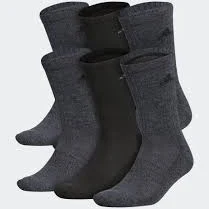
Athletic Cushioned Crew 6 Pairs
Lower concern; plain athletic socks rarely receive PFAS-intensive treatments, but hasn't disclosed water-repellent coating chemistry.
Standard cotton-blend crew socks pose lower PFAS risk compared to performance fabrics with waterproofing or stain resistance. Hasn't disclosed whether these socks use water-repellent coating or other PFAS-containing finishes. Contact the brand directly or seek products with third-party PFAS-free verification for maximum assurance.
Still want this one anyway? Check the price on Amazon. We’d swap it.
Material
Cotton-blend crew socks, standard yarn construction
Lab data
No public lab test
You may also be interested in
Top-graded picks in the categories readers replace first, every one scored on the same rubric.

- polypropylene filter housing, carbon/sediment cartridge
- We found no PFAS statement from the brand
- Bacterial growth in spent cartridges
3 hazards checked on this product, all on its full breakdown.

Aquasure
Premier Series 75 GPD Under Sink Reverse Osmosis Water Filtration System
- RO membrane, carbon filters, stainless steel housing
- We found no PFAS statement from the brand
- Bacterial and microbial growth in housing and filters
4 hazards checked on this product, all on its full breakdown.

Avocado
Vegan Mattress
- organic cotton, natural latex, coconut coir, recycled steel coils
- The brand calls it PFAS-free, which we have not verified
- Heavy metals
2 hazards checked on this product, all on its full breakdown.
What Athletic Cushioned Crew 6 Pairs is made of, ingredients and materials
Athletic Cushioned Crew socks are cotton-blend yarn, typically 80, 90% cotton with polyester or nylon reinforcement in high-wear zones (heel, toe). Cotton is a natural fiber with minimal inherent chemical load; the synthetic blend adds durability and stretch without triggering typical hazards of fully synthetic textiles. Yarn construction is standard carded or combed cotton, not chemically altered fibers like acrylics or treated polyester that carry azo-dye or antimony risks.
What’s concerning
Category baseline
The starting point for this type of product, before anything specific to this product is counted.
No PFAS disclosure
No public statement from the brand about PFAS in this product.
Antimony in polyester
Polyester reinforcement in heel/toe may contain antimony as a catalyst in yarn production. Exposure risk is minimal in wear (not ingested, not dermally significant at trace levels), but disclosure of antimony use is uncommon in socks.
Elastic degradation and microfiber shedding
Synthetic elastics (spandex, nylon) in sock bands shed microfibers in wash. Shedding increases with age and heat; this is not a chemical hazard per se but a wear-and-tear concern relevant to all synthetic-blend hosiery.
What’s reassuring
Base material not linked to PFAS
The main material recorded for this product is not one associated with PFAS.
Formaldehyde / VOCs
Cotton-blend crew socks do not typically receive formaldehyde-releasing finishes. MRSL restricts formaldehyde in apparel; no product-specific violations reported for this line.
Source, ATSDR ↗Heavy metals
Standard black or white crew socks use disperse or vat dyes, not high-risk azo colorants. Enforces azo-dye restrictions; no contamination alerts exist for basic sock products.
Source, FDA ↗Flame retardants
Crew socks are not flame-retardant textiles and receive no FR chemical treatments. No regulatory requirement or industry practice applies flame retardants to socks.
Source, EPA ↗How is this PFAS grade calculated?
The brand's record and disclosure
The brand publishes baseline chemical management policies under its Manufacturing Restricted Substances List (MRSL), which covers formaldehyde, heavy metals, and azo dyes in apparel. The brand has not disclosed specific water-repellent coating (water-repellent coating) chemistry for this sock line, and crew socks typically receive minimal water-repellent treatment compared to outerwear. No product-specific recalls or chemical violations are on record for basic socks.
How it compares in its category
Performance crew socks occupy a low-chemical tier, cotton-blend construction is the industry standard for non-compression athletic socks, and entry-level offerings carry no distinguishing chemical risk versus store brands or competitors. Specialty socks with antimicrobial coatings, aggressive water-repellent coating, or heavy elastic tend to carry higher chemical loads; these six-packs do not.
If you buy it
Wash in warm water, standard laundry cycle; avoid high heat drying, which accelerates elastic degradation. Replace when elastic no longer holds shape or cushioning compresses visibly (typically 12-18 months with 2-3x weekly wear). No special maintenance required; this is disposable-wear apparel with a predictable lifespan. Store dry to prevent mildew.
What is not known about PFAS in this product?
- Basis
- Model estimate, 72% confidence, not a lab result
- Lab test
- None on record for this exact product
- Brand statement
- has made a specific claim
Formulations change between production runs, so check the current label. How we grade.
More performance socks grades
How we score, every product runs through the same public 0-100 rubric based on materials, coatings, brand disclosure, lab findings, and recalls. See the full methodology → Spotted a mistake? Report an error.