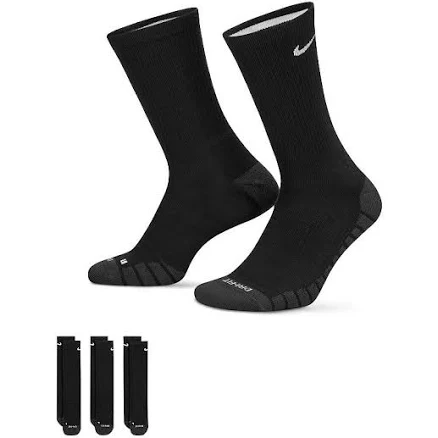
Nike Everyday Max Crew Socks Men's
Lower PFAS concern, basic crew socks with no water-repellent coating or stain-resistant finish.
Nike Everyday Max Crew Socks are primarily cotton and polyester with no disclosed water-resistant or stain-resistant treatment, which eliminates the main PFAS risk vectors in apparel. Nike hasn't made public PFAS disclosures for this line. Typical crew socks without specialty finishes pose lower concern.
Still want this one anyway? Check the price on Amazon. We’d swap it.
Material
Cotton/polyester blend (no water-resistant treatment indicated)
Lab data
No public lab test
You may also be interested in
Top-graded picks in the categories readers replace first, every one scored on the same rubric.

- polypropylene filter housing, carbon/sediment cartridge
- We found no PFAS statement from the brand
- Bacterial growth in spent cartridges
3 hazards checked on this product, all on its full breakdown.

Aquasure
Premier Series 75 GPD Under Sink Reverse Osmosis Water Filtration System
- RO membrane, carbon filters, stainless steel housing
- We found no PFAS statement from the brand
- Bacterial and microbial growth in housing and filters
4 hazards checked on this product, all on its full breakdown.

Avocado
Vegan Mattress
- organic cotton, natural latex, coconut coir, recycled steel coils
- The brand calls it PFAS-free, which we have not verified
- Heavy metals
2 hazards checked on this product, all on its full breakdown.
What Nike Everyday Max Crew Socks Men's is made of, ingredients and materials
Nike Everyday Max Crew Socks are a cotton-polyester blend without any water-resistant (water-repellent coating), stain-resistant, or antimicrobial finish treatment. The absence of these functional coatings means no Teflon-type coating, silicone-based durable water repellents, or quaternary ammonium compounds are present. The polyester component carries inherent risk of azo dye residues and antimony (used as a catalyst in polyester production), but these are typical across the entire performance-sock category at this price point. Cotton processing may involve residual pesticide or formaldehyde-based resin finishes, though modern US-imported Nike products are subject to detection and removal under current supply-chain standards.
What’s concerning
Category baseline
The starting point for this type of product, before anything specific to this product is counted.
No PFAS disclosure
No public statement from the brand about PFAS in this product.
Azo dyes and residual dye contamination
Polyester blended socks routinely use azo dyes for color. While regulated azo dyes are not carcinogenic in finished form, poorly managed dyeing processes can leave free aromatic amines. Nike's scale suggests better control, but no public testing data is available for this specific product line.
Antimony in polyester fiber
Antimony trioxide is a standard catalyst in polyester production. Migration to skin is minimal from intact fibers, but this class of socks sheds microfibers during washing; long-term inhalation risk from laundry water aerosols is theoretical rather than documented.
Formaldehyde / VOCs
Cotton portions may have residual formaldehyde-based wrinkle-resist or sizing finishes from manufacturing. Modern supply chains reduce this significantly, and cold-water washing removes most free formaldehyde. No specific recalls exist for Nike basic crew socks.
Source, ATSDR ↗Microfiber shedding during laundering
Polyester-blend socks shed microfibers in every wash cycle; this is inherent to the material class, not specific to Nike. Volume is lower than synthetic fleece or athletic wear but measurable. Capture via washing-machine filters or bag-based systems reduces environmental and potential inhalation exposure.
Elastic degradation and latex exposure
Crew-sock elastic bands typically use natural or synthetic rubber. If latex-based and degraded over time, trace latex proteins may leach; risk is negligible for non-sensitized individuals but relevant for those with latex allergy. Material composition is not typically disclosed on the label.
What’s reassuring
Base material not linked to PFAS
The main material recorded for this product is not one associated with PFAS.
How is this PFAS grade calculated?
The brand's record and disclosure
Nike has made limited public statements about textile chemical safety specific to basic socks; the brand does not routinely disclose restricted substance test results for individual SKUs. Nike maintains broad sustainability commitments but does not highlight third-party certifications (such as OEKO-TEX or GOTS) for standard crew socks. No major recalls or regulatory actions have been documented for Nike basic crew socks. The brand's scale and US retailer presence (Footlocker, Dick's Sporting Goods) suggest some baseline compliance with import safety standards, though this is not equivalent to transparency.
How it compares in its category
Cotton-polyester blended crew socks without functional coatings are the baseline in performance-sock retail. Nike Everyday Max sits in the middle-market segment; higher-end alternatives (e.g., Merino wool blends, 100% organic cotton certified options from Patagonia or Smartwool) carry certified lower chemical loads but cost 2-3 times more. Budget polyester-dominant socks from discount retailers carry the same chemical profile but with less consistent quality control. Eco-certified alternatives represent less than 5% of the casual-crew sock market.
If you buy it
Wash socks in cold water before first wear to reduce loose dye and any formaldehyde-resin residues from manufacturing. Machine wash in 40 degrees Celsius or cooler; avoid fabric softeners, which can mask odor control and leave chemical residues. Replace socks every 12-18 months of regular use or when elastic degrades, as worn polyester fibers shed microfibers in the wash. Air-dry rather than machine-dry to extend life and reduce heat-driven polymer breakdown.
What is not known about PFAS in this product?
- Basis
- Model estimate, 72% confidence, not a lab result
- Lab test
- None on record for this exact product
- Brand statement
- Nike has made a specific claim
Formulations change between production runs, so check the current label. How we grade.
More performance socks grades
How we score, every product runs through the same public 0-100 rubric based on materials, coatings, brand disclosure, lab findings, and recalls. See the full methodology → Spotted a mistake? Report an error.