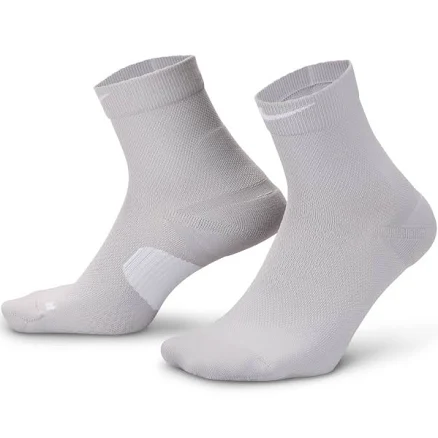
Nike Midweight Running Crew Women Socks
Lower concern, basic athletic socks with no obvious PFAS triggers, but Nike discloses nothing.
Nike's midweight running crew socks are standard polyester, nylon, and elastane blends with no disclosed water-repellent or stain-resistant treatments. No Teflon-type coating, Teflon-family coating coatings, or water-repellent coating finishes are publicly listed.
Still want this one anyway? Check the price on Amazon. We’d swap it.
Material
polyester/nylon blend with elastane
Lab data
No public lab test
You may also be interested in
Top-graded picks in the categories readers replace first, every one scored on the same rubric.

- polypropylene filter housing, carbon/sediment cartridge
- We found no PFAS statement from the brand
- Bacterial growth in spent cartridges
3 hazards checked on this product, all on its full breakdown.

Aquasure
Premier Series 75 GPD Under Sink Reverse Osmosis Water Filtration System
- RO membrane, carbon filters, stainless steel housing
- We found no PFAS statement from the brand
- Bacterial and microbial growth in housing and filters
4 hazards checked on this product, all on its full breakdown.

Avocado
Vegan Mattress
- organic cotton, natural latex, coconut coir, recycled steel coils
- The brand calls it PFAS-free, which we have not verified
- Heavy metals
2 hazards checked on this product, all on its full breakdown.
What Nike Midweight Running Crew Women Socks is made of, ingredients and materials
Nike Midweight Running Crew socks are a polyester-nylon-elastane blend, common in performance athletic wear. Polyester dominates these socks, with nylon providing durability and elastane (spandex) enabling stretch. This material combination is thermally stable during normal wear and washing, meaning chemical migration into skin is minimal under typical use. The blend itself does not inherently require dyes or finishes known to carry high residual toxicity, though the dyeing and finishing process quality depends on Nike's supplier chain.
What’s concerning
Category baseline
The starting point for this type of product, before anything specific to this product is counted.
No PFAS disclosure
No public statement from the brand about PFAS in this product.
Azo dyes and colorant residues
Polyester and nylon require synthetic dyes; some azo dyes (restricted in EU) may be present in lower-cost dye lots if suppliers cut corners. Nike follows RSL but does not publish per-product dye validation. Risk is low but not zero, especially for dark colors (navy, black crew styles).
Formaldehyde / VOCs
Polyester-nylon blends sometimes use formaldehyde-releasing finishing agents to improve durability and wrinkle resistance. Standard athletic socks do not undergo heavy finishing, so exposure is likely minimal, but Nike does not disclose finishing chemistry for this product line.
Source, ATSDR ↗Microplastic shedding during use and wash
Polyester socks shed microfibers during normal wear and especially washing. Shedding increases if elastane degrades or seams fray. This is not a direct health hazard to the wearer but a known environmental concern for all synthetic socks; no brand has eliminated it.
Elastane degradation and skin sensitivity
Elastane (spandex) can degrade with heat, chlorine, or sweat and may release degradation byproducts or irritate sensitive skin. For most wearers, this is not a concern; allergic contact dermatitis to elastane is rare but documented. Standard washing and rotation minimize degradation risk.
What’s reassuring
Base material not linked to PFAS
The main material recorded for this product is not one associated with PFAS.
Cadmium
Nike RSL compliance should exclude high levels of toxic heavy metals in dyes. No recalls or testing failures on record for Nike socks specifically. Baseline risk exists across all dyed textiles but is not elevated for this product vs. peers.
Source, ATSDR ↗How is this PFAS grade calculated?
The brand's record and disclosure
Nike has not published a public PFAS policy or detailed chemical disclosure for finished apparel, despite investor pressure and competitor action. The company has faced scrutiny over manufacturing practices but has not issued recalls or safety warnings specific to socks or lower-tier athletic lines. Nike is a signatory to the Restricted Substances List (RSL) framework used across footwear and apparel, which limits heavy metals and select dyes, but does not independently certify or transparently report results for individual products. No formal testing data is available for this specific sock line.
How it compares in its category
Polyester-nylon socks are the industry standard for running and athletic performance due to moisture-wicking and durability. Nike's midweight crew sits in the mainstream performance tier. Competitors (e.g., Smartwool, Darn Tough) offer merino wool or recycled polyester alternatives; some indie or direct-to-consumer brands now publish dye and finishing certifications that Nike does not. Price and performance are comparable across the category; Nike's differentiation is brand and fit, not chemical transparency.
If you buy it
Wash before first wear to remove loose dyes and manufacturing residues. Launder in warm water (not hot) with mild detergent to minimize dye leaching and elastane degradation. Avoid fabric softener and bleach, which can damage fibers and release microplastics. Replace socks when elastic loses tension (typically 12-18 months of regular use) or seams fray. No special storage precautions needed; standard drawer storage is appropriate.
What is not known about PFAS in this product?
- Basis
- Model estimate, 72% confidence, not a lab result
- Lab test
- None on record for this exact product
- Brand statement
- Nike has made a specific claim
Formulations change between production runs, so check the current label. How we grade.
More performance socks grades
How we score, every product runs through the same public 0-100 rubric based on materials, coatings, brand disclosure, lab findings, and recalls. See the full methodology → Spotted a mistake? Report an error.