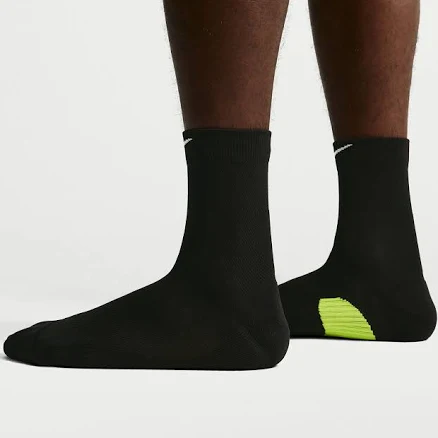
Nike Running Midweight Socks
Lower concern for typical use, but Nike doesn't disclose water-repellent coating chemistry.
Nike's running socks are primarily synthetic fibers like polyester, nylon, and elastane, materials not inherently PFAS-prone. Nike makes no public disclosure about whether moisture-wicking or durability treatments contain PFAS. The brand hasn't published PFAS commitments or pursued third-party certification.
Still want this one anyway? Check the price on Amazon. We’d swap it.
Material
polyester/nylon blend with elastane
Lab data
No public lab test
You may also be interested in
Top-graded picks in the categories readers replace first, every one scored on the same rubric.

- polypropylene filter housing, carbon/sediment cartridge
- We found no PFAS statement from the brand
- Bacterial growth in spent cartridges
3 hazards checked on this product, all on its full breakdown.

Aquasure
Premier Series 75 GPD Under Sink Reverse Osmosis Water Filtration System
- RO membrane, carbon filters, stainless steel housing
- We found no PFAS statement from the brand
- Bacterial and microbial growth in housing and filters
4 hazards checked on this product, all on its full breakdown.

Avocado
Vegan Mattress
- organic cotton, natural latex, coconut coir, recycled steel coils
- The brand calls it PFAS-free, which we have not verified
- Heavy metals
2 hazards checked on this product, all on its full breakdown.
What Nike Running Midweight Socks is made of, ingredients and materials
Nike Running Midweight Socks are a polyester-nylon-elastane blend, common in performance hosiery for moisture wicking and durability. Polyester is a synthetic fiber with low inherent toxicity, though some concerns exist around azo dyes (colorants) and antimony trioxide, a catalyst sometimes used in polyester synthesis. Elastane provides stretch; nylon adds durability. The blend itself poses no documented leaching risk during normal wear.
What’s concerning
Category baseline
The starting point for this type of product, before anything specific to this product is counted.
No PFAS disclosure
No public statement from the brand about PFAS in this product.
Azo dyes in polyester
Polyester textiles can be dyed with azo colorants, some of which may break down under heat or bacterial action to release aromatic amines; however, finished socks meeting basic textile safety standards rarely present exposure risk during normal wear. Nike does not disclose dye chemistry for this product.
Elastane degradation and microfiber shedding
Elastane (spandex) fibers break down over time with heat, stretching, and washing, releasing microfibers. While microfiber shedding from textiles is broadly documented, the health significance of inhaling or ingesting fibers from socks is not established. Socks shed less than activewear that experiences high mechanical stress.
PFAS
If water-repellent coating treatment is present on these socks, Nike's silence means the specific chemistry (fluorinated or non-fluorinated) is unknown. The PFAS grade of 65/100 reflects caution rather than confirmation. This does not elevate the risk category but leaves a minor uncertainty for consumers seeking zero-PFAS products.
Source, ATSDR ↗What’s reassuring
Base material not linked to PFAS
The main material recorded for this product is not one associated with PFAS.
Antimony in polyester synthesis
Antimony trioxide is a known catalyst in polyester manufacturing; finished polyester fibers typically retain only trace amounts that do not leach during normal wear or washing. No documented health incidents from wearing polyester socks. This remains a theoretical concern monitored by regulators but not a practical hazard for this product.
Formaldehyde / VOCs
Some textiles use formaldehyde-based resins for shrink control or wrinkle resistance. High-performance socks occasionally use such finishes. Nike does not disclose resins for this product, but any residual formaldehyde would be negligible after standard manufacturing rinses and pose no risk at skin-contact levels in finished socks.
Source, ATSDR ↗How is this PFAS grade calculated?
The brand's record and disclosure
Nike does not publicly disclose the chemistry of water-repellent coating (water-repellent coating) treatments on socks, which is industry-standard silence rather than a red flag. The brand has faced scrutiny over PFAS use in footwear and apparel historically but has committed to phasing older PFAS chemistries by 2025. No recalls or safety incidents tied to Nike socks for hazards covered here are on public record. Certification details (e.g., OEKO-TEX) are not widely promoted for this product line.
How it compares in its category
Performance socks in this price tier typically use polyester-nylon blends; wool-synthetic blends are an alternative with lower dye risk but higher cost. Nike's mainstream athletic socks do not stand out as unusually risky or unusually transparent compared to Adidas, Balega, or Darn Tough. Most competitors also withhold specific water-repellent coating and dye supplier data, making this product representative of the category rather than an outlier.
If you buy it
Wash socks in cold to warm water (under 104F/40C) to preserve elastane and avoid accelerated dye release. Do not bleach or use fabric softeners, which can degrade elastic fibers and moisture-wicking performance. Replace when elastic loss is visible or odor persists after washing, typically after 6-12 months of regular use. Air dry rather than tumble dry to extend lifespan and minimize any residual chemical volatilization.
What is not known about PFAS in this product?
- Basis
- Model estimate, 72% confidence, not a lab result
- Lab test
- None on record for this exact product
- Brand statement
- Nike has made a specific claim
Formulations change between production runs, so check the current label. How we grade.
More performance socks grades
How we score, every product runs through the same public 0-100 rubric based on materials, coatings, brand disclosure, lab findings, and recalls. See the full methodology → Spotted a mistake? Report an error.