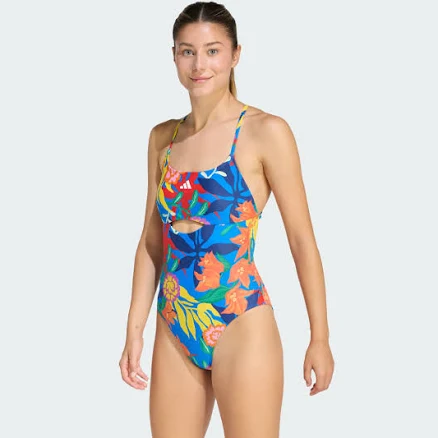
adidas Women's Mexicana Florals Tie-Back Swimsuit
Lower PFAS concern likely; standard swimwear without waterproofing claims carries reduced risk.
This tie-back suit uses polyester and nylon with no indicated water-repellent or stain-resistant coating. Adidas makes no PFAS commitment or disclosure.
The better-graded swap
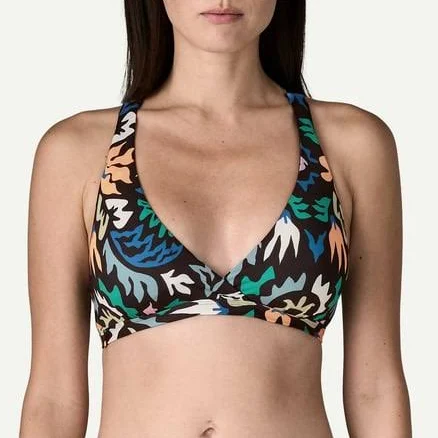
Patagonia
Patagonia Women's Bottom Turn Racerback Bikini Top
90/100 safety
Same rubric that flunked this product. The swap earned Excellent.
Still want this one anyway? Check the price on Amazon. We’d swap it.
Material
Polyester/nylon swimsuit fabric, likely uncoated or standard finish
Lab data
No public lab test
What adidas Women's Mexicana Florals Tie-Back is made of, ingredients and materials
This swimsuit is constructed from polyester and nylon blends, common synthetic fibers chosen for durability, stretch, and quick-dry properties in swimwear. Uncoated or standard-finish polyester in swimwear typically does not require Teflon-type coating (Teflon) or heavy water-repellent coating (water-repellent coating) treatments, which are the primary vectors for PFAS in textiles. The tie-back design and floral print suggest no specialized coatings beyond standard dyes and finishes applied during manufacturing.
What’s concerning
Category baseline
The starting point for this type of product, before anything specific to this product is counted.
No PFAS disclosure
No public statement from the brand about PFAS in this product.
Azo dyes and synthetic colorants
Floral print requires synthetic dyes; while regulated in EU and US, some azo dyes can degrade into aromatic amines under acidic or biological conditions. Risk is low with normal use but elevated if swimsuit is worn extensively in high-chlorine pools or stored damp.
Formaldehyde / VOCs
Polyester and nylon swimwear often receive formaldehyde-based crosslinking treatments to improve shape retention and shrinkage control. New swimwuits may off-gas low levels; washing before first wear significantly reduces exposure.
Source, ATSDR ↗Microplastics
All synthetic fiber textiles shed microplastics during wash and wear, particularly with friction or abrasion. Standard polyester swimwear in this category sheds at typical rates; no evidence this model sheds excessively, but cumulative release occurs with every laundry cycle.
Source, EPA ↗Elastane (spandex) degradation and leaching
Swimwear blends typically contain elastane (5 to 20 percent) for stretch. Chlorine, UV light, and heat accelerate elastane breakdown, potentially releasing oligomers. Risk is minimal with proper rinsing and air-drying but increases in heavy-use or poorly maintained garments.
What’s reassuring
Base material not linked to PFAS
The main material recorded for this product is not one associated with PFAS.
Antimony in polyester
Polyester production may involve antimony as a catalyst. No evidence of excess antimony leaching from standard uncoated polyester swimwear under normal use; not a documented concern for this product type.
The full breakdown
The brand's record and disclosure
Adidas has committed publicly to phasing out PFAS in apparel and footwear by 2025, though enforcement and transparency remain inconsistent across product lines. The brand does not routinely disclose detailed chemical composition or independent third-party test results for individual swimwear items. No established recalls or safety warnings are on record for this specific product line. Standard Adidas apparel generally meets basic EU and US regulatory requirements for textiles.
How it compares in its category
Uncoated polyester/nylon swimwear without waterproofing marketing sits in the lower-risk segment of the swimwear category. Many competitors (particularly brands emphasizing 'fast-dry' or 'stain-resistant' finishes) apply water-repellent coating coatings that carry higher PFAS loads. This product's straightforward material profile avoids those premium finishes, making it comparable to budget and mid-range swimwear offerings. Specialty athletic or technical swimwear typically carries greater chemical risk.
If you buy it
Wash in cool or lukewarm water (below 40 degrees C / 104 degrees F) before first wear to release loose dyes and finish residues. Air-dry away from direct heat and sunlight to preserve elastic and color. Replace when elastic loses tension or fabric shows pilling or fading; typical lifespan with proper care is 1 to 2 years of regular use. Rinse immediately after chlorine or saltwater exposure to reduce corrosion of fibers and fasteners.
What we don’t know
- Basis
- Model estimate, 72% confidence, not a lab result
- Lab test
- None on record for this exact product
- Brand statement
- Adidas has made a specific claim
Formulations change between production runs, so check the current label. How we grade.
Better-graded alternatives in Swimwear
Patagonia
Women's Bottom Turn Racerback Bikini Top
- Nylon/polyester blend with elastane (standard swimwear)
- The brand calls it PFAS-free, which we have not verified
- Elastane (spandex) degradation under heat or chlorine
More swimwear grades
How we score, every product runs through the same public 0-100 rubric based on materials, coatings, brand disclosure, lab findings, and recalls. See the full methodology → Spotted a mistake? Report an error.