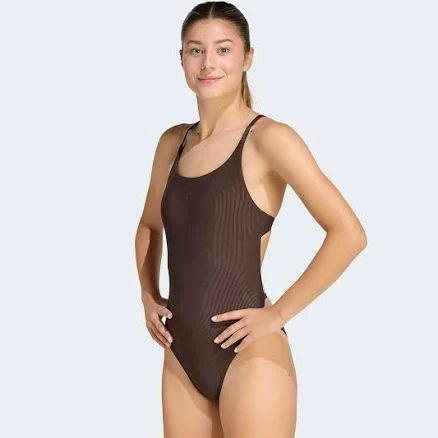
Women's adidas Iconisea Ribbed Padded Thin Straps Swimsuit
Lower concern; standard swimwear without waterproofing or stain treatment.
Ribbed padded suit uses conventional nylon and polyester fabrics without water-repellent or stain-resistant finishing. Adidas has not disclosed PFAS policies or verification.
The better-graded swap
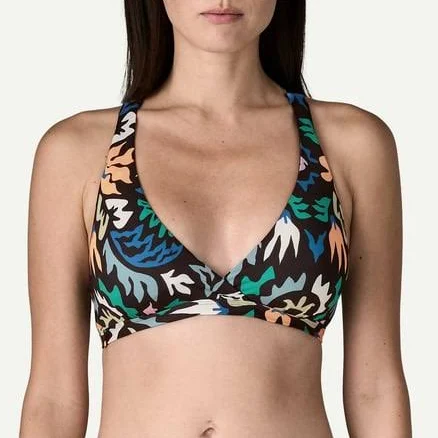
Patagonia
Patagonia Women's Bottom Turn Racerback Bikini Top
90/100 safety
Same rubric that flunked this product. The swap earned Excellent.
Still want this one anyway? Check the price on Amazon. We’d swap it.
Material
Nylon/polyester blend swimsuit fabric with standard elastic
Lab data
No public lab test
What Women's adidas Iconisea Ribbed Padded is made of, ingredients and materials
This swimsuit is a nylon/polyester blend, the industry standard for competitive and recreational swimwear. Nylon is synthetic polyamide that resists chlorine and saltwater degradation; polyester adds durability and color retention. Neither material inherently leaches chemicals into skin or water under normal swimming conditions. The elastic (likely polyurethane-based) is the component most prone to degradation with age and UV exposure, but this is a mechanical failure, not a toxicological concern.
What’s concerning
Category baseline
The starting point for this type of product, before anything specific to this product is counted.
No PFAS disclosure
No public statement from the brand about PFAS in this product.
Heavy metals
Conventional swimwear dyes may include azo compounds or trace heavy metals (e.g., chromium, lead in pigments), but regulatory thresholds in the EU and North America limit hazardous azo dyes. No independent testing of this specific product is publicly available; risk is typical for mass-market colored swimwear.
Source, FDA ↗Antimony in polyester
Polyester is often manufactured with antimony trioxide as a catalyst, with residual antimony present in the final fiber at levels typically below 200 ppm. Skin contact with polyester does not cause measurable antimony transfer; this is primarily a manufacturing and end-of-life concern, not a use-phase hazard.
Elastic degradation and leachate from polyurethane
Elastic components may degrade with prolonged chlorine or UV exposure, potentially releasing oligomers or residual additives. The rate is slow under normal use; risk increases with infrequent rinsing or storage in direct sunlight.
Microplastic shedding from synthetic fibers
Nylon and polyester swimwear shed microfibers during washing and wear. The quantity is typical for synthetic textiles and not unique to this product; environmental impact is cumulative across all synthetic garments, not a direct health hazard to the wearer.
What’s reassuring
Base material not linked to PFAS
The main material recorded for this product is not one associated with PFAS.
Formaldehyde / VOCs
No formaldehyde resin treatment is standard in nylon/polyester swimwear fabrics. Adidas does not advertise formaldehyde-based curing in this product, and no testing or recall documents confirm its presence.
Source, ATSDR ↗The full breakdown
The brand's record and disclosure
Adidas does not publicly disclose chemical composition or testing of swimwear beyond fiber content. The company has no documented recalls for chemical contamination of swimwear and no certification against formaldehyde resins or azo dyes in this product line. Adidas maintains general sustainability commitments but does not transparently report chemical restrictions specific to swimwear fabrics.
How it compares in its category
Nylon/polyester blends are not linked to the chemical finishes (flame retardants, water-repellent treatments) found in technical outerwear or some performance fabrics. This product sits in the conventional mass-market range with no premium certifications (e.g., OEKO-TEX, bluesign) but also no indicators of elevated risk. Luxury or eco-focused brands may offer transparent testing, but chemical hazard levels for this type are broadly comparable across price tiers.
If you buy it
Rinse after saltwater or chlorinated swimming to extend elastic life and remove residual chlorine. Wash in cool water, lay flat to dry, and avoid prolonged direct sunlight to slow UV degradation of the polyester dyes. Replace if the elastic loses tension or the seams separate, as these are signs the polymer matrix is breaking down. Normal storage in a dry drawer poses no leaching risk; do not store in direct heat or a sealed plastic bag, as moisture and warmth can accelerate fabric aging.
What we don’t know
- Basis
- Model estimate, 72% confidence, not a lab result
- Lab test
- None on record for this exact product
- Brand statement
- Adidas has made a specific claim
Formulations change between production runs, so check the current label. How we grade.
Better-graded alternatives in Swimwear
Patagonia
Women's Bottom Turn Racerback Bikini Top
- Nylon/polyester blend with elastane (standard swimwear)
- The brand calls it PFAS-free, which we have not verified
- Elastane (spandex) degradation under heat or chlorine
More swimwear grades
How we score, every product runs through the same public 0-100 rubric based on materials, coatings, brand disclosure, lab findings, and recalls. See the full methodology → Spotted a mistake? Report an error.