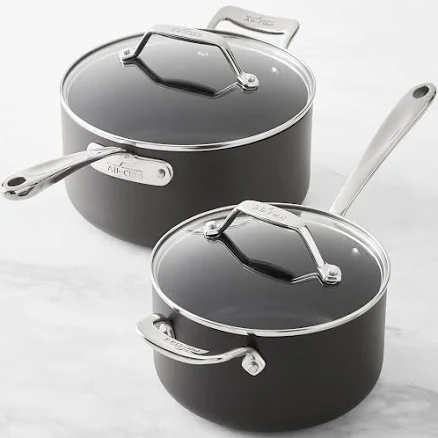
All-Clad Essentials Nonstick Hard Anodized Sauce Pan Set, Is It Non-Toxic?
Teflon-type coating non-stick coating, disclosed by the brand.
All-Clad says its nonstick contains Teflon-type coating, and lists its HA1, Essentials, NS1, D3 and D5 nonstick lines among its Teflon-type coating coated products. Teflon-type coating is a Teflon-family coating in the PFAS family.
The better-graded swap
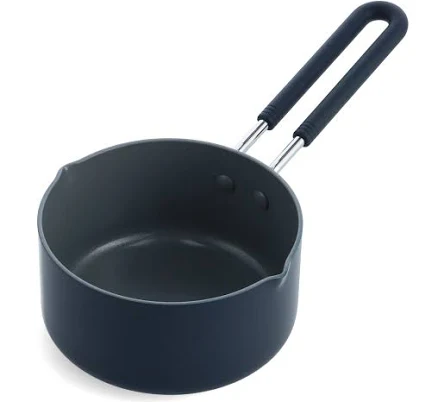
GreenPan
Crate & Barrel Greenpan Mini 1-Qt. Butter Warmer
70/100 safety
Same rubric that flunked this product. The swap earned Good.
Still want this one anyway? Check the price on Amazon. We’d swap it.
Material
Teflon-type coating non-stick coating, as disclosed by All-Clad
Lab data
No public lab test
You may also be interested in
Top-graded picks in the categories readers replace first, every one scored on the same rubric.

- polypropylene filter housing, carbon/sediment cartridge
- We found no PFAS statement from the brand
- Bacterial growth in spent cartridges
3 hazards checked on this product, all on its full breakdown.

Aquasure
Premier Series 75 GPD Under Sink Reverse Osmosis Water Filtration System
- RO membrane, carbon filters, stainless steel housing
- We found no PFAS statement from the brand
- Bacterial and microbial growth in housing and filters
4 hazards checked on this product, all on its full breakdown.

Avocado
Vegan Mattress
- organic cotton, natural latex, coconut coir, recycled steel coils
- The brand calls it PFAS-free, which we have not verified
- Heavy metals
2 hazards checked on this product, all on its full breakdown.
Is All-Clad Essentials Nonstick Sauce Pan Set non-toxic? What it is made of
This set uses hard-anodized aluminum as the base, a dense oxidized layer that reduces aluminum leaching into food. The cooking surface is Teflon-type coating (polytetrafluoroethylene), the same Teflon-family coating resin used in most non-stick cookware. Hard anodizing is more durable than standard anodizing and resists scratching better, which helps preserve the non-stick coating and reduces the risk of coating fragments or base-metal contact with food. The nonstick layer itself is the primary source of PFAS exposure if it degrades or is heated to high temperatures.
What’s concerning
No PFAS disclosure
No PFAS-free statement from the brand for this product.
PTFE / Teflon confirmed
The brand discloses a Teflon-type coating.
Category baseline
The starting point for this type of product, before anything specific to this product is counted.
Teflon-type coating thermal decomposition and fume risk
Teflon-type coating coatings release gases when heated above 500°F, potentially causing polymer fume fever in humans and acute toxicity in birds. This risk applies when cookware is left unattended on high heat or preheated empty; normal cooking at medium heat poses lower concern.
Coating degradation and fragmentation
Hard-anodized coatings are more scratch-resistant than standard non-stick, but abrasion from utensils, acidic foods, or thermal cycling can degrade the Teflon-type coating layer over time. Visible flaking or peeling is rare but signals the coating is failing and should trigger replacement.
PFAS
Teflon-type coating contains PFOA, PFOS, or related PFAS compounds as manufacturing byproducts or processing aids. Studies have detected PFAS in food cooked in Teflon-type coating non-stick cookware, particularly under high heat or with acidic or oily foods. All-Clad does not disclose PFAS reduction measures or migration testing.
Source, ATSDR ↗What’s reassuring
Aluminum leaching from base metal
Hard anodizing significantly reduces aluminum migration compared to untreated aluminum. No recalls or established hazard reports exist for All-Clad hard-anodized cookware; the anodized layer acts as a reliable barrier under normal cooking conditions.
Lead
All-Clad does not use enamel or ceramic glazes on the cooking surface of this model. Hard-anodized aluminum itself does not contain lead or cadmium as production contaminants in US and EU manufacturing. No historical recalls for this hazard exist for the brand.
Source, ATSDR ↗How is this PFAS grade calculated?
The brand's record and disclosure
All-Clad openly discloses Teflon-type coating as the non-stick material in this product, which is more transparent than some competitors who obscure the coating type. The brand does not publish independent third-party testing, safety certifications (such as GreenGuard or NSF), or a formal statement on PFAS reduction or phaseout plans. All-Clad has no known recalls for this product line related to coating failure or leaching, though the brand does not publicly engage with PFAS concerns in marketing or documentation.
How it compares in its category
Hard-anodized Teflon-type coating non-stick cookware is a mainstream choice; All-Clad positions itself at the premium end of this segment. Comparable brands (Calphalon, T-fal, Circulon) use similar Teflon-type coating coatings and hard-anodized bases. Ceramic and stainless-steel alternatives eliminate Teflon-type coating entirely but sacrifice non-stick ease and durability. Within Teflon-type coating non-stick, hard anodizing is considered more robust than softer anodized or non-anodized aluminum, reducing coating damage during typical use.
If you buy it
Keep heat below medium-high; Teflon-type coating begins to degrade around 500°F and can off-gas at higher temperatures. Hand wash if possible; dishwashers can degrade the coating over years. Inspect the cooking surface regularly for scratches, peeling, or discoloration; replace if coating is visibly compromised. Use silicone, wood, or plastic utensils to minimize physical damage. Ensure adequate ventilation if the pan does overheat accidentally, as fume inhalation is the acute hazard.
What is not known about PFAS in this product?
- Basis
- Model estimate, 35% confidence, not a lab result
- Lab test
- None on record for this exact product
- Brand statement
- All-Clad has made a specific claim
Formulations change between production runs, so check the current label. How we grade.
What are the PFAS-free alternatives to All-Clad Essentials Nonstick Hard Anodized Sauce Pan Set?
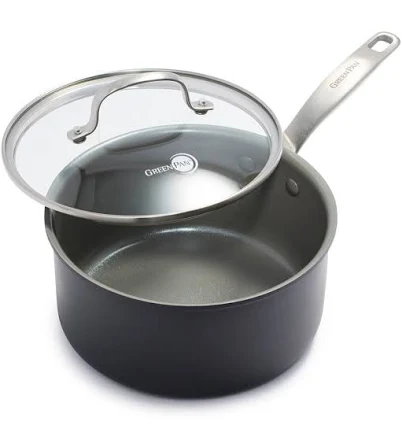
- Ceramic nonstick coating
- The brand calls it PFAS-free, which we have not verified
- Aluminum leaching
2 hazards checked on this product, all on its full breakdown.
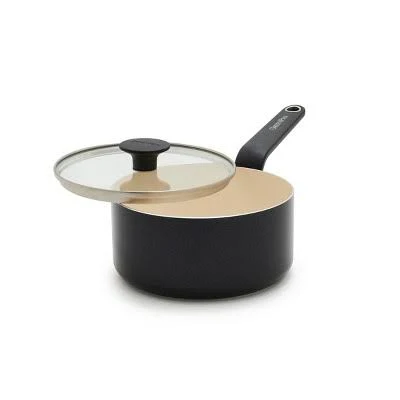
- ceramic nonstick coating
- The brand calls it PFAS-free, which we have not verified
- Ceramic coating degradation over time
4 hazards checked on this product, all on its full breakdown.
- Nonstick ceramic-based coating (GreenPan proprietary, unspecified)
- The brand calls it PFAS-free, which we have not verified
- Coating degradation over time
3 hazards checked on this product, all on its full breakdown.
More nonstick saucepans grades
How we score, every product runs through the same public 0-100 rubric based on materials, coatings, brand disclosure, lab findings, and recalls. See the full methodology → Spotted a mistake? Report an error.