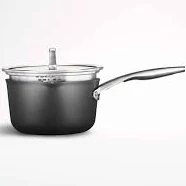
Calphalon · Nonstick Saucepans
Calphalon Premier 3.5-Qt. MineralShield Non-Stick Saucepan with Lid, Is It Non-Toxic?
Pass until Calphalon reveals MineralShield's chemistry or certifies PFAS-free.
Calphalon's MineralShield coating stays proprietary with no public PFAS statement. Nonstick coatings commonly use fluorinated compounds, but this product's chemistry is unknown.
The better-graded swap
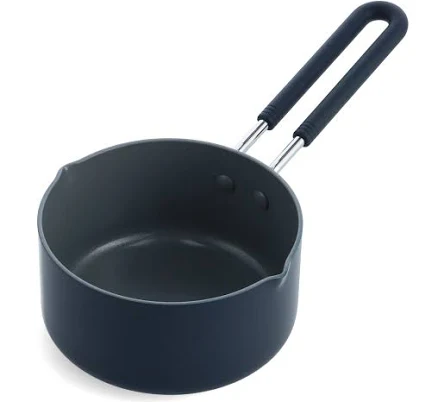
GreenPan
Crate & Barrel Greenpan Mini 1-Qt. Butter Warmer
70/100 safety
Same rubric that flunked this product. The swap earned Good.
Still want this one anyway? Check the price on Amazon. We’d swap it.
Material
Aluminum with proprietary non-stick coating (MineralShield)
Lab data
No public lab test
You may also be interested in
Top-graded picks in the categories readers replace first, every one scored on the same rubric.

- polypropylene filter housing, carbon/sediment cartridge
- We found no PFAS statement from the brand
- Bacterial growth in spent cartridges
3 hazards checked on this product, all on its full breakdown.

Aquasure
Premier Series 75 GPD Under Sink Reverse Osmosis Water Filtration System
- RO membrane, carbon filters, stainless steel housing
- We found no PFAS statement from the brand
- Bacterial and microbial growth in housing and filters
4 hazards checked on this product, all on its full breakdown.

Avocado
Vegan Mattress
- organic cotton, natural latex, coconut coir, recycled steel coils
- The brand calls it PFAS-free, which we have not verified
- Heavy metals
2 hazards checked on this product, all on its full breakdown.
Is Calphalon Premier 3.5-Qt. Lid non-toxic? What it is made of
This pan combines aluminum (lightweight, heat-conductive) with Calphalon's proprietary MineralShield nonstick coating. The coating chemistry is not publicly detailed by Calphalon, which prevents independent verification of Teflon-type coating, GenX, or other fluorinated polymer content. Aluminum itself does not leach significantly at typical cooking temperatures, but the coating's integrity over time is the primary safety variable.
What’s concerning
Category baseline
The starting point for this type of product, before anything specific to this product is counted.
Vague safety claims only
Uses vague language ("eco-friendly", "clean") without a specific PFAS statement.
Non-stick, chemistry undisclosed
Marketed as non-stick without stating the coating chemistry.
Teflon-type coating thermal decomposition fume risk
If MineralShield is Teflon-type coating-based (unconfirmed), heating above 500°F may produce toxic polymer fumes. No public evidence of failure at normal use, but undisclosed coating composition prevents risk quantification.
Coating degradation and flaking
Long-term nonstick coatings on aluminum cookware degrade with age and dishwasher use. Users report visible wear on Calphalon nonstick pans after 2-3 years; flaking poses ingestion risk and loss of nonstick function.
Aluminum-coating interaction under acidic foods
Aluminum can leach slowly when coating is compromised and acidic foods (tomato, vinegar, citrus) are used. Risk is low with intact coating but rises as coating wears. No brand-specific data available.
Proprietary coating composition opacity
Calphalon does not disclose whether MineralShield contains Teflon-family coating, GenX, or other synthetic chemicals. Lack of transparency prevents informed risk assessment and complicates long-term safety monitoring.
How is this PFAS grade calculated?
The brand's record and disclosure
Calphalon has not made public commitments to lower PFAS concern formulations or published ingredient lists for its nonstick coatings. The company has faced no major recalls specific to MineralShield, but its silence on PFAS and Teflon-family coating chemistry is notable in an era when competitors (GreenPan, Our Place) market PFOA-free or Teflon-type coating-free alternatives. No third-party certifications (NSF, Green Seal) are listed for this model.
How it compares in its category
Most modern nonstick cookware still uses Teflon-family coating; Calphalon's MineralShield sits in the middle of the market. Alternatives include ceramic-coated pans (fewer transparency concerns but faster wear), cast iron (no coating risk, heavier), and brands like GreenPan or Caraway that explicitly market PFOA and/or Teflon-type coating avoidance. This Calphalon pan is cheaper than premium alternatives but offers less transparency.
If you buy it
Keep temperatures below 500°F (Calphalon's stated oven limit); overheating any nonstick coating risks decomposition. Inspect the coating regularly for peeling, scratching, or discoloration. Use silicone or wood utensils only; metal scratches accelerate wear and potential flaking. Hand-wash rather than machine-wash to extend coating life. Replace within 3-5 years if visible wear develops, or sooner if any flakes or roughness appear in the cooking surface.
What is not known about PFAS in this product?
- Basis
- Model estimate, 35% confidence, not a lab result
- Lab test
- None on record for this exact product
- Brand statement
- Calphalon has made a specific claim
Formulations change between production runs, so check the current label. How we grade.
What are the PFAS-free alternatives to Calphalon Premier 3.5-Qt. MineralShield Non-Stick Saucepan with Lid?
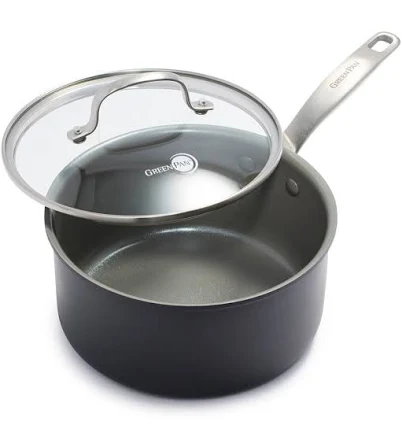
- Ceramic nonstick coating
- The brand calls it PFAS-free, which we have not verified
- Aluminum leaching
2 hazards checked on this product, all on its full breakdown.
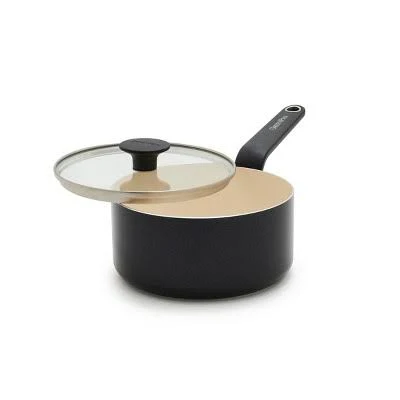
- ceramic nonstick coating
- The brand calls it PFAS-free, which we have not verified
- Ceramic coating degradation over time
4 hazards checked on this product, all on its full breakdown.
- Nonstick ceramic-based coating (GreenPan proprietary, unspecified)
- The brand calls it PFAS-free, which we have not verified
- Coating degradation over time
3 hazards checked on this product, all on its full breakdown.
More nonstick saucepans grades
How we score, every product runs through the same public 0-100 rubric based on materials, coatings, brand disclosure, lab findings, and recalls. See the full methodology → Spotted a mistake? Report an error.