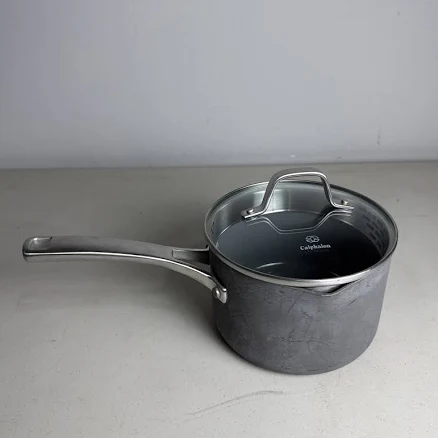
Calphalon · Nonstick Saucepans
Calphalon Classic Nonstick Sauce Pan with Cover, Is It Non-Toxic?
Standard nonstick with Teflon-type coating; PFAS exposure depends on cooking conditions and coating wear.
Calphalon Classic uses traditional Teflon-type coating nonstick over aluminum, a Teflon-family coating that typically contains or breaks down into PFAS. Risk stays moderate with normal cooking below 500°F.
The better-graded swap
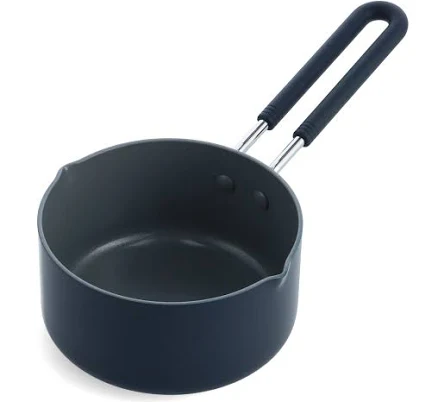
GreenPan
Crate & Barrel Greenpan Mini 1-Qt. Butter Warmer
70/100 safety
Same rubric that flunked this product. The swap earned Good.
Still want this one anyway? Check the price on Amazon. We’d swap it.
Material
Nonstick Teflon-family coating (Teflon-type coating-based) coating over aluminum
Lab data
No public lab test
You may also be interested in
Top-graded picks in the categories readers replace first, every one scored on the same rubric.

- polypropylene filter housing, carbon/sediment cartridge
- We found no PFAS statement from the brand
- Bacterial growth in spent cartridges
3 hazards checked on this product, all on its full breakdown.

Aquasure
Premier Series 75 GPD Under Sink Reverse Osmosis Water Filtration System
- RO membrane, carbon filters, stainless steel housing
- We found no PFAS statement from the brand
- Bacterial and microbial growth in housing and filters
4 hazards checked on this product, all on its full breakdown.

Avocado
Vegan Mattress
- organic cotton, natural latex, coconut coir, recycled steel coils
- The brand calls it PFAS-free, which we have not verified
- Heavy metals
2 hazards checked on this product, all on its full breakdown.
Is Calphalon Classic Nonstick Sauce Pan Cover non-toxic? What it is made of
This pan uses a Teflon-type coating-based Teflon-family coating nonstick coating bonded to an aluminum core. Teflon-type coating itself is chemically inert when intact, but the coating's durability and the manufacturing process (which typically involves PFOA or newer PFAS alternatives as processing aids) determine actual exposure risk. Aluminum underneath can leach if the nonstick layer degrades or is compromised by abrasion or high heat, though modern Calphalon products are anodized to reduce this. The key safety variable is how long the coating lasts and whether you exceed recommended temperature limits.
What’s concerning
Category baseline
The starting point for this type of product, before anything specific to this product is counted.
No PFAS disclosure
No public statement from the brand about PFAS in this product.
PTFE / Teflon confirmed
Uses Teflon-type coating (Teflon), a Teflon-family coating in the PFAS family.
Teflon-type coating thermal decomposition / fume risk
If pan is accidentally left on high heat or exposed to flame above 500°F, Teflon-type coating breaks down and releases gases that can cause flu-like symptoms in humans and acute toxicity in pet birds. This is a known hazard of all Teflon-type coating cookware, not specific to Calphalon, but depends entirely on user practice.
Aluminum leaching (post-coating failure)
Calphalon Classic pans are anodized aluminum, which resists leaching in normal conditions. However, if the nonstick coating chips, flakes, or is worn away by abrasion or acidic foods, the underlying aluminum can contact food. Anodization reduces but does not eliminate this risk.
Nonstick coating degradation over time
Teflon-type coating-based nonstick coatings naturally degrade with repeated heating, washing, and use. Consumer reports and product reviews for Calphalon Classic indicate coating loss after 1-3 years of regular use, varying by care and heat exposure. No data on whether degraded Calphalon coating specifically leaches harmful substances.
PFAS
Teflon-type coating coatings are typically applied using PFAS processing aids (e.g., PFOA alternatives or GenX); these are not intentionally in the final product but their use in manufacturing links this cookware to PFAS supply chains. Calphalon does not disclose its processing practices.
Source, ATSDR ↗What’s reassuring
Lead
No public recalls or test reports indicate lead or cadmium in Calphalon Classic lids, handles, or metal fittings. Modern cookware from established brands typically complies with U.S. and EU heavy-metal limits, but Calphalon does not independently certify this.
Source, ATSDR ↗How is this PFAS grade calculated?
The brand's record and disclosure
Calphalon (owned by Groupe SEB) has not published detailed commitments to reduce PFAS in manufacturing or transparency comparable to some competitors. The brand does not prominently disclose whether it has phased away from PFOA in coating production, though PFOA has been regulated in the U.S. since 2013. No major recalls of Calphalon Classic nonstick cookware for coating failure or chemical leaching have been formally documented in public records, suggesting acceptable field performance under normal use.
How it compares in its category
Calphalon Classic is a budget-to-mid-range nonstick pan; its Teflon-type coating is comparable to most conventional nonstick at this price point. Ceramic or mineral-based nonstick alternatives (e.g., GreenPan, Our Place) eliminate Teflon-type coating and PFAS entirely but often perform less durably or cost more. Stainless steel or cast iron avoid nonstick chemistry altogether but require different care. Calphalon Classic occupies the mainstream middle ground, proven performance, modest cost, moderate chemical exposure risk.
If you buy it
Never exceed 500°F (260°C); many Teflon-type coating coatings degrade or off-gas above this. Hand wash only; dishwasher and abrasive scrubbers accelerate coating wear. Avoid metal utensils and high-heat searing. Inspect the coating regularly for chips, peeling, or discoloration; discontinue use if damage appears, as aluminum may then leach. Ensure good ventilation if the pan is ever overheated; decomposing Teflon-type coating can irritate the respiratory system at high temperatures.
What is not known about PFAS in this product?
- Basis
- Model estimate, 72% confidence, not a lab result
- Lab test
- None on record for this exact product
- Brand statement
- Calphalon has made a specific claim
Formulations change between production runs, so check the current label. How we grade.
What are the PFAS-free alternatives to Calphalon Classic Nonstick Sauce Pan with Cover?
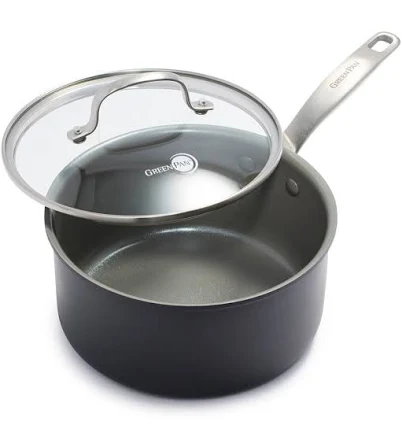
- Ceramic nonstick coating
- The brand calls it PFAS-free, which we have not verified
- Aluminum leaching
2 hazards checked on this product, all on its full breakdown.
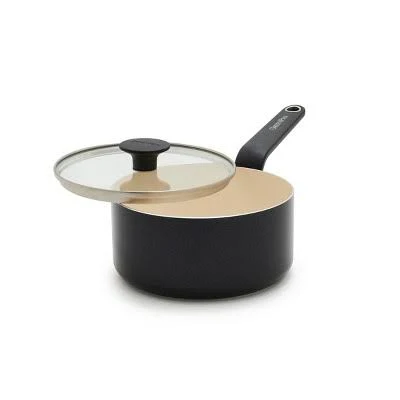
- ceramic nonstick coating
- The brand calls it PFAS-free, which we have not verified
- Ceramic coating degradation over time
4 hazards checked on this product, all on its full breakdown.
- Nonstick ceramic-based coating (GreenPan proprietary, unspecified)
- The brand calls it PFAS-free, which we have not verified
- Coating degradation over time
3 hazards checked on this product, all on its full breakdown.
More nonstick saucepans grades
How we score, every product runs through the same public 0-100 rubric based on materials, coatings, brand disclosure, lab findings, and recalls. See the full methodology → Spotted a mistake? Report an error.