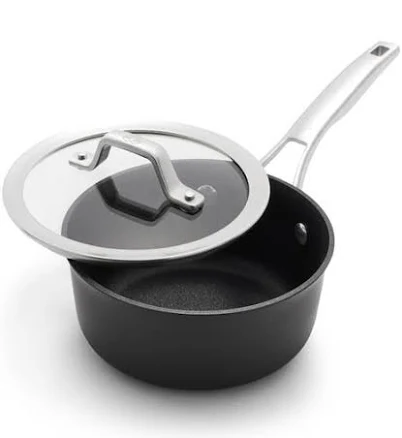
Calphalon · Nonstick Saucepans
Calphalon Premier Hard-Anodized Nonstick Sauce Pan with Lid, Is It Non-Toxic?
Higher PFAS risk; traditional Teflon-type coating without brand disclosure or PFAS-free backing.
Calphalon Premier uses conventional Teflon-type coating nonstick, a Teflon-family coating tied to PFAS chemistry. The brand makes no PFAS-free claim or third-party verification.
The better-graded swap
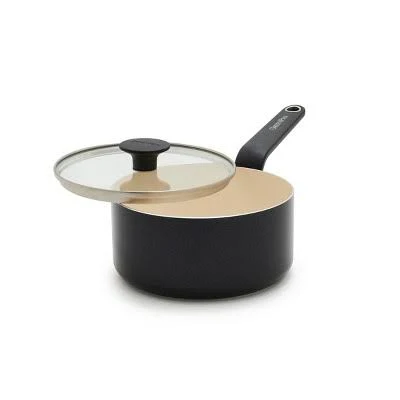
GreenPan
GreenPan Rio Advanced 3qt Ceramic Nonstick Sauce Pan with Lid
70/100 safety
Same rubric that flunked this product. The swap earned Good.
Still want this one anyway? Check the price on Amazon. We’d swap it.
Material
Hard-anodized aluminum with Teflon-type coating-based nonstick coating
Lab data
No public lab test
You may also be interested in
Top-graded picks in the categories readers replace first, every one scored on the same rubric.

- polypropylene filter housing, carbon/sediment cartridge
- We found no PFAS statement from the brand
- Bacterial growth in spent cartridges
3 hazards checked on this product, all on its full breakdown.

Aquasure
Premier Series 75 GPD Under Sink Reverse Osmosis Water Filtration System
- RO membrane, carbon filters, stainless steel housing
- We found no PFAS statement from the brand
- Bacterial and microbial growth in housing and filters
4 hazards checked on this product, all on its full breakdown.

Avocado
Vegan Mattress
- organic cotton, natural latex, coconut coir, recycled steel coils
- The brand calls it PFAS-free, which we have not verified
- Heavy metals
2 hazards checked on this product, all on its full breakdown.
Is Calphalon Premier Hard-Anodized Lid non-toxic? What it is made of
This pan uses hard-anodized aluminum as the base, a process that creates a durable oxide layer making the metal more corrosion-resistant than raw aluminum. The cooking surface is coated with Teflon-type coating (polytetrafluoroethylene), the resin used in traditional nonstick formulations. Hard-anodized construction reduces the risk of aluminum leaching compared to soft-anodized or bare aluminum, but the Teflon-type coating remains the primary safety consideration because it can degrade and release fumes if heated above 500°F (260°C).
What’s concerning
Category baseline
The starting point for this type of product, before anything specific to this product is counted.
No PFAS disclosure
No public statement from the brand about PFAS in this product.
PTFE / Teflon confirmed
Uses Teflon-type coating (Teflon), a Teflon-family coating in the PFAS family.
Teflon-type coating fume inhalation risk
Teflon-type coating-based nonstick coatings are established to release hydrogen fluoride and other toxic fumes when heated above 500°F. This product lacks explicit temperature limiters; users must manually monitor heat. Pet birds and sensitive individuals are at highest risk.
Aluminum leaching
Hard-anodized aluminum reduces but does not eliminate leaching risk, especially in acidic or salt-containing foods. The oxidized barrier provides protection, but damage to the surface or prolonged contact with acidic liquids (vinegar, citrus, tomato) can allow trace aluminum migration.
Nonstick coating degradation and flaking
Teflon-type coating coatings degrade over time, particularly with scratching, high heat, or dishwasher use. Once coating integrity is compromised, small particles may flake into food. Hard-anodized construction is more resistant than soft-anodized but not immune.
PFAS
Traditional Teflon-type coating nonstick without brand PFAS-free certification typically contains PFOA or other PFAS as manufacturing aids or trapped in the coating matrix. Migration into food or water is not yet fully quantified for this specific product, but PFAS presence is probable.
Source, ATSDR ↗What’s reassuring
Lid and handle material hazards
No specific public reports of lead, cadmium, or other heavy metals in Calphalon Premier lid hardware or handles. Glass lids are chemically inert if intact; steel handles carry no known leaching risk.
How is this PFAS grade calculated?
The brand's record and disclosure
Calphalon has not publicly disclosed PFAS-free certification or provided transparency about Teflon-type coating formulation chemistry for this product line. The brand has faced litigation regarding nonstick cookware PFAS contamination in the past but has not issued product-specific recalls for the Premier line based on available public records. Calphalon offers some PFAS-free alternative lines but does not clearly market this particular sauce pan as PFAS-minimized, indicating it likely contains traditional Teflon-type coating with legacy PFAS chemistry.
How it compares in its category
Hard-anodized aluminum with Teflon-type coating is a mid-tier nonstick option, more durable than soft-anodized or ceramic-coated alternatives but less innovative than newer polymerized coatings marketed without PFAS-based chemistries (such as Caraway or Our Place). It performs better than traditional nonstick on longevity and heat tolerance but sits behind ceramic or stainless-steel alternatives in terms of chemical transparency. The lid and handle construction appear standard; the main differentiator is the anodization quality, which is solid for the price tier.
If you buy it
Never exceed 400-450°F during cooking or preheating; overheating is the primary route to Teflon-type coating fume release, which can cause flu-like symptoms in humans and is fatal to pet birds. Hand-wash only, avoiding abrasive scrubbers and high-temperature dishwasher cycles, as damage to the nonstick layer accelerates degradation. Inspect the coating monthly for peeling, scratches, or discoloration; discard immediately if visible damage appears. Replace every 3-5 years depending on use frequency, as hard-anodized nonstick does not regain integrity once compromised.
What is not known about PFAS in this product?
- Basis
- Model estimate, 72% confidence, not a lab result
- Lab test
- None on record for this exact product
- Brand statement
- Calphalon has made a specific claim
Formulations change between production runs, so check the current label. How we grade.
What are the PFAS-free alternatives to Calphalon Premier Hard-Anodized Nonstick Sauce Pan with Lid?
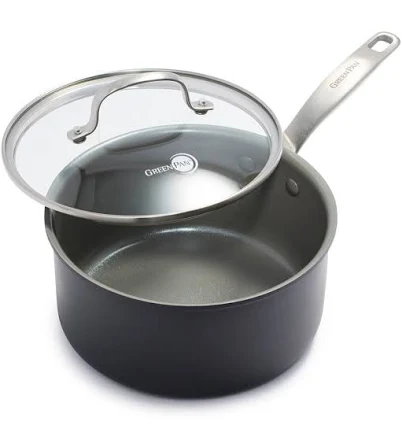
- Ceramic nonstick coating
- The brand calls it PFAS-free, which we have not verified
- Aluminum leaching
2 hazards checked on this product, all on its full breakdown.
- ceramic nonstick coating
- The brand calls it PFAS-free, which we have not verified
- Ceramic coating degradation over time
4 hazards checked on this product, all on its full breakdown.
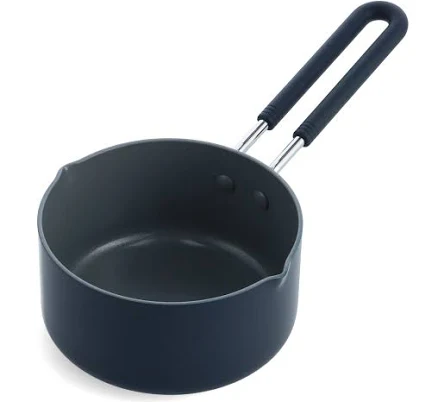
- Nonstick ceramic-based coating (GreenPan proprietary, unspecified)
- The brand calls it PFAS-free, which we have not verified
- Coating degradation over time
3 hazards checked on this product, all on its full breakdown.
More nonstick saucepans grades
How we score, every product runs through the same public 0-100 rubric based on materials, coatings, brand disclosure, lab findings, and recalls. See the full methodology → Spotted a mistake? Report an error.