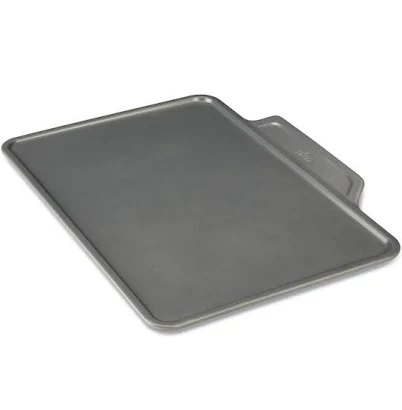
All-Clad Pro-Release Bakeware Cookie Sheet, Is It Non-Toxic?
Teflon-type coating non-stick coating, disclosed by the brand.
All-Clad says its nonstick contains Teflon-type coating, and lists its HA1, Essentials, NS1, D3 and D5 nonstick lines among its Teflon-type coating coated products. Teflon-type coating is a Teflon-family coating in the PFAS family.
The better-graded swap
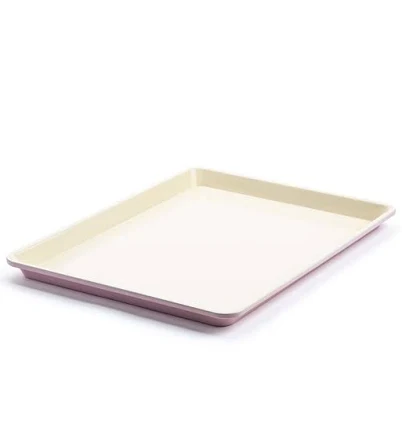
GreenPan
GreenLife Ceramic Nonstick Cookie Sheet
70/100 safety
Same rubric that flunked this product. The swap earned Good.
Still want this one anyway? Check the price on Amazon. We’d swap it.
Material
Teflon-type coating non-stick coating, as disclosed by All-Clad
Lab data
No public lab test
You may also be interested in
Top-graded picks in the categories readers replace first, every one scored on the same rubric.

- polypropylene filter housing, carbon/sediment cartridge
- We found no PFAS statement from the brand
- Bacterial growth in spent cartridges
3 hazards checked on this product, all on its full breakdown.

Aquasure
Premier Series 75 GPD Under Sink Reverse Osmosis Water Filtration System
- RO membrane, carbon filters, stainless steel housing
- We found no PFAS statement from the brand
- Bacterial and microbial growth in housing and filters
4 hazards checked on this product, all on its full breakdown.

Avocado
Vegan Mattress
- organic cotton, natural latex, coconut coir, recycled steel coils
- The brand calls it PFAS-free, which we have not verified
- Heavy metals
2 hazards checked on this product, all on its full breakdown.
Is All-Clad Pro-Release Bakeware Cookie Sheet non-toxic? What it is made of
All-Clad Pro-Release uses Teflon-type coating (polytetrafluoroethylene), the same resin in Teflon non-stick coatings, bonded to a steel or aluminum substrate. Teflon-type coating itself is chemically inert at room temperature, but the manufacturing, applied coatings, and chemical precursors (including perfluorooctanoic acid and related PFAS) create contamination concerns documented in water and blood serum studies. The bakeware geometry (flat sheet) reduces direct food contact compared to cookware with high sidewalls, but degradation of the coating over time is the primary use-phase concern.
What’s concerning
No PFAS disclosure
No PFAS-free statement from the brand for this product.
PTFE / Teflon confirmed
The brand discloses a Teflon-type coating.
Category baseline
The starting point for this type of product, before anything specific to this product is counted.
Teflon-type coating thermal decomposition and fume release
Teflon-type coating coatings become unstable above 450-500F, releasing perfluorooctane and other volatile compounds; risk is low at typical baking temperatures (350-425F) but rises sharply if oven is preheated very hot or broiler is used. Symptoms of polymer fume fever are rare in home use but documented in occupational settings.
Coating degradation and flaking
Teflon-type coating non-stick coatings on bakeware are prone to gradual wear from thermal cycling, washing, and mechanical contact. Small flakes can theoretically enter food; ingested Teflon-type coating particles pass through the digestive tract largely unabsorbed, but visible coating loss is a sign the product has reached end-of-life.
PFAS
Teflon-type coating production inherently involves PFOA and related PFAS. Migration of residual PFAS from the coating into food or water is documented at parts-per-billion levels in scientific literature; this hazard is graded separately as PFAS and reflects the known contamination pathway, not a defect in this brand specifically.
Source, ATSDR ↗What’s reassuring
Aluminum substrate leaching
If substrate is aluminum (All-Clad does not clearly specify; many sheet pans use aluminum bases), direct contact with acidic foods could theoretically increase leaching, but the Teflon-type coating barrier typically prevents this. All-Clad's premium positioning suggests steel substrate, which eliminates this concern; confirmation from the product spec sheet is recommended.
Lead
No recalls or test reports indicate lead or cadmium in All-Clad Pro-Release coatings. The brand maintains US and EU market presence, both of which enforce heavy-metal limits in cookware; none_known reflects absence of evidence, not guarantee of safety.
Source, ATSDR ↗How is this PFAS grade calculated?
The brand's record and disclosure
All-Clad discloses the Teflon-type coating transparently on product pages and care instructions, which is standard industry practice and does not imply superior safety. The brand does not publicly commit to PFAS phase-out, fluorine-free alternatives, or third-party testing for PFAS migration. All-Clad is owned by Groupe SEB (also parent of T-fal, Imusa, and others) and follows corporate cookware-industry norms; no major recalls specific to Teflon-type coating safety in this product line are on record.
How it compares in its category
Most non-stick bakeware (sheet pans, cookie sheets) in the mainstream market rely on Teflon-type coating. Alternatives include bare steel, silicone mat liners, ceramic-coated carbon steel, and stainless steel without non-stick; these eliminate Teflon-type coating and its PFAS risk but require oil or parchment and are more prone to sticking. All-Clad's construction quality (thickness, handle design, oven-safe rating to 500F) is above budget alternatives and comparable to OXO, Calphalon, and Farberware Teflon-type coating non-stick sheets. If Teflon-type coating avoidance is the priority, bare or seasoned steel baking sheets are the only mainstream category alternative.
If you buy it
Keep oven temperature at or below 400-425F during use; above 450-500F, Teflon-type coating begins thermal decomposition, releasing fumes (polymer fume fever risk). Hand-wash only; abrasive scrubbers and dishwashers degrade the coating faster. Inspect the surface regularly for peeling, discoloration, or gray wear patterns; replace within 3-5 years or sooner if coating damage is visible. Store flat and avoid stacking heavy items on it to prevent micro-fractures in the coating.
What is not known about PFAS in this product?
- Basis
- Model estimate, 35% confidence, not a lab result
- Lab test
- None on record for this exact product
- Brand statement
- All-Clad has made a specific claim
Formulations change between production runs, so check the current label. How we grade.
What are the PFAS-free alternatives to All-Clad Pro-Release Bakeware Cookie Sheet?
- ceramic nonstick coating
- The brand calls it PFAS-free, which we have not verified
- Ceramic coating degradation over time
3 hazards checked on this product, all on its full breakdown.
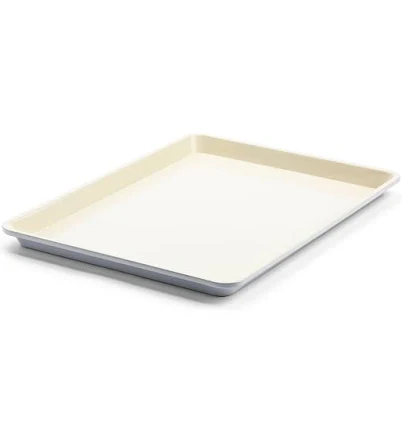
- Ceramic nonstick coating
- The brand calls it PFAS-free, which we have not verified
- Ceramic coating degradation and microflaking
2 hazards checked on this product, all on its full breakdown.
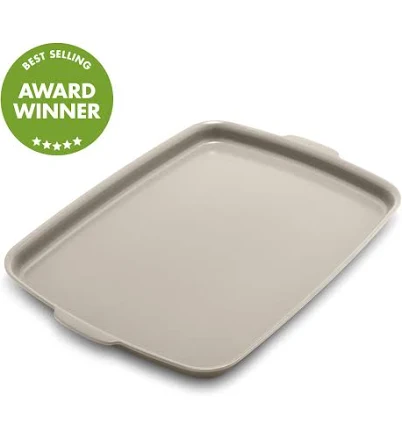
- Ceramic nonstick coating
- The brand calls it PFAS-free, which we have not verified
- Ceramic coating degradation and chipping
2 hazards checked on this product, all on its full breakdown.
More cookie sheets grades
How we score, every product runs through the same public 0-100 rubric based on materials, coatings, brand disclosure, lab findings, and recalls. See the full methodology → Spotted a mistake? Report an error.