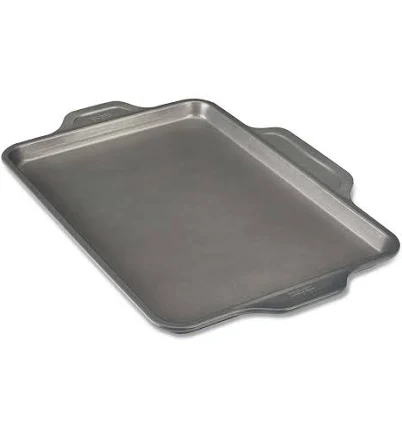
All-Clad Pro-Release Bakeware Half Sheet Pan, Is It Non-Toxic?
Teflon-type coating non-stick coating, disclosed by the brand.
All-Clad says its nonstick contains Teflon-type coating, and lists its HA1, Essentials, NS1, D3 and D5 nonstick lines among its Teflon-type coating coated products. Teflon-type coating is a Teflon-family coating in the PFAS family.
The better-graded swap
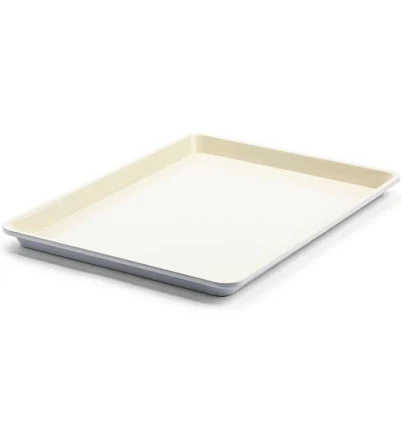
GreenPan
GreenPan GreenLife Ceramic Nonstick Cookie Sheet
70/100 safety
Same rubric that flunked this product. The swap earned Good.
Still want this one anyway? Check the price on Amazon. We’d swap it.
Material
Teflon-type coating non-stick coating, as disclosed by All-Clad
Lab data
No public lab test
You may also be interested in
Top-graded picks in the categories readers replace first, every one scored on the same rubric.

- polypropylene filter housing, carbon/sediment cartridge
- We found no PFAS statement from the brand
- Bacterial growth in spent cartridges
3 hazards checked on this product, all on its full breakdown.

Aquasure
Premier Series 75 GPD Under Sink Reverse Osmosis Water Filtration System
- RO membrane, carbon filters, stainless steel housing
- We found no PFAS statement from the brand
- Bacterial and microbial growth in housing and filters
4 hazards checked on this product, all on its full breakdown.

Avocado
Vegan Mattress
- organic cotton, natural latex, coconut coir, recycled steel coils
- The brand calls it PFAS-free, which we have not verified
- Heavy metals
2 hazards checked on this product, all on its full breakdown.
Is All-Clad Pro-Release Half Sheet Pan non-toxic? What it is made of
All-Clad Pro-Release uses a Teflon-type coating-based non-stick coating applied to a steel substrate. Teflon-type coating (polytetrafluoroethylene) is the chemical backbone of Teflon and similar coatings. The concern centers on Teflon-type coating manufacturing and degradation, when heated above 500°F (260°C), Teflon-type coating coatings can decompose and release volatile fluorinated compounds, some of which have been linked to PFOA and related perfluorinated chemicals (PFAS). At normal baking temperatures (typically 325, 450°F), the risk of fume release is lower but not absent, particularly if the coating degrades over time or if the pan is preheated empty or used under broiler heat.
What’s concerning
No PFAS disclosure
No PFAS-free statement from the brand for this product.
PTFE / Teflon confirmed
The brand discloses a Teflon-type coating.
Category baseline
The starting point for this type of product, before anything specific to this product is counted.
Teflon-type coating fume risk on thermal decomposition
Teflon-type coating coatings degrade above 500°F and can release fluorinated volatiles. Home baking rarely reaches this threshold, but preheating empty, broiler use, or damaged coatings increase risk. No recalls on record for this specific All-Clad model, but the hazard class is well documented across Teflon-type coating cookware.
Coating degradation and particulate shedding
Teflon-type coating coatings on steel sheet pans are subject to wear from repeated heating, cooling, and cleaning. Visible peeling or flaking has been reported by some users over multi-year use; ingested flakes are generally considered inert but represent loss of non-stick function and potential aesthetic issue.
Steel substrate corrosion if coating is breached
If the Teflon-type coating is significantly damaged, underlying steel can oxidize, particularly if the pan is washed and stored wet. All-Clad uses quality steel, but this is a practical durability rather than acute toxicity concern.
What’s reassuring
Lead
All-Clad is a recognized US manufacturer with established quality control. No recalls or testing reports have identified lead or cadmium in the Pro-Release coating or substrate. This hazard is not on record for this brand's bakeware.
Source, ATSDR ↗Aluminum leaching
This product is steel-based with a Teflon-type coating topcoat, not aluminum or anodized aluminum, so aluminum leaching is not a concern.
How is this PFAS grade calculated?
The brand's record and disclosure
All-Clad openly identifies the Pro-Release coating as Teflon-type coating-based in product descriptions and materials. The brand has not published independent testing, third-party certifications (such as GREENGUARD), or a public commitment to phase out Teflon-type coating in favor of PFAS-free alternatives. All-Clad's parent company (Groupe SEB) has made no widely publicized PFAS reduction pledges specific to its cookware lines. This silence is typical of mid-range cookware manufacturers but contrasts with brands that have explicitly moved to ceramic or other non-fluorinated coatings.
How it compares in its category
Half-sheet pans are a commodity bakeware item. Teflon-type coating-coated steel pans are standard at All-Clad's price point and are generally cheaper than ceramic or anodized aluminum alternatives. Ceramic-coated and bare steel pans are widely available at similar or lower cost and carry no Teflon-type coating-related fume risk, though ceramic may wear faster and bare steel requires oiling. All-Clad's stainless steel cookware line does not use Teflon-type coating, but dedicated bakeware in Teflon-type coating-free options from this brand is not marketed prominently.
If you buy it
Keep oven temperature below 500°F; do not preheat the pan empty or use under a broiler. Hand wash only; abrasive scrubbing and dishwasher heat accelerate coating degradation. Inspect the coating regularly for peeling, scratching, or discoloration. If the non-stick surface flakes or wears significantly (typically after 2, 4 years of regular use), replace the pan rather than continuing to use a compromised coating. Avoid high-heat finishing techniques such as quick broiling at the end of baking.
What is not known about PFAS in this product?
- Basis
- Model estimate, 35% confidence, not a lab result
- Lab test
- None on record for this exact product
- Brand statement
- All-Clad has made a specific claim
Formulations change between production runs, so check the current label. How we grade.
What are the PFAS-free alternatives to All-Clad Pro-Release Bakeware Half Sheet Pan?
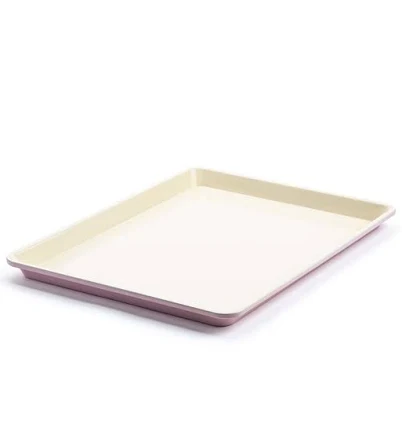
- ceramic nonstick coating
- The brand calls it PFAS-free, which we have not verified
- Ceramic coating degradation over time
3 hazards checked on this product, all on its full breakdown.
- Ceramic nonstick coating
- The brand calls it PFAS-free, which we have not verified
- Ceramic coating degradation and microflaking
2 hazards checked on this product, all on its full breakdown.
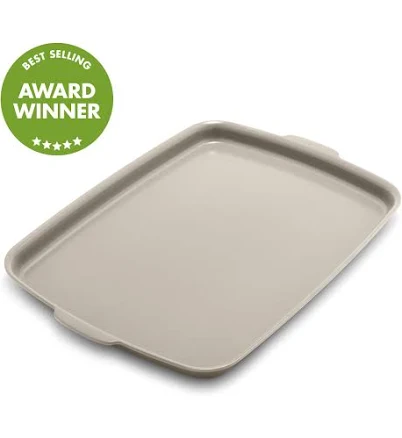
- Ceramic nonstick coating
- The brand calls it PFAS-free, which we have not verified
- Ceramic coating degradation and chipping
2 hazards checked on this product, all on its full breakdown.
More cookie sheets grades
How we score, every product runs through the same public 0-100 rubric based on materials, coatings, brand disclosure, lab findings, and recalls. See the full methodology → Spotted a mistake? Report an error.