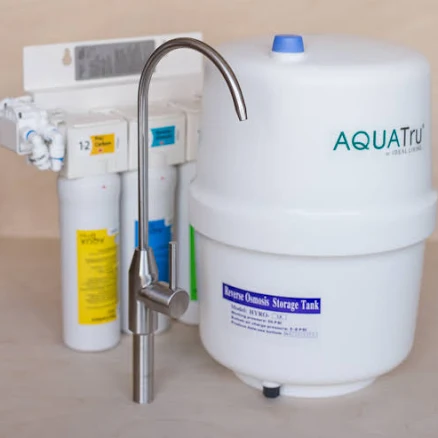
AquaTru · Under-Sink RO Systems
AquaTru Under Sink Under Sink
Brand PFAS statement on record, which we have not verified.
AquaTru says its purifiers are free from harmful substances such as BPA, PFAS and phthalates. We record that as an unverified brand claim.
Brand says: “AquaTru says its purifiers are free from harmful substances such as BPA, PFAS and phthalates.”
We flunk more products than we pass. This one earned its grade. How we grade
Material
Multi-stage filter cartridges (activated carbon, ion exchange resins)
Brand disclosure
Brand claims PFAS-free
Lab data
No public lab test
You may also be interested in
Top-graded picks in the categories readers replace first, every one scored on the same rubric.

- polypropylene filter housing, carbon/sediment cartridge
- We found no PFAS statement from the brand
- Bacterial growth in spent cartridges
3 hazards checked on this product, all on its full breakdown.

Avocado
Vegan Mattress
- organic cotton, natural latex, coconut coir, recycled steel coils
- The brand calls it PFAS-free, which we have not verified
- Heavy metals
2 hazards checked on this product, all on its full breakdown.

- polyurethane foam
- We found no PFAS statement from the brand
- Volatile Organic Compound (VOC) Off-Gassing
4 hazards checked on this product, all on its full breakdown.
What AquaTru Under Sink Under Sink is made of, ingredients and materials
AquaTru under-sink systems use replaceable cartridges containing activated carbon (for chlorine and organic compounds), ion-exchange resin (for mineral softening), and RO membrane stages. These are industry-standard materials for point-of-use water treatment. The cartridges themselves are engineered to trap contaminants without leaching their own material into water under normal use; the resin beads and carbon are contained in sealed plastic housings designed to prevent direct contact with drinking water.
What’s concerning
Bacterial growth in filter cartridges
If cartridges are not replaced on schedule or system is left unused for extended periods, stagnant water in the cartridge housing can support microbial growth. This is a maintenance issue, not a material defect, and is prevented by following replacement intervals and flushing instructions.
Activated carbon dust or fines
New or degraded carbon cartridges can release small amounts of carbon fines (black specks) into water during initial use or after cartridge aging. This is cosmetic and not a health hazard, but can be minimized by flushing after cartridge replacement.
RO membrane degradation over time
RO membranes can degrade if exposed to chlorine (before the carbon pre-filter) or extreme pH, reducing contaminant removal efficiency over time. AquaTru systems include pre-filtration to protect the membrane, but replacement schedules should be observed to maintain effectiveness.
What’s reassuring
Brand-stated PFAS-free
The brand states this product is PFAS-free. We have not verified the claim.
Base material not linked to PFAS
The main material recorded for this product is not one associated with PFAS.
Ion-exchange resin leaching
Ion-exchange resins used in water softening stages are food-contact approved materials and do not leach into water under normal pressure and flow conditions. No reports of resin particle release from AquaTru cartridges in normal use.
Plastic housing leachables (housing, not cartridge contents)
Under-sink housings are typically food-grade polyethylene or polypropylene rated for cold water storage. No reports of BPA, phthalates, or other endocrine disruptors leaching from AquaTru housings. The system is sealed and operates under low pressure, reducing any leaching risk.
How is this PFAS grade calculated?
The brand's record and disclosure
AquaTru has publicly stated PFAS-free design for their filter cartridges and claims no PFAS in treated water output. The brand is transparent about filter replacement intervals (typically 6-12 months depending on water quality and flow rate) and provides NSF certification or third-party testing documentation for many models. No major safety recalls or contamination incidents are on public record for this product line as of available information.
How it compares in its category
Under-sink RO systems are among the most effective for removing dissolved contaminants, PFAS included, compared to pitcher filters or faucet-mount systems. AquaTru's approach is comparable to other established brands (Aqua-Pure, iSpring) in materials and cartridge design. The main trade-off with RO is wastewater (typically 3:1 or higher ratio), which is not a safety issue but an environmental and usage consideration.
If you buy it
Replace cartridges on schedule (do not exceed manufacturer's recommended lifespan) to prevent breakthrough and bacterial colonization inside spent filters. Flush the system after cartridge replacement as instructed. If water sits unused for more than a few days, run water for 30 seconds before drinking to clear any stagnation. Keep the system in a temperature-stable location (not freezing or extreme heat) to avoid membrane damage and resin degradation.
What is not known about PFAS in this product?
- Basis
- Model estimate, 72% confidence, not a lab result
- Lab test
- None on record for this exact product
- Brand statement
- AquaTru has made a specific claim
Formulations change between production runs, so check the current label. How we grade.
More under-sink ro systems grades
How we score, every product runs through the same public 0-100 rubric based on materials, coatings, brand disclosure, lab findings, and recalls. See the full methodology → Spotted a mistake? Report an error.