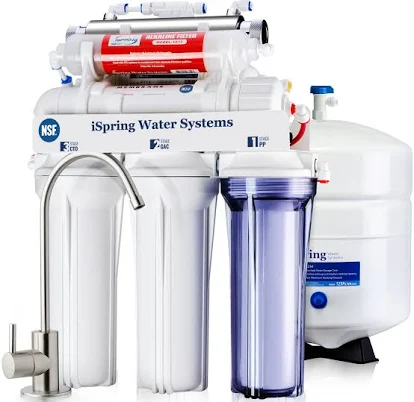
iSpring · Under-Sink RO Systems
ISPRING RCC7AK-UV 7-Stage Under Sink Reverse Osmosis Water Filtration System
Lower concern, RO systems rarely use PFAS; no red flags, but brand makes no PFAS disclosure.
Reverse osmosis filtration systems typically use carbon, RO membranes, and plastic housings, materials with lower inherent PFAS risk compared to Teflon-family coating coatings or water-repellent treatments. iSpring makes no PFAS claims or disclosures for this model.
We flunk more products than we pass. This one earned its grade. How we grade
Material
Carbon filter, RO membrane, plastic housing (polypropylene/PVC typical)
Brand disclosure
Brand is silent on PFAS
Lab data
No public lab test
You may also be interested in
Top-graded picks in the categories readers replace first, every one scored on the same rubric.

- polypropylene filter housing, carbon/sediment cartridge
- We found no PFAS statement from the brand
- Bacterial growth in spent cartridges
3 hazards checked on this product, all on its full breakdown.

Avocado
Vegan Mattress
- organic cotton, natural latex, coconut coir, recycled steel coils
- The brand calls it PFAS-free, which we have not verified
- Heavy metals
2 hazards checked on this product, all on its full breakdown.

- polyurethane foam
- We found no PFAS statement from the brand
- Volatile Organic Compound (VOC) Off-Gassing
4 hazards checked on this product, all on its full breakdown.
What ISPRING RCC7AK-UV 7-Stage Under System is made of, ingredients and materials
The RCC7AK-UV uses a multi-stage cartridge system (sediment, carbon, RO membrane) housed in polypropylene and PVC plastic fittings. Carbon and membrane materials are not materials linked to PFAS under normal operating conditions. Plastic housings are not heated or pressurized beyond typical residential water pressure (50-80 psi), so leaching risk from the housing itself is negligible. The UV stage adds a germicidal element with no chemical byproducts.
What’s concerning
No PFAS disclosure
No public statement from the brand about PFAS in this product.
Bacterial and microbial growth in filter stages
Standing water in carbon and sediment cartridges can harbor bacteria if cartridges are not replaced on schedule or if the system sits unused for extended periods. This is a maintenance issue, not a manufacturing defect; risk is controlled by following replacement intervals.
Activated carbon dust and loose particulates
New carbon filter cartridges commonly shed fine black dust that can affect water clarity for the first few uses. iSpring documentation recommends flushing for several minutes after cartridge installation; this is a cosmetic and operational issue, not a toxicity risk.
What’s reassuring
Base material not linked to PFAS
The main material recorded for this product is not one associated with PFAS.
Plastic housing leachables (PVC/polypropylene)
Under-sink RO systems operate at low pressure and room temperature; PVC and polypropylene do not leach BPA, phthalates, or other endocrine disruptors under these conditions. No contamination events reported for this product line.
Heavy metals
The RO membrane and carbon stages remove lead, cadmium, and other heavy metals from source water. iSpring does not publish independent NSF test results, so you cannot verify removal rates without third-party testing of your own water.
Source, FDA ↗UV lamp safety and ozone production
The UV stage produces no ozone or chemical byproducts; it uses standard germicidal UV-C light. Lamps are shielded; no direct UV exposure risk during normal use. Replace UV cartridges per schedule (typically 12 months) to maintain disinfection efficacy.
How is this PFAS grade calculated?
The brand's record and disclosure
iSpring is a private-label manufacturer without published material safety data sheets or third-party certifications prominently displayed on product pages. The brand does not publicly disclose material composition, manufacturing origin, or testing standards. No significant safety recalls or contamination incidents are documented for this model line. The company's silence on PFAS, heavy metals testing, or third-party NSF certification is typical for budget RO brands but limits independent verification.
How it compares in its category
Under-sink RO systems have lower concern for accumulation hazards because water passes through the system rather than accumulating in it. The RCC7AK-UV is mid-tier, it includes UV disinfection (a plus) but lacks NSF/ANSI 58 certification that some premium competitors carry. Most under-sink RO units share the same hazard profile; iSpring's price advantage comes with reduced transparency rather than reduced safety.
If you buy it
Replace sediment and carbon cartridges every 6-12 months and the RO membrane every 2-3 years or per manufacturer guidance to prevent bacterial biofilm growth inside unused stages. Store replacement cartridges in a cool, dry place away from sunlight. Ensure the system is installed by someone familiar with water line shut-off in case of leaks; plastic fittings are durable but connection points are the failure point. Flush the system for 5 minutes after each cartridge change to clear activated carbon dust.
What is not known about PFAS in this product?
- Basis
- Model estimate, 72% confidence, not a lab result
- Lab test
- None on record for this exact product
- Brand statement
- iSpring has made none
Formulations change between production runs, so check the current label. How we grade.
What are the PFAS-free alternatives to ISPRING RCC7AK-UV 7-Stage Under Sink Reverse Osmosis Water Filtration System?

Aquasure
Premier Series 75 GPD Under Sink Reverse Osmosis Water Filtration System
- RO membrane, carbon filters, stainless steel housing
- We found no PFAS statement from the brand
- Bacterial and microbial growth in housing and filters
4 hazards checked on this product, all on its full breakdown.
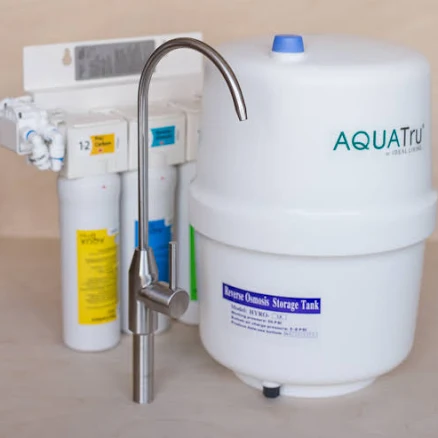
- Multi-stage filter cartridges (activated carbon, ion exchange resins)
- The brand calls it PFAS-free, which we have not verified
- Bacterial growth in filter cartridges
3 hazards checked on this product, all on its full breakdown.
More under-sink ro systems grades
How we score, every product runs through the same public 0-100 rubric based on materials, coatings, brand disclosure, lab findings, and recalls. See the full methodology → Spotted a mistake? Report an error.