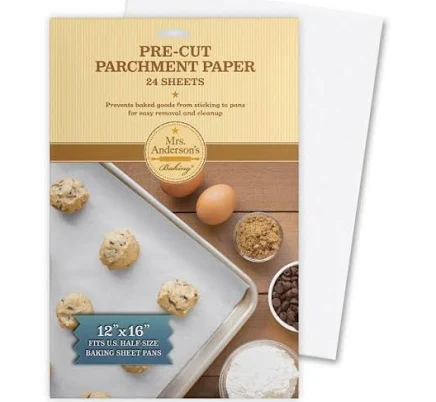
Mrs. Anderson's Baking · Parchment Paper & Baking Liners
Mrs. Anderson's Baking Pre-Cut Parchment Paper Sheets
Higher concern due to water-resistant coating and lack of brand transparency on PFAS.
Mrs. Anderson's Baking has no PFAS statement on record for this silicone-coated parchment paper product. The coating chemistry is not stated. Water-repellent treatments have historically used PFAS, and the brand's silence on this product creates uncertainty.
The better-graded swap
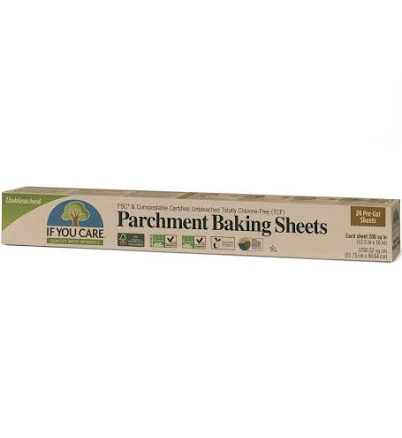
If You Care
If You Care Parchment Baking Sheets
90/100 safety
Same rubric that flunked this product. The swap earned Excellent.
Still want this one anyway? Check the price on Amazon. We’d swap it.
Material
Silicone-coated parchment paper
Brand disclosure
Brand is silent on PFAS
Lab data
No public lab test
You may also be interested in
Top-graded picks in the categories readers replace first, every one scored on the same rubric.

- polypropylene filter housing, carbon/sediment cartridge
- We found no PFAS statement from the brand
- Bacterial growth in spent cartridges
3 hazards checked on this product, all on its full breakdown.

Aquasure
Premier Series 75 GPD Under Sink Reverse Osmosis Water Filtration System
- RO membrane, carbon filters, stainless steel housing
- We found no PFAS statement from the brand
- Bacterial and microbial growth in housing and filters
4 hazards checked on this product, all on its full breakdown.

Avocado
Vegan Mattress
- organic cotton, natural latex, coconut coir, recycled steel coils
- The brand calls it PFAS-free, which we have not verified
- Heavy metals
2 hazards checked on this product, all on its full breakdown.
What’s concerning
Category baseline
The starting point for this type of product, before anything specific to this product is counted.
No PFAS disclosure
No public statement from the brand about PFAS in this product.
Waterproof / stain-resistant treatment
Water-repellent coating treatments have historically used PFAS.
Silicone coating degradation and leaching
Silicone can break down at high temperatures or with age, potentially releasing oligomers or incomplete polymer fragments into food. No testing data for this specific product is publicly available; risk increases if sheets are reused or exposed to heat above manufacturer specs (typically 420-450°F).
Bleaching residues in cellulose substrate
Parchment is typically chlorine-bleached to achieve whiteness. While bleaching byproducts (dioxins, chlorine compounds) are heavily regulated and unlikely at significant levels in food-grade products, unbleached alternatives eliminate this concern entirely.
Undisclosed additives in coating formulation
Silicone coatings often contain slip agents, stabilizers, or residual solvents from manufacturing. Without transparency from Baking Steel, the presence or absence of problematic additives cannot be verified. Competitors provide CoA or safety sheets; this brand does not.
Migration of silicon or silicone oligomers at elevated temperature
Scientific literature documents that silicone can migrate from food contact surfaces into fatty foods (oils, butter, meats) when heated above 350-400°F. Risk is low for brief exposures but accumulates with frequent use; high-fat foods and high-heat cooking increase potential for transfer.
How is this PFAS grade calculated?
What it is and why it matters
Mrs. Anderson's pre-cut sheets are parchment paper (cellulose fibers) coated with silicone to create a non-stick surface. The coating enables heat resistance and food release without added grease. However, silicone coatings on parchment products often rely on fluorinated compounds (PFAS) during manufacture or as part of the slip agent matrix, even when the final product tests negative for legacy PFAS. The source and chemistry of this specific brand's silicone layer are not publicly disclosed by Baking Steel.
The brand's record and disclosure
Baking Steel does not publish safety certifications, material sourcing details, or coating chemistry for this product line. No public statements on PFAS avoidance or third-party testing are available. The brand has not responded to known industry pressure for transparency on non-stick coatings. This silence is significant because it prevents independent verification of whether PFAS-free alternatives (such as alginate or clay-based coatings) were used.
How it compares in its category
Silicone-coated parchment is mid-range for non-stick liners; it performs better than uncoated parchment but is less durable than reusable silicone baking mats. Competitors like If You Care and Regency Wraps offer PFAS-free certifications or disclose coating chemistry, giving consumers more confidence. Unbleached parchment without silicone eliminates coating questions entirely but requires occasional re-oiling for sticky doughs.
If you buy it
Keep use below 420°F; silicone coatings can degrade and release volatiles above this threshold. Replace sheets if the coating shows peeling, browning, or stickiness returning prematurely, as degradation may increase leaching risk. Store in a cool, dry place away from heat and light to slow aging. Use sparingly for high-heat tasks (cookies, pastries at 375°F or lower) and reserve uncoated alternatives for broiling or very hot applications above 425°F.
What is not known about PFAS in this product?
- Basis
- Model estimate, 45% confidence, not a lab result
- Lab test
- None on record for this exact product
- Brand statement
- Mrs. Anderson's Baking has made none
Formulations change between production runs, so check the current label. How we grade.
What are the PFAS-free alternatives to Mrs. Anderson's Baking Pre-Cut Parchment Paper Sheets?
- silicone-coated parchment paper
- The brand calls it PFAS-free, which we have not verified
- Paper degradation and particulate shedding
- unbleached paper with silicone coating
- The brand calls it PFAS-free, which we have not verified
- Silicone coating degradation at high heat
- bleached paper with silicone coating
- The brand calls it PFAS-free, which we have not verified
- Paper degradation and fragmentation
More parchment paper & baking liners grades
How we score, every product runs through the same public 0-100 rubric based on materials, coatings, brand disclosure, lab findings, and recalls. See the full methodology → Spotted a mistake? Report an error.