
Banana Republic · Stain-Resistant Blazers & Suits
Banana Republic Women's Slim City Stretch Blazer
Stretch blends often use fluorine-based finishes; treatment unknown.
Cotton blend with stretch and likely water-repellent coating treatment, though Banana Republic won't disclose what chemicals make it water-resistant.
Still want this one anyway? Check the price on Amazon. We’d swap it.
Material
Cotton blend with stretch finish, likely water-repellent coating-treated
Brand disclosure
Brand is silent on PFAS
Lab data
No public lab test
You may also be interested in
Top-graded picks in the categories readers replace first, every one scored on the same rubric.

- polypropylene filter housing, carbon/sediment cartridge
- We found no PFAS statement from the brand
- Bacterial growth in spent cartridges
3 hazards checked on this product, all on its full breakdown.

Aquasure
Premier Series 75 GPD Under Sink Reverse Osmosis Water Filtration System
- RO membrane, carbon filters, stainless steel housing
- We found no PFAS statement from the brand
- Bacterial and microbial growth in housing and filters
4 hazards checked on this product, all on its full breakdown.

Avocado
Vegan Mattress
- organic cotton, natural latex, coconut coir, recycled steel coils
- The brand calls it PFAS-free, which we have not verified
- Heavy metals
2 hazards checked on this product, all on its full breakdown.
What Banana Republic Women's Stretch Blazer is made of, ingredients and materials
This blazer is a cotton blend with synthetic stretch fibers (likely elastane or polyester) and a water-repellent coating (water-repellent coating) finish. Cotton itself is low-risk, but the stretch finish and water-resistant coating are chemical treatments applied post-manufacture. water-repellent coating finishes historically relied on PFAS chemistry, though some brands have shifted to fluorine-free alternatives; Banana Republic has not publicly disclosed which type they use here. The blend structure means the garment can off-gas volatile compounds during the first several wears, particularly if formaldehyde-based resins were used to set the weave.
What’s concerning
Category baseline
The starting point for this type of product, before anything specific to this product is counted.
No PFAS disclosure
No public statement from the brand about PFAS in this product.
Waterproof / stain-resistant treatment
Water-repellent coating treatments have historically used PFAS.
PFAS
Banana Republic does not disclose whether this stretch blazer uses legacy PFAS-based water-repellent coating (now common in older or budget production) or fluorine-free alternatives. Skin contact risk from water-repellent coating-treated fabric is generally low; inhaled fumes from heat application are the primary concern.
Source, ATSDR ↗Formaldehyde / VOCs
Cotton-blend garments often receive formaldehyde-based resins to set wrinkle resistance and shape. Banana Republic does not publicly certify free-formaldehyde status on this line. Pre-washing significantly reduces residual formaldehyde off-gassing before skin contact.
Source, ATSDR ↗Elastane/polyester microfiber shedding
Stretch blends with synthetic fibers can shed microfibers with repeated washing. This blazer's microfiber load depends on yarn quality and weave density, neither disclosed by the brand. Standard care (gentle wash, lower temperature) limits shedding.
Coating degradation and water-repellent loss
Water-repellent coating coatings on affordable blazers typically degrade within 1-2 years of regular washing and use. Once compromised, the protective chemical layer no longer functions; re-treatment adds additional chemical exposure and is rarely cost-effective at this price point.
What’s reassuring
Heavy metals
No specific recalls or testing data exists for Banana Republic blazers regarding azo dye or heavy-metal contamination. Cotton-blend blazers in neutral colorways (common in this product) typically use lower-risk dye sets than printed or saturated fabrics.
Source, FDA ↗How is this PFAS grade calculated?
The brand's record and disclosure
Banana Republic (owned by Gap Inc.) does not publicly disclose detailed chemical composition or water-repellent coating treatment methodology for individual garments. The brand has no widely documented commitment to PFAS-free textiles or third-party certifications like OEKO-TEX or GOTS on this product line. Gap Inc. has made general sustainability statements but lacks transparency on water-repellent chemistry in apparel. This silence around treatment specifics leaves buyers unable to verify whether legacy PFAS or newer alternatives were used.
How it compares in its category
Cotton-blend blazers at this price point typically receive water-repellent coating treatment; this product is standard for fast-fashion-adjacent retail. Competitors with equivalent price and fit (J.Crew, Uniqlo) similarly do not disclose water-repellent coating chemistry publicly. Premium brands (Patagonia, Allbirds) explicitly label fluorine-free or PFAS-free treatments and often carry certifications. This blazer sits in the middle, acceptable durability and aesthetics, but no chemical transparency advantage over mass-market peers.
If you buy it
Pre-wash the blazer separately in cool water before wearing to reduce residual chemical load and off-gassing. Avoid hot water and high heat drying, which can accelerate coating degradation and potential leaching. Dry-clean only if necessary; chlorinated solvents in dry-cleaning can interact with some water-repellent coating treatments. Inspect the coating annually for pilling or loss of water-beading; once compromised, the chemical benefit is lost and replacement becomes more practical than re-treatment.
What is not known about PFAS in this product?
- Basis
- Model estimate, 45% confidence, not a lab result
- Lab test
- None on record for this exact product
- Brand statement
- Banana Republic has made none
Formulations change between production runs, so check the current label. How we grade.
What are the PFAS-free alternatives to Banana Republic Women's Slim City Stretch Blazer?

- linen-blend, likely cotton-linen mix, unfinished
- We found no PFAS statement from the brand
- Azo dyes and synthetic colorants
2 hazards checked on this product, all on its full breakdown.
Find an alternative on Amazon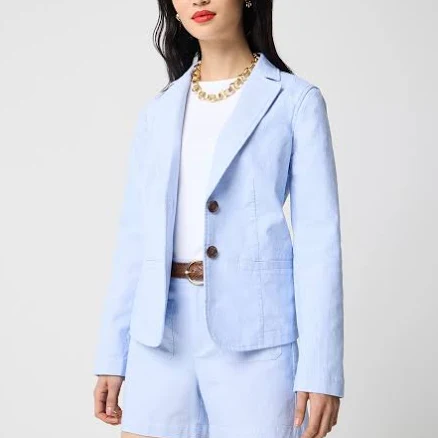
- Cotton-blend, unlined blazer
- We found no PFAS statement from the brand
- Azo dyes and colorant safety
3 hazards checked on this product, all on its full breakdown.
Find an alternative on Amazon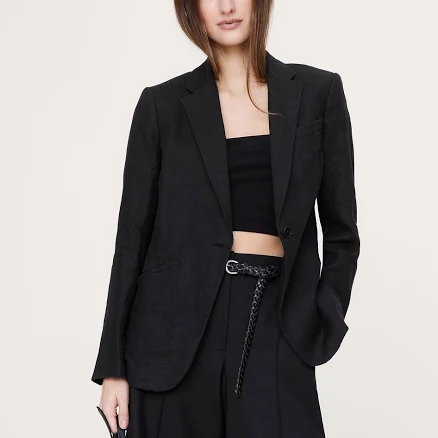
- 100% linen
- We found no PFAS statement from the brand
- Formaldehyde / VOCs
4 hazards checked on this product, all on its full breakdown.
Find an alternative on AmazonMore stain-resistant blazers & suits grades
How we score, every product runs through the same public 0-100 rubric based on materials, coatings, brand disclosure, lab findings, and recalls. See the full methodology → Spotted a mistake? Report an error.