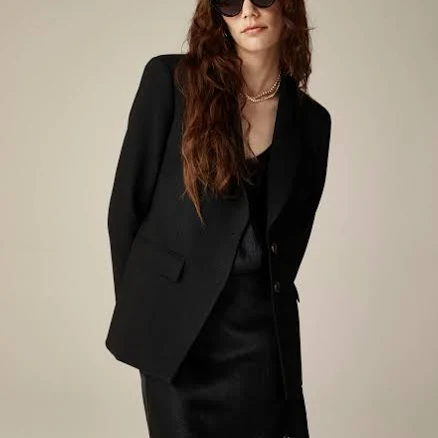
J.Crew · Stain-Resistant Blazers & Suits
J.Crew Women's Madelyn Four-Season Stretch Blazer
Stretch blazer likely treated for water resistance; PFAS risk unclear without disclosure.
Four-season stretch fabrics often receive water-repellent coating finishes historically containing PFAS. J.Crew doesn't publicly disclose treatment chemistry or PFAS status for this item.
Still want this one anyway? Check the price on Amazon. We’d swap it.
Material
Four-season stretch fabric with water-resistant treatment
Brand disclosure
Brand is silent on PFAS
Lab data
No public lab test
You may also be interested in
Top-graded picks in the categories readers replace first, every one scored on the same rubric.

- polypropylene filter housing, carbon/sediment cartridge
- We found no PFAS statement from the brand
- Bacterial growth in spent cartridges
3 hazards checked on this product, all on its full breakdown.

Aquasure
Premier Series 75 GPD Under Sink Reverse Osmosis Water Filtration System
- RO membrane, carbon filters, stainless steel housing
- We found no PFAS statement from the brand
- Bacterial and microbial growth in housing and filters
4 hazards checked on this product, all on its full breakdown.

Avocado
Vegan Mattress
- organic cotton, natural latex, coconut coir, recycled steel coils
- The brand calls it PFAS-free, which we have not verified
- Heavy metals
2 hazards checked on this product, all on its full breakdown.
What J.Crew Women's Madelyn Stretch Blazer is made of, ingredients and materials
The Madelyn blazer uses a 'four-season stretch' synthetic blend, typically polyester with elastane, treated with a durable water-resistant finish. This coating is the primary concern, water repellency on apparel is almost always achieved with fluorinated compounds (PFAS) or, less commonly, silicone or wax bases. J.Crew has not publicly disclosed which chemistry is used here. The stretch component (elastane) is chemically stable and not a known hazard in finished garments.
What’s concerning
Category baseline
The starting point for this type of product, before anything specific to this product is counted.
No PFAS disclosure
No public statement from the brand about PFAS in this product.
Waterproof / stain-resistant treatment
Water-repellent coating treatments have historically used PFAS.
PFAS
Four-season water-resistant apparel almost universally uses fluorinated PFAS finishes (C6, C8, or alternatives). J.Crew discloses neither the specific compound nor its concentration. Consumer exposure is primarily dermal during wear and via wash water.
Source, ATSDR ↗Antimony in polyester
Antimony is used as a catalyst in polyester synthesis; trace residues may remain in finished fabric. Levels in apparel are typically below concern thresholds, but dermal absorption over prolonged wear is not well-studied. No J.Crew-specific data available.
Elastane (spandex) degradation under heat and UV
The stretch component can break down with repeated hot washing, high-temperature drying, or sun exposure, potentially releasing degradation byproducts. This is a durability rather than acute safety issue; cold care extends garment life and minimizes exposure.
What’s reassuring
Formaldehyde / VOCs
No recalls or reports of excess formaldehyde in J.Crew blazers. Modern apparel finishing typically uses low-formaldehyde or formaldehyde-free resins, though no certification is claimed here. Risk is minimal in finished garments not subjected to heat stress.
Source, ATSDR ↗Heavy metals
J.Crew does not operate its own dye houses and sources from suppliers; no specific contamination has been reported. Standard dyeing of polyester-elastane blends in this price range generally meets basic safety thresholds, though independent testing is not disclosed.
Source, FDA ↗How is this PFAS grade calculated?
The brand's record and disclosure
J.Crew has not published a comprehensive chemicals policy or PFAS stance as of available records. The brand has faced scrutiny for supply chain transparency but has not faced major recalls or chemical safety controversies. Without specific material safety data sheets or third-party certifications (e.g., OEKO-TEX, Bluesign) listed for this item, the water-resistant treatment chemistry remains undisclosed to consumers.
How it compares in its category
Water-resistant blazers in this market segment routinely use PFAS-based finishes as the industry standard for durability and performance. Alternatives with certified PFAS-free water resistance (silicone or paraffin wax) are less common at mainstream retailers and often cost more. J.Crew's positioning suggests a performance-first approach typical of the category, with minimal chemical transparency compared to specialty sustainable brands.
If you buy it
Wear the blazer as-is; the finished garment does not release significant volatile chemicals under normal use. Wash separately in cold water before first wear to reduce any residual coating transfer. Avoid high-heat drying (use air dry or low heat); heat can degrade synthetic fibers and potentially alter coating stability. If water-resistance diminishes after several years, dry-cleaning can refresh the finish, though ask the cleaner about their chemical treatments.
What is not known about PFAS in this product?
- Basis
- Model estimate, 45% confidence, not a lab result
- Lab test
- None on record for this exact product
- Brand statement
- J.Crew has made none
Formulations change between production runs, so check the current label. How we grade.
What are the PFAS-free alternatives to J.Crew Women's Madelyn Four-Season Stretch Blazer?
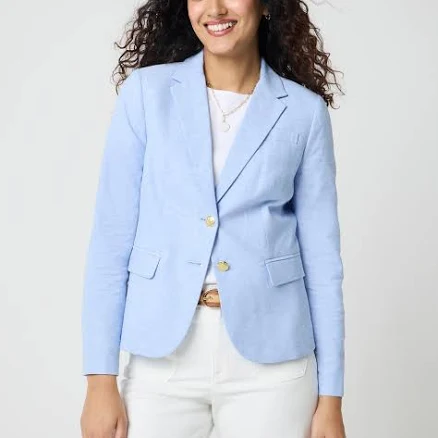
- linen-blend, likely cotton-linen mix, unfinished
- We found no PFAS statement from the brand
- Azo dyes and synthetic colorants
2 hazards checked on this product, all on its full breakdown.
Find an alternative on Amazon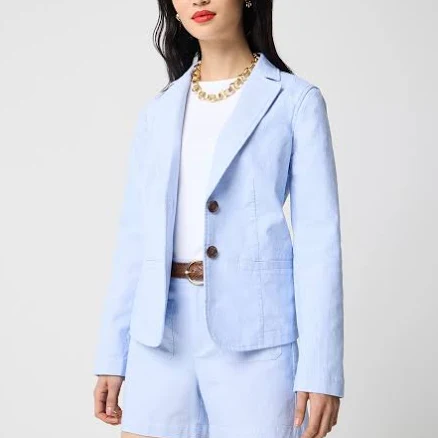
- Cotton-blend, unlined blazer
- We found no PFAS statement from the brand
- Azo dyes and colorant safety
3 hazards checked on this product, all on its full breakdown.
Find an alternative on Amazon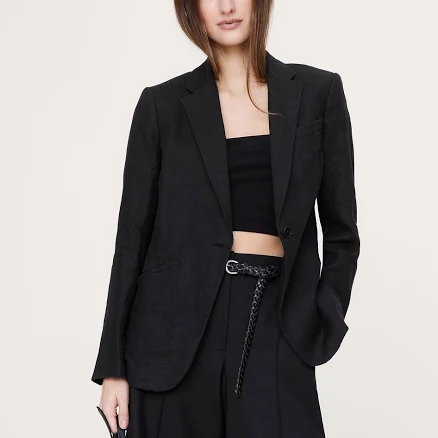
- 100% linen
- We found no PFAS statement from the brand
- Formaldehyde / VOCs
4 hazards checked on this product, all on its full breakdown.
Find an alternative on AmazonMore stain-resistant blazers & suits grades
How we score, every product runs through the same public 0-100 rubric based on materials, coatings, brand disclosure, lab findings, and recalls. See the full methodology → Spotted a mistake? Report an error.